Screws Puzzle Review: A Ball-and-Groove Lock in Every Tile
Every tile holds a ball in a cut-out groove: a Screws Puzzle review of this pin-puzzle variant, from three-tile boards to tall hooked pieces.
Game at a glance
Screws Puzzle
7/ 10
Our score
Other pin puzzles could take notes from this one. It's pretty fun.
In this article6 sections
Pin puzzles run on a chain: pieces interlock, and each one holds up the next. Screws Puzzle, a mobile puzzle game, keeps that chain and cuts a second lock into the pieces themselves. Every colored tile has a shaped groove with a ball sitting in it, so the lock is inside each piece as well as between them.
It is a higher-difficulty take on the pin puzzle with some of a nuts-and-bolts puzzle mixed in, the kind where bolts come out in the right order so plates can drop away. No actual screws turn up in Levels 2 to 16, the stretch we played. The pieces are flat tiles with rounded edges and soft shadows, one color per level, on a plain light-gray board.
Grooved tiles that shift around a still ball
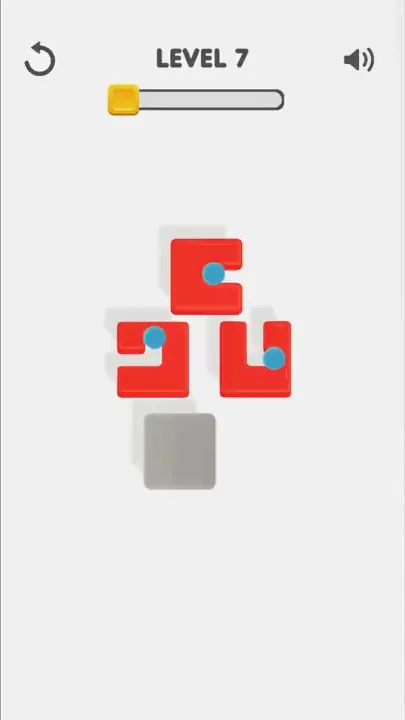
Each level is a small cluster of same-color tiles packed edge to edge. No goal text appears, but every board ends the same way: when the last colored tile is gone, the next level loads, even if a gray block is still sitting there, as one is at the end of Level 7. No move counter, level timer, lives display or fail screen shows up on any of these boards.
No tutorial hand or hint text appears on these boards either, so they never spell out the gesture that moves a tile. What they do show is the result: tiles in new positions, their balls left where they were. Around the cluster, the display holds only the level number at the top center with a progress bar and combo text beneath it, plus an icon in each top corner.
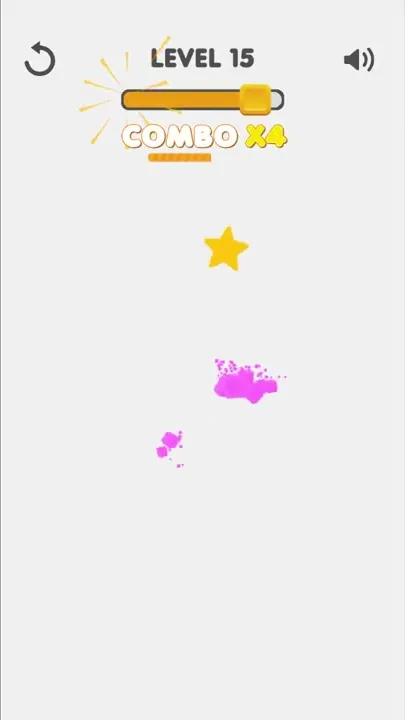
Screws Puzzle gameplay follows the same cycle on every board. Tiles change position and leave the board one at a time, each breaking into a burst of particles with a gold star above it. As they go, the progress bar fills and a combo count appears under it, until no colored tile is left.
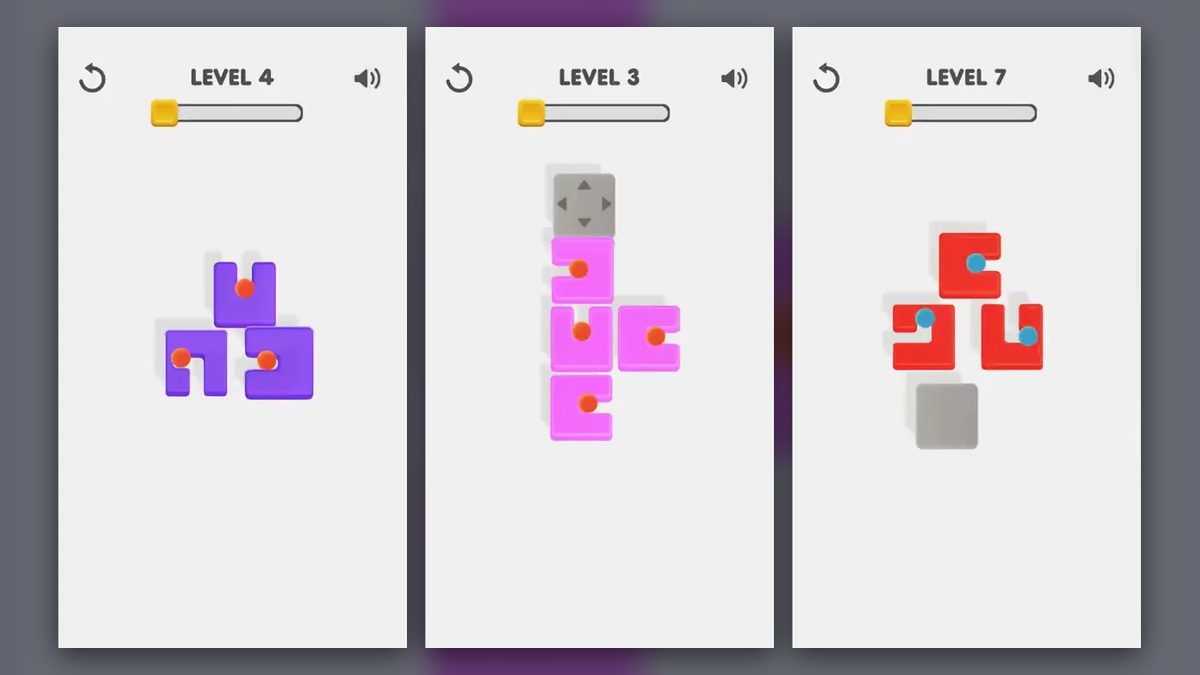
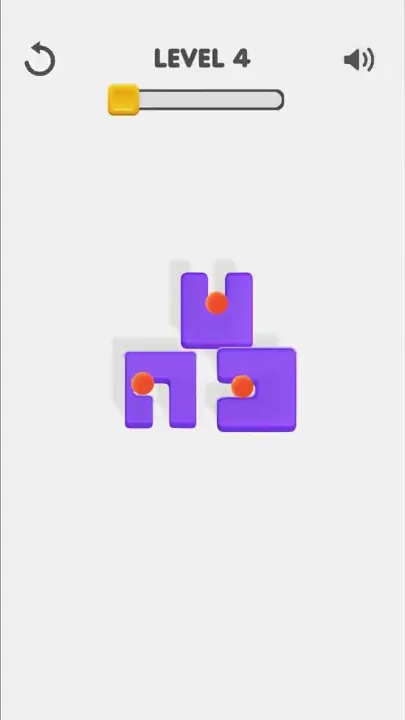
The basic piece is a square tile with a groove cut into it, in shapes that run from a straight slot to a hook, and a single ball sitting in that groove. A groove can open through the tile’s edge: as Level 4 begins, the top tile’s groove opens at its top edge and the lower-left tile’s at its bottom edge. Balls are red on most boards, but blue on the orange tiles of Levels 6 and 11 and on the red tiles of Level 7.
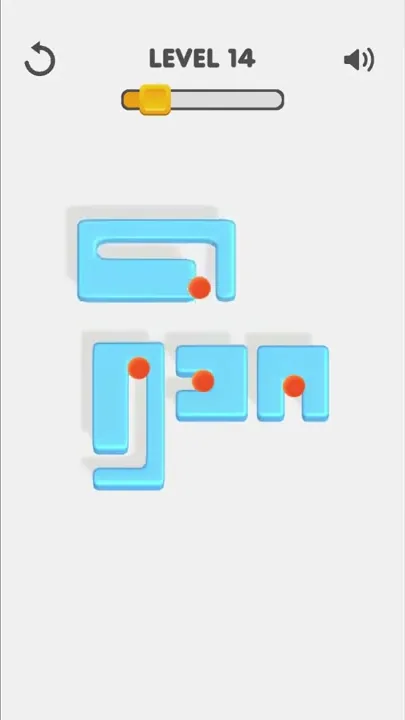
Tiles move while their balls stay put. Across these boards, tiles turn up shifted in all four directions, each ball fixed to the same spot on screen, and the stretch of groove beside the ball shows as a white channel. In Level 9 one tile ends up further left and another higher. In Level 14 the tall left-hand tile rises and later drops back to its starting spot, while the wide top tile shifts both left and up, leaving its ball near the far end of an L-shaped groove.
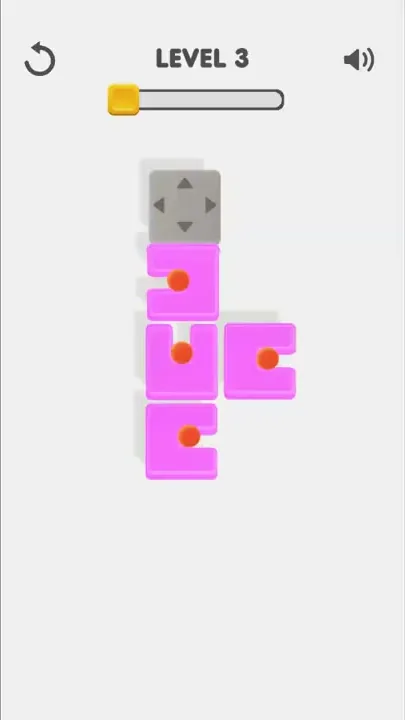
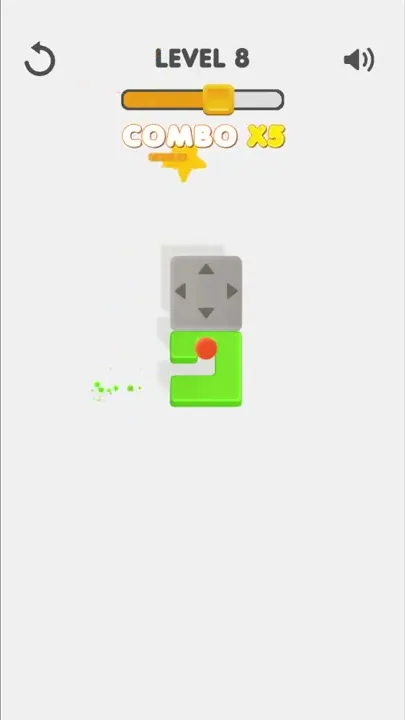
A gray square marked with four small triangles, one pointing each way, first appears in Level 3. It has no groove and no ball, and it doesn’t always keep its place. In Level 3 it ends up lower, in the spot the column’s middle tile had filled, and in Level 13 it moves down and is gone by the time the last yellow tile bursts. In Level 8 it stays in the same spot.
The plain gray block, first seen in Level 7, is a bare square with nothing marked or cut into it. It is never seen leaving its spot, and in Levels 7 and 13 it is still on the board after the last colored tile is gone. Level 10 sets two of them on one board.
Once tiles start clearing, “COMBO X2” appears under the progress bar with a short orange bar beneath it, and the number climbs as the level goes on. The highest it gets on these boards is X5, which shows in Level 5 and as late as Level 14. At some moments mid-level the combo text is missing altogether.
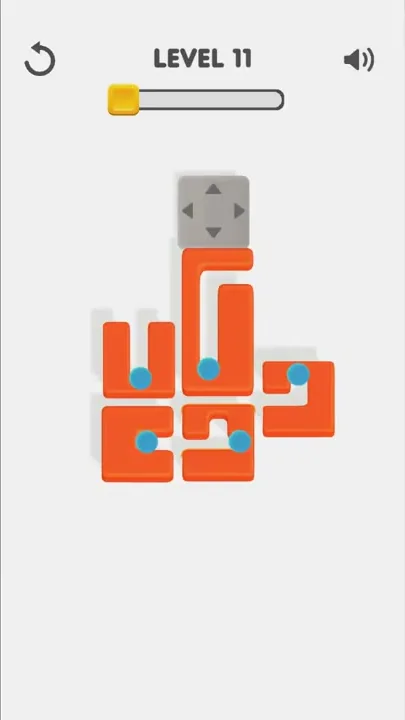
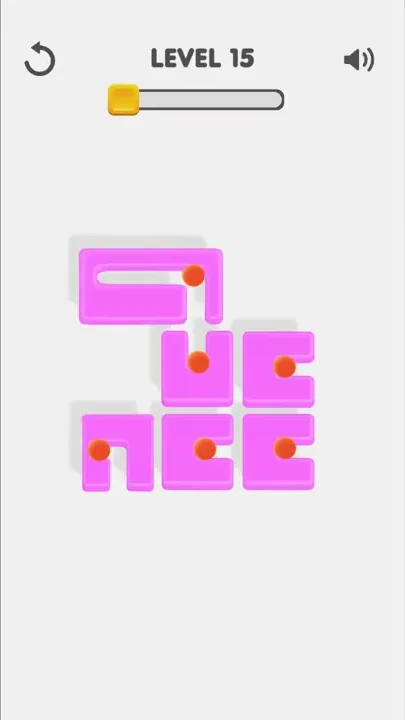
Longer tiles appear from Level 11 on: twice the usual length, cut with longer bent or hooked grooves. A tall one stands on every board after that except Level 15’s, and Levels 14 and 15 lay a wide one across the top of the cluster. Like the small tiles, they change position while their balls stay put.
Five orange tiles with blue balls make up the opening board of Level 11. One of them, in the middle column, is two cells tall with a long hooked groove, and the arrow block sits directly on top of it. Soon three tiles remain and “COMBO X2” shows. By “COMBO X4” only the tall tile is left, lower than at the start with its ball in the same spot on screen, and the arrow block has come down with it, still resting on top.
Clusters grow, then double-length tiles arrive
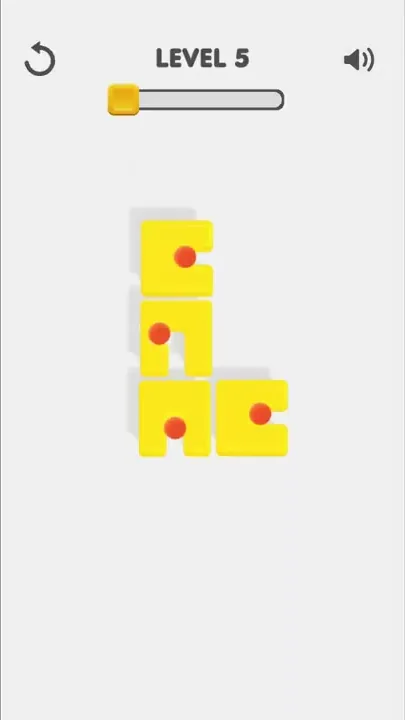
The early boards stay small, and every new level switches the tile color. The pink cluster at the start of Level 3 has four single-cell tiles and the purple one in Level 4 has three. The yellow cluster that opens Level 5 has four, set out as an L: a column of three with one more beside the bottom.
The clusters then fill out. A packed block of blue tiles in three rows opens Level 9, with one at the top right, three across the middle and two along the bottom.
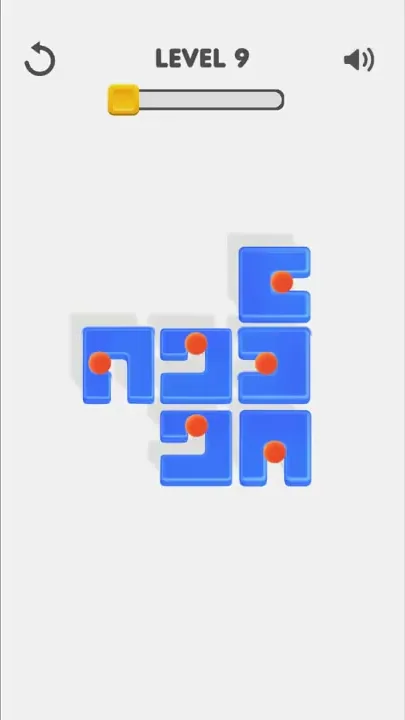
Gray blocks become part of the layouts as well. After its debut in Level 3, the arrow block returns in Level 8 and again in Levels 11 and 13, while plain blocks arrive in Level 7, with two on the board in Level 10. Both kinds share the board in Level 13: the arrow block over a column of yellow tiles on the right, the plain block at the bottom left.
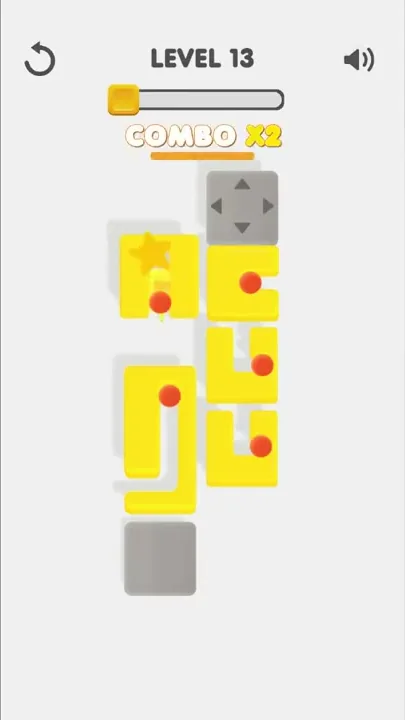
Double-length pieces then reshape the clusters, tall ones first and wide ones after. Early in Level 16, a column of three blue tiles stands on a tall one at the right, with a single tile to its left under a plain gray block. The wide pink tile across the top of Level 15 sits over two tiles in the middle row and three along the bottom.
Around the board, the interface stays bare. The progress bar under the level number has a yellow square marker that starts at the left end and moves right as tiles clear, with yellow rays flashing around it at times. A circular-arrow icon at the top left and a second icon at the top right sit on every level screen, and neither one is pressed on any of these boards.
After Level 9, the board dims behind “CONGRATS!” and a spray of gold stars, with “TAP TO CONTINUE” lower down and the progress bar full. That screen carries no reward and no offer, only the message. No coin or gem counter, shop, booster bar, lives display or ad appears on the level screens either.

The groove as a second lock
The groove cut into each tile is the part we liked. A standard pin puzzle turns on one question, which piece is in the way of which, but here every piece also has its own shape to work around, and that takes the puzzle from one dimension into several. It’s a small innovation, and a very interesting one. The wide tile in Level 14 shows the idea in a single piece, ending up both left of and above where it started while its ball stays fixed.
That makes the grooved tile an approach the rest of the pin-puzzle field could learn from, and a pretty fun one at that. Even a three-tile board carries it: Level 4 holds nothing but three purple tiles on a light-gray board, and the new layer sits in how each groove is cut.
Underneath is the interlocking pin-puzzle play that has caught on lately, the chain where each piece holds up the next. The tiles come packed edge to edge, like the three-row block that opens Level 9, and leave the board one at a time.
Fail states and shops that never appeared
There are no complaints to report about Screws Puzzle. None of these levels ended in a failure, so what happens when a board goes wrong is something we can’t describe. No text on screen explains what the arrow block or the plain block is for, or what the combo count leads to. The absence of any shop or ad also applies only to the boards in this stretch.
Reading grooves on a bare board
The work here is studying shapes. Each board is a one-color cluster of tiles, every one holding a ball in its groove, sometimes with a gray block or two nearby, and the job is clearing those tiles one by one until none are left. Anyone who enjoys freeing interlocked pieces in a pin puzzle meets the same chain here, with a groove to study inside every tile.
The screen itself is spare, which matches a taste for puzzles with nothing to look at but the board. Nothing around the tiles asks for coins, and no level timer appears.
Verdict
Screws Puzzle takes the interlocking chain of a pin puzzle and cuts a second lock into each piece, so the puzzle works in more than one dimension. That change is a small fresh idea on a popular formula, a very interesting one, and an approach the genre can learn from.