5 Mobile Game Monetization Tricks That Play on Human Nature
Why Coin Master's $14.99 middle bundle is the one you're meant to buy, plus four more mobile game monetization tricks built on human nature.
In this article5 sections
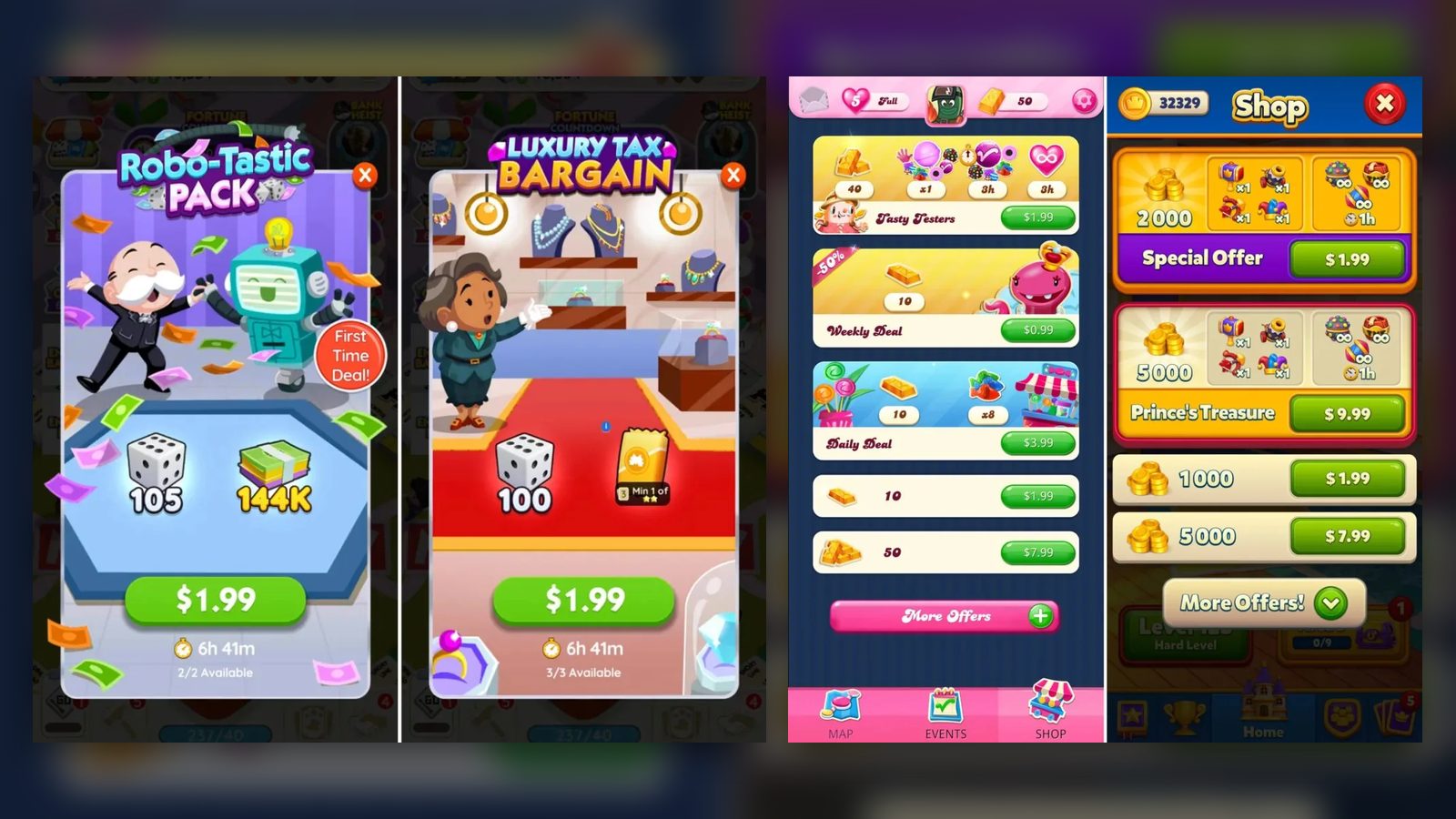
Cultures differ from one country to the next, but human nature is the same everywhere, and the games on your phone are built around that fact. A game that wants to do well has to understand people. That matters most in mobile game monetization, the part of mobile game design that brings in the money, which at heart works no differently from the sales and special offers in any ordinary store. Here are five monetization features that play on human nature and work very well in games played around the world.
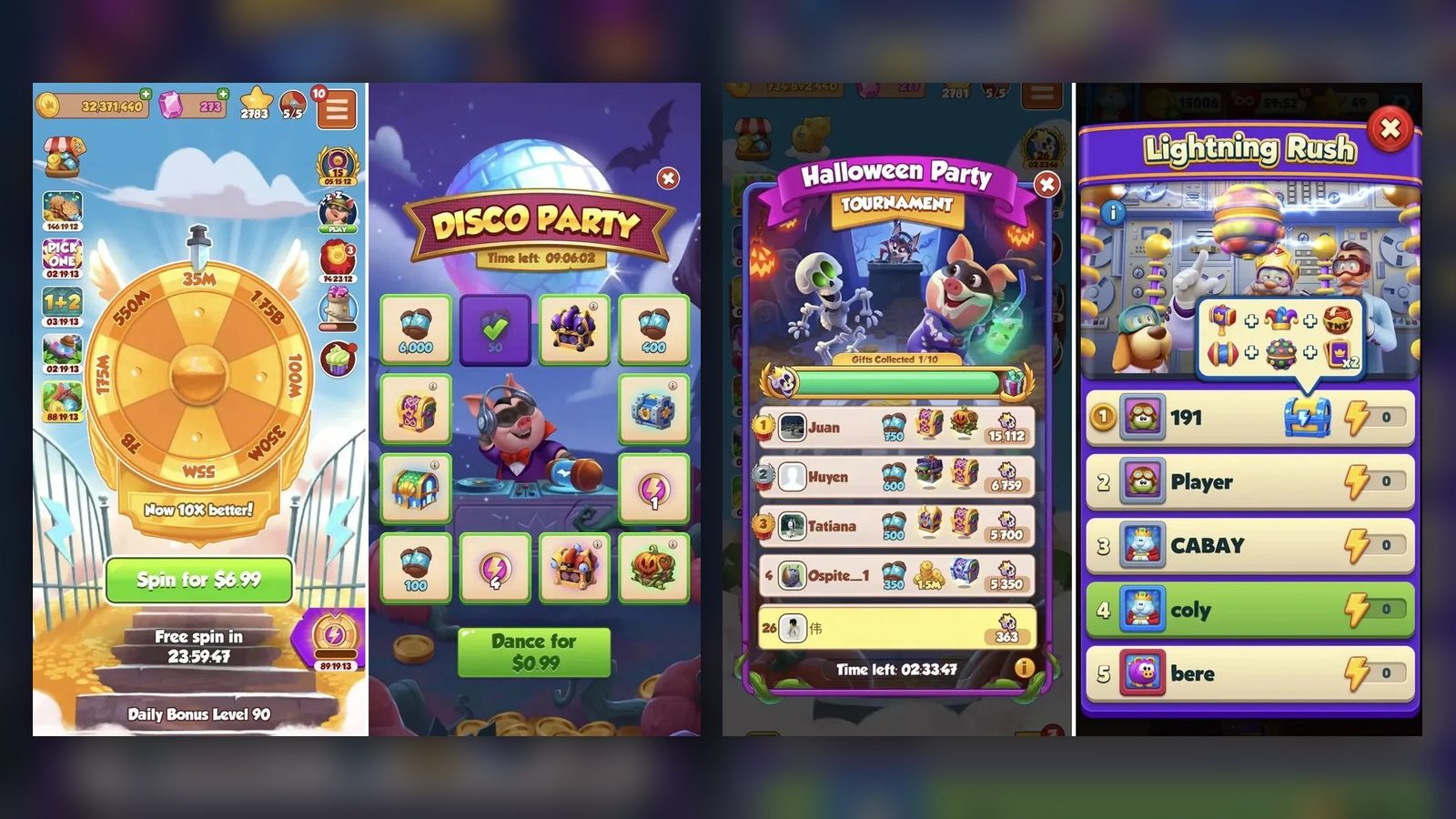
The paid prize wheel: betting small to win big
This feature comes from Bingo Blitz and has two parts:
- A free wheel. The prizes on it are small, and players get one free spin a day.
- A paid wheel. Spins start at $0.99, and the prizes are far bigger than on the free wheel. Most important of all, it has a jackpot. Players can buy as many spins as they like, but each purchase raises the price and the prizes together by one step.
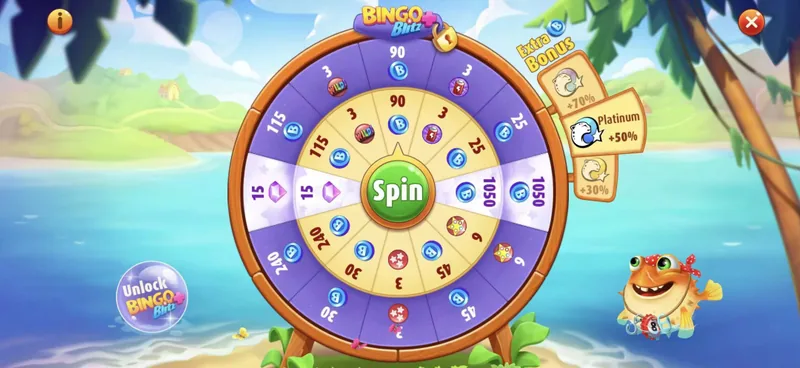
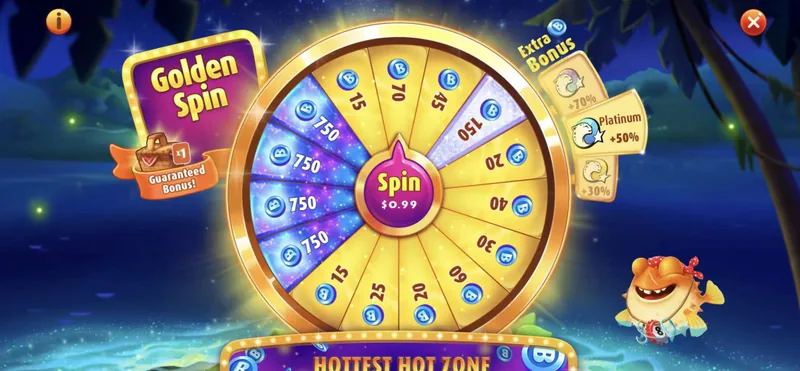
This feature makes full use of the urge to risk a little in the hope of winning a lot. Everyone would like something for nothing, and everyone dreams of getting rich overnight; people only differ in how strongly they feel it.
Besides Bingo Blitz, Coin Master, the slot-machine village builder, and a number of other games have the same kind of feature.
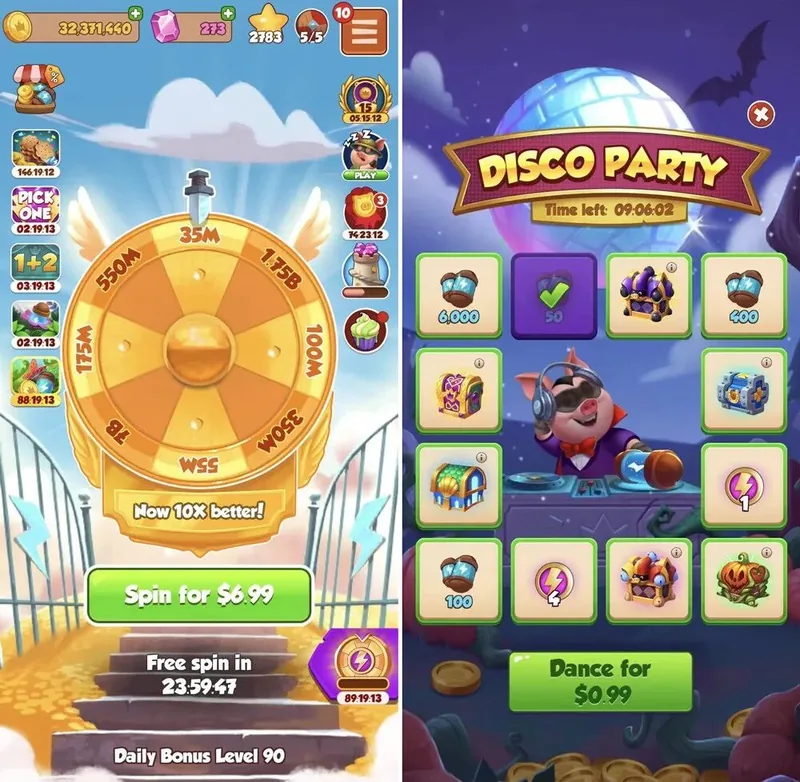
What it achieves:
- Most of the money comes from a small group of players making in-app purchases again and again. In other words, the ones paying are mostly people with a strong urge to bet small and win big.
- The numbers have to be tuned so that, every so often, a player lands a big prize worth more than they paid, which keeps them paying. Otherwise, after a few purchases without a jackpot, they give up and stop playing.
Tower of Fortune: greed and pushing your luck
One example is the Tower of Fortune in Angry Birds 2.
Here is how it works:
- Players start climbing from the first floor, and the higher they go, the better the rewards.
- Each floor offers four options. One of them works like a bomb: picking it ends the run in failure. The other three are rewards, and picking one lets the player keep climbing. That means every floor carries a 25% chance of failure.
- After a failure, players can give up and lose every reward collected so far, or spend in-game currency to revive and keep going.
- Players can also walk away on any floor and keep everything they have collected up to that point.
- Certain floors hold a super jackpot to lure players higher. In one run, for instance, the super jackpot sat on the 30th floor.
The feature works squarely on a gambler’s mindset. Players want to keep going and win more, they are afraid of losing, and yet they can’t bring themselves to take the winnings and walk away right then. It is the same train of thought as sitting at a gambling table. Beyond Angry Birds 2, plenty of other casual games use this kind of feature heavily, repackaged to suit each game’s audience and style.
What it does for the game:
- It burns through players’ currency fast. It’s best not to use the game’s main currency for it, though, since that gives the main currency too many places to be spent and puts more strain on players.
- It does a lot to keep players active (it can be played once a day).
- It also works as a place to hand out in-game items.
Pick one of three: comparing prices to avoid a bad deal
Coin Master sells its bundles this way.
The offer is set up like this:
- There are three bundles, low, middle and high, shown side by side, and players can buy any one of them.
- The higher the price, the better the value. $9.99 buys 800 spins, $14.99 doubles that to 1,600, and $19.99 triples the $9.99 amount to 2,400.
- The top tier is the best value, but its price is on the high side.
- The real goal of the whole setup is to get players to buy the middle bundle at $14.99. The cheap one and the expensive one are there mainly as points of comparison, to make the middle one look good. A few players with deep pockets will buy the top tier outright, and those sales beat expectations. Most paying players will find the top tier too expensive and the bottom tier poor value, and decide the middle one is the better deal. Real-world stores use the same trick all the time.
The endless offer: the pull of a freebie
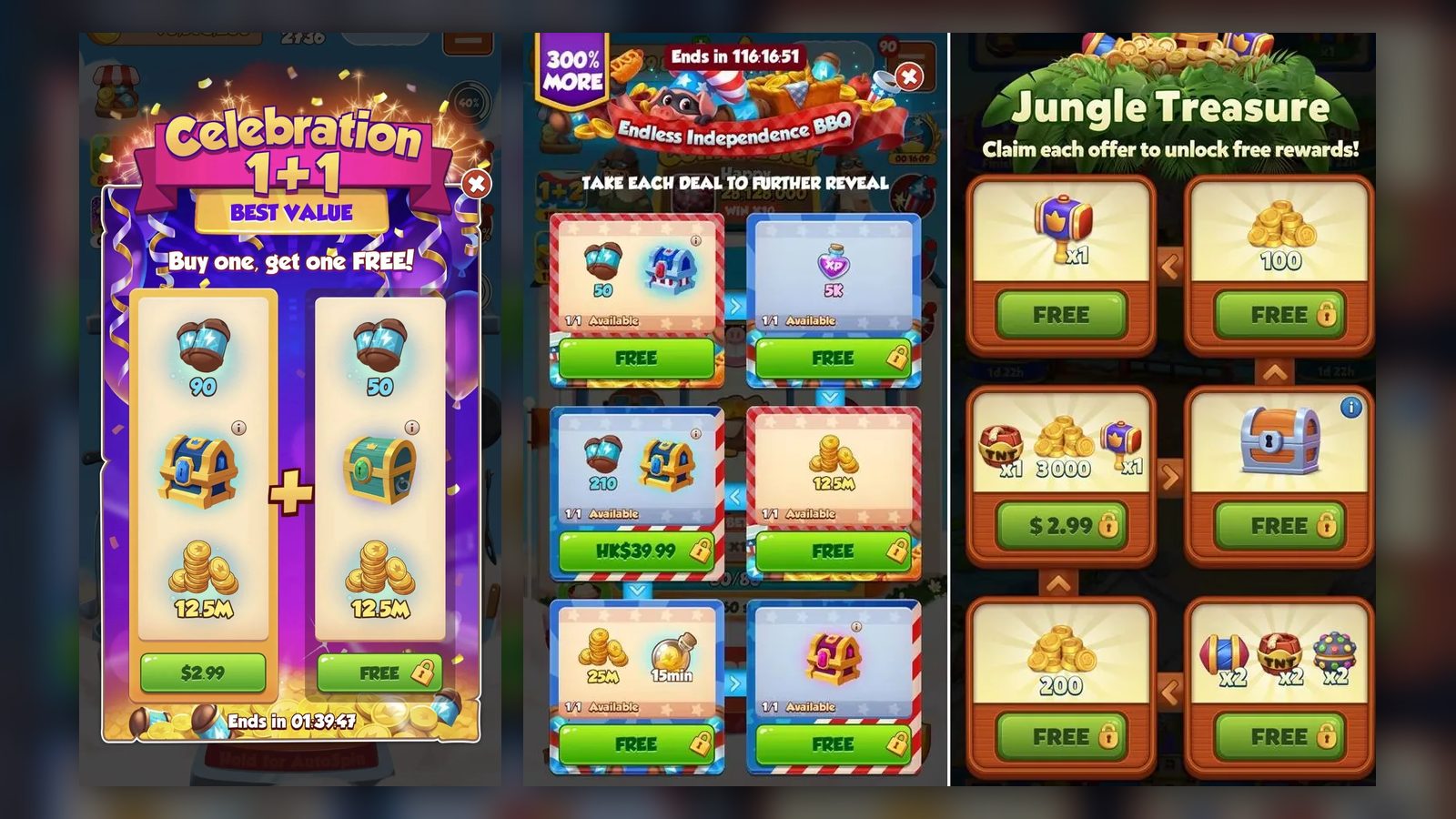
Coin Master and Royal Match, the king-themed match-3 hit, both use this kind of offer.
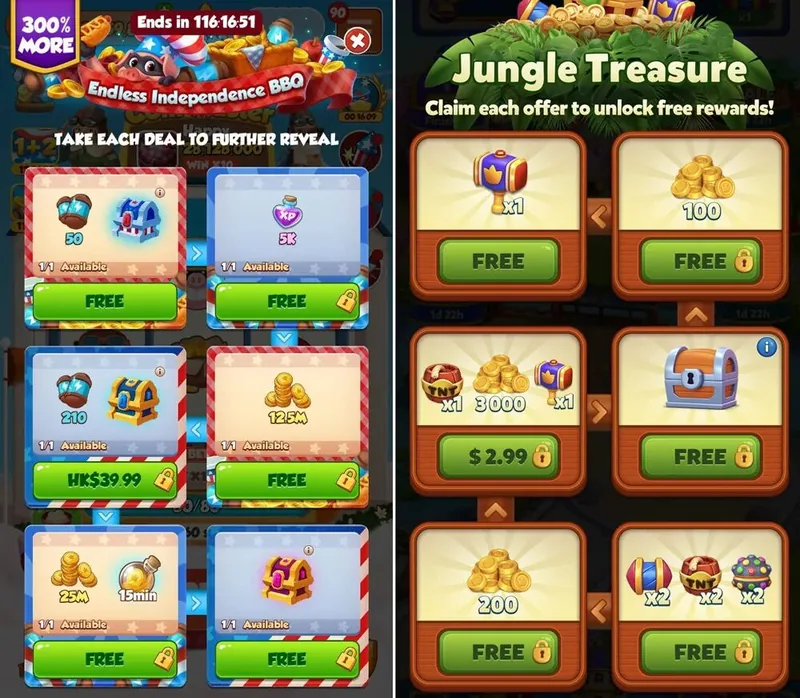
Its key features:
- The rewards can only be claimed in order: players have to claim one before they can claim the next.
- At the start, players can claim a large batch of free rewards.
- After paying once, players can claim another large batch of free rewards.
What sets this offer apart from the others is that a single payment unlocks a whole run of free rewards, which makes full use of players’ love of getting a bargain (the free part). It works very well in practice: the share of players who buy it is usually more than twice that of other offers, though the average amount each paying player spends is a bit lower.
Leaderboards: vanity and keeping up with others
Coin Master and Royal Match both run leaderboard events.
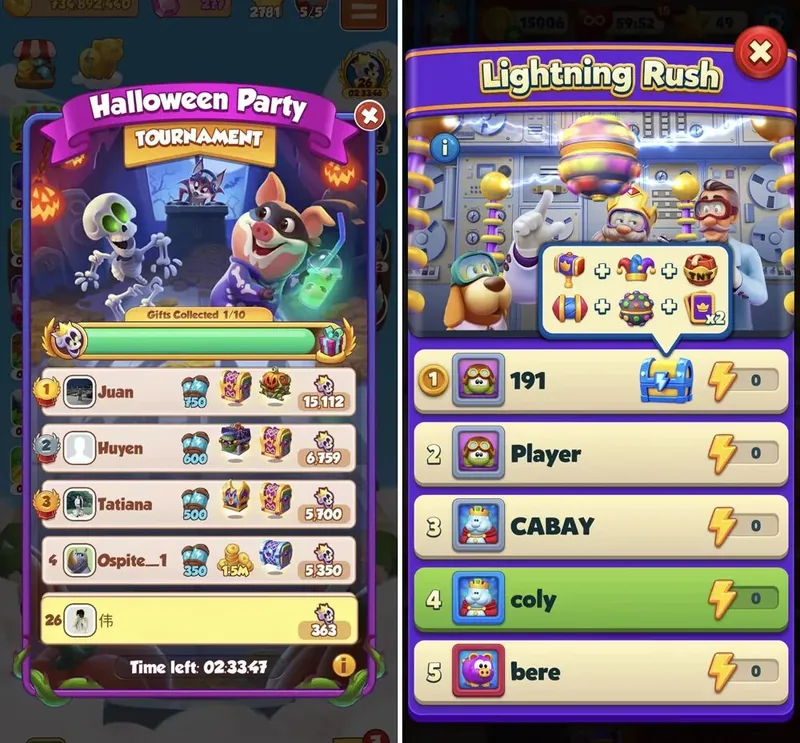
These leaderboards are short-lived: when one expires, it resets and starts again. They have two goals:
- They feed players’ vanity and push them to climb the rankings.
- They draw players in with rewards for placing high.
On top of these, Royal Match also has an overall leaderboard.
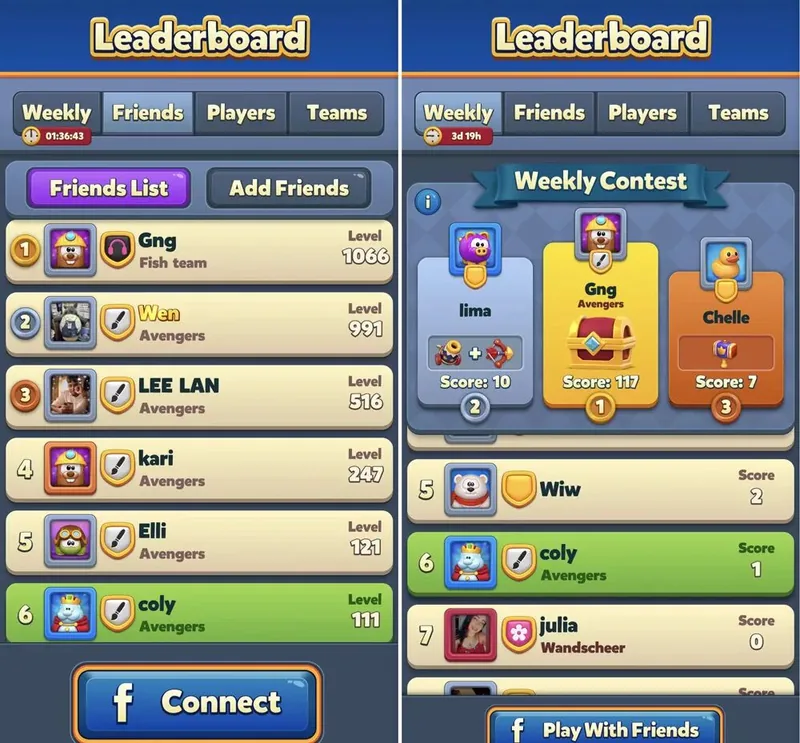
It is split into weekly, friends, world and country rankings, among others. These boards never expire. Their main job is to tap players’ urge to keep up with others and get them to play more.
For a closer look at leaderboard systems, see our earlier article: Why every casual game needs a leaderboard, especially a head-to-head one.
The feature doesn’t earn money directly, but it gets players playing more and spending more of their in-game currency. Over time it helps sales a great deal, because currency spent is almost the same as money earned.
Those are five monetization designs from games around the world that work on human psychology. Each comes at it from a different angle, and each has its own strengths.