5 Must-Have Mobile Game Monetization Modules and Design Tips
How passes, piggy banks, coupons, first-purchase packs and endless offers work in mobile game monetization, and how to design each one.
In this article5 sections
Games made for global markets share a handful of mobile game monetization modules that work well and are widely used. They do a lot to raise revenue, and even retention. Below we go through them one at a time.
Battle Pass
More than 50% of the games on the US top-grossing chart now have a pass. The version used today came from Fortnite’s designers, who in 2017 reworked the battle pass from Dota 2 and built a two-track structure, with a free track and a paid track running side by side. Here’s a typical layout:
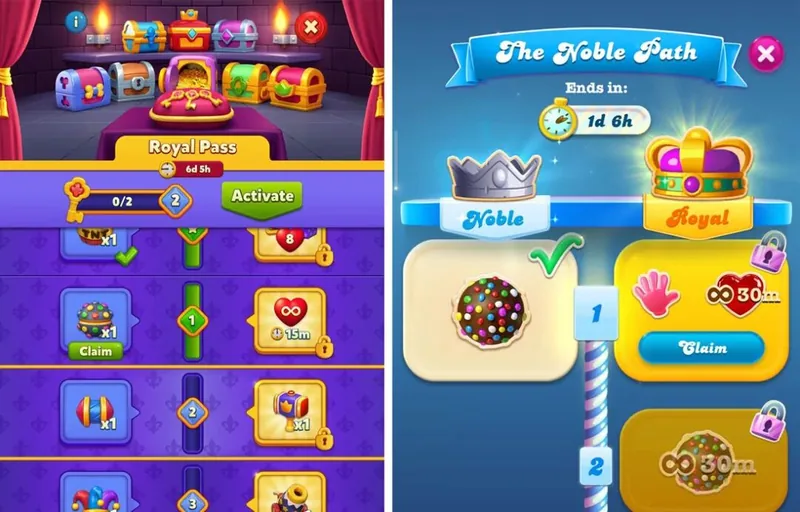
How it works:
- Players earn points by completing tasks or playing the core gameplay, and those points move the pass forward.
- At set milestones, every player can claim the rewards on the free track, but the paid-track rewards (which offer very good value) are only available to players who pay.
- Passes usually run in cycles, and there are three common lengths: one week, two weeks or one month.
Why passes are so popular:
- The way a pass combines points, a progress bar and rewards drives engagement among retained players and sets milestone goals, which can raise long-term retention.
- A pass is a discount in itself. Through the pass, players get 10–20 times the rewards, which works out to roughly 90% off.
- Infrequent payers usually only buy the pass each month. For frequent payers, the pass is a baseline purchase that doesn’t cut into what they spend on other IAPs.
Design tips for passes:
- The recommended cycle is one month. If the game moves at a fast pace, consider running several passes, such as a weekly pass and a monthly pass.
- Pass rewards have to meet expectations. Use the 10–20x figure above as a guide. If the rewards are too poor to be attractive, players lose motivation and paying players come away unhappy.
- Progress through the pass has to be paced to fit the cycle. Take a one-month pass: if nothing in the mechanic holds players back and highly active players fill the progress bar in about 15 days, they lose their reason to play for the second half of the month and turn into low-activity players.
- Games with few in-game items shouldn’t add a pass: there are only so many rewards to hand out, so the pass looks thin and unappealing.
- A monthly pass should cost $9.99 or $19.99. The right price depends on the rewards. You can also offer passes at both prices and let players choose. Shorter passes, such as weekly ones, should be priced down in proportion.
- Keep free-track rewards under tight control, and make sure paid-track rewards don’t clash with other paid modules.
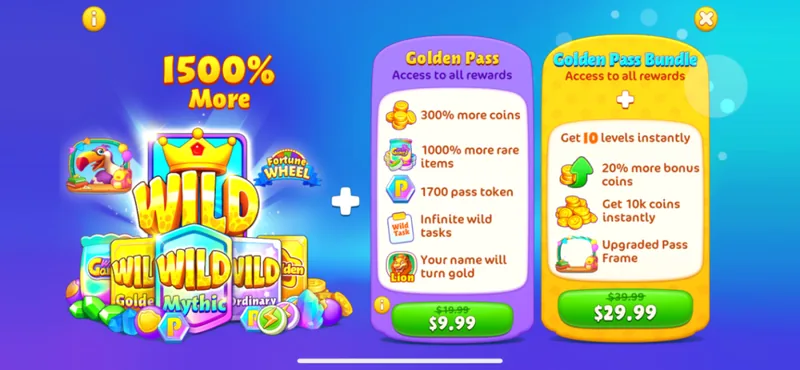
Variations on the pass:
1. A purely free progress bar that runs for a short time, used to lengthen active play time.
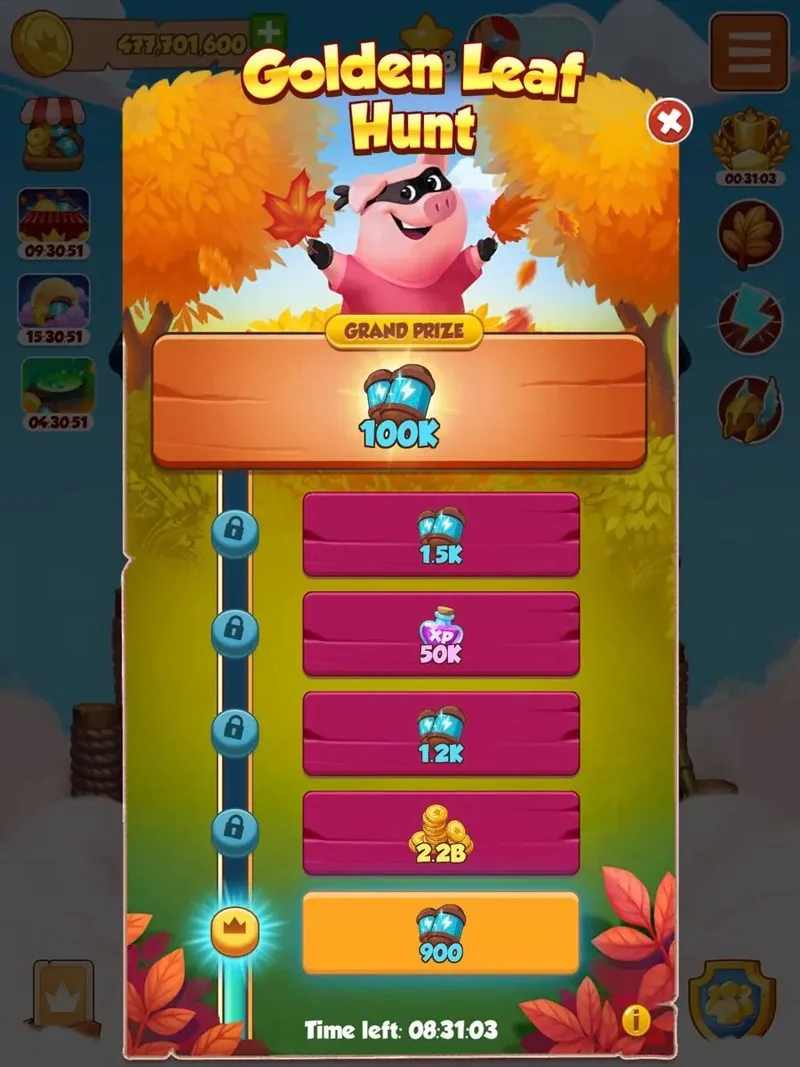
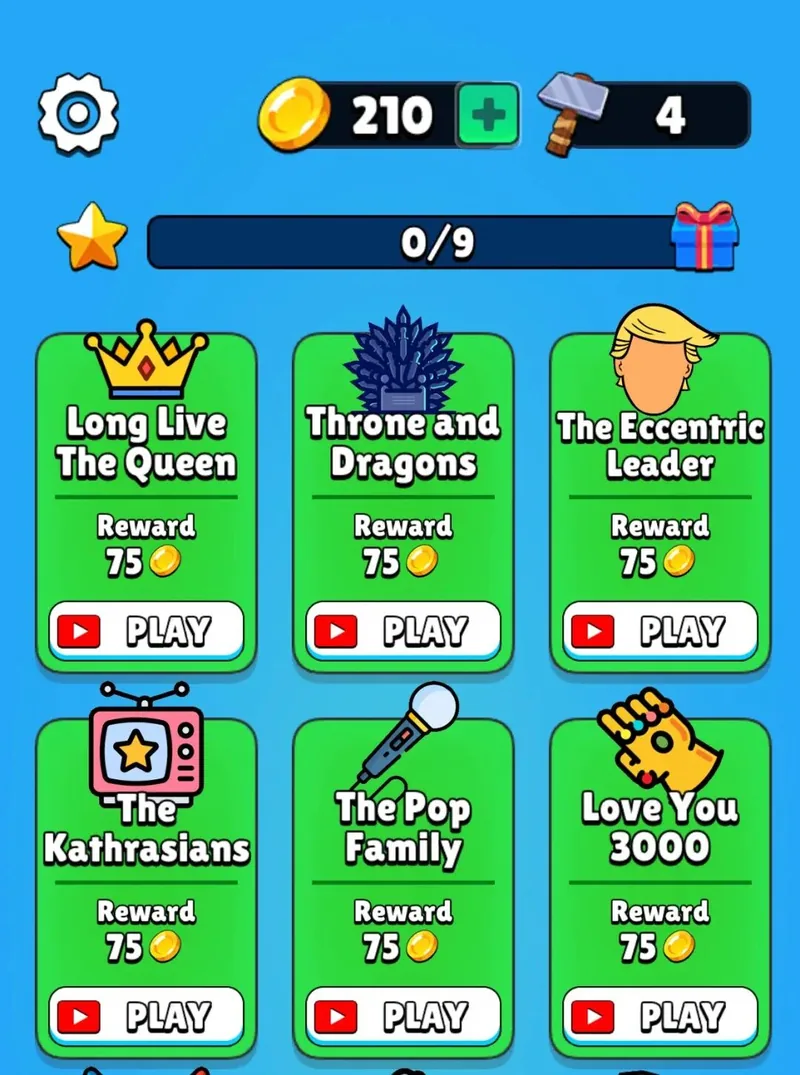
2. The ad pass, mainly for games without IAP: players watch rewarded ads to move it forward.
Piggy Bank
Here’s an example:
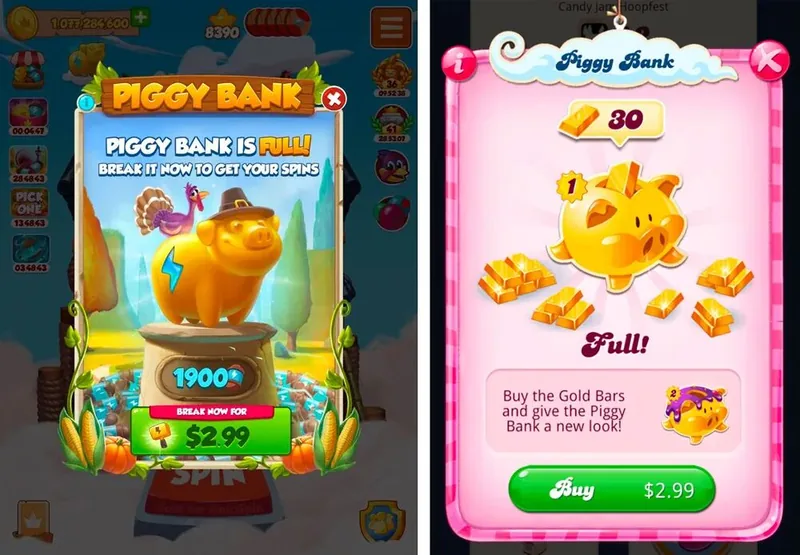
How it works:
- It starts out empty, with very small rewards.
- As the player keeps playing, the bank fills up. Once it’s full, the reward becomes very tempting and offers great value.
- Players can pay to break the bank and collect what’s inside. The bank then resets to empty and starts filling again.
In games for global markets, the piggy bank is the best ice-breaker purchase there is.
Design tips for the piggy bank:
- For new players, price it at $2.99 or $3.99; avoid going much higher or lower.
- After repeat purchases, raise the price and the rewards together to push up ARPPU. For example, after a player buys the $2.99 bank three times, the price moves to $4.99, with a matching increase in rewards.
- Once the bank is full, remind the player again and again.
Coupons
It looks like this:
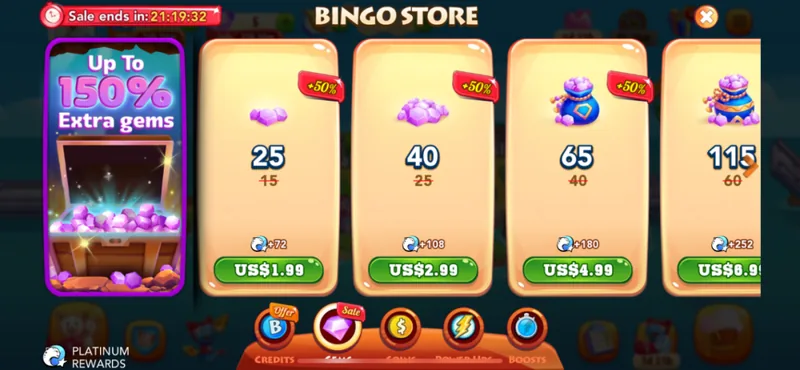
How it works:
- Coupons are mainly used in the shop. A coupon works like a discount voucher for the shop, except it doesn’t lower prices: it raises the rewards of every IAP by a set percentage. A “50% more” coupon, for example, gives 50% extra rewards.
- Coupons can be opened to all players to promote big events such as Christmas or New Year.
- Coupons can also go to selected players through in-game mail or other systems. This mainly relies on the game’s payer segmentation system: each player gets a time-limited coupon that suits them, to nudge them into spending more.
Design tips for coupons:
- Keep a tight grip on how often coupons go out and how deep the discounts are. If they go out too often or the discounts are too large, spending may seem to rise in the short term, but players get used to it. From then on, the discounts have to keep getting deeper to sell anything, and in the end the game’s economy collapses.
- Coupons suit games where the shop is positioned as the place for big purchases. If the shop only serves as a price reference and offers are the main thing players buy, we don’t recommend adding coupons.
First-Purchase Offer
An example:
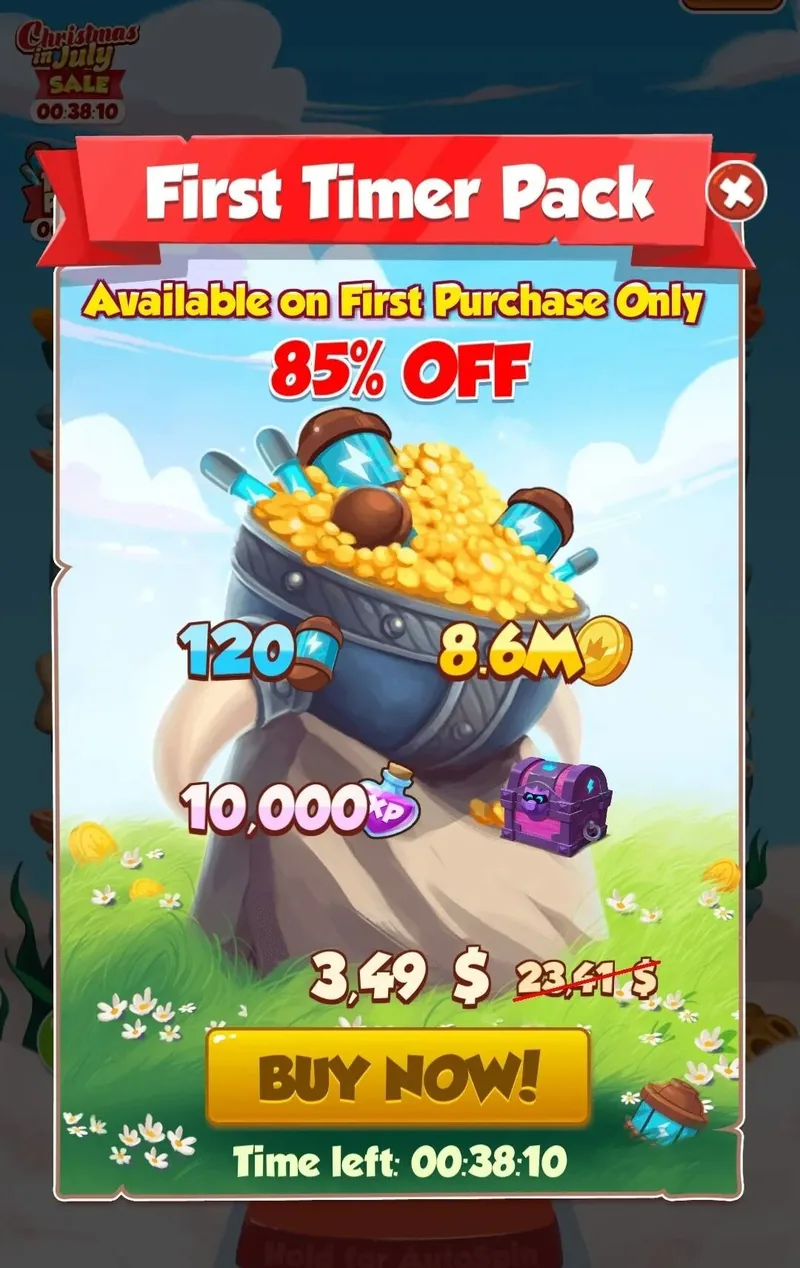
How it works:
First-purchase offers are common in games in China as well. The idea is to give players who have never paid an offer with an especially big discount, usually worth at least 2–3 times the rewards of other offers.
Design tips for first-purchase offers:
- The suggested price is $0.99 or $1.99. A higher price would clash with other offers and dampen players’ willingness to pay. The offer’s main job is to turn players into paying users.
- One refinement: let every player buy the first-purchase offer once, and only once, regardless of other paid modules. A player who has bought the pass, for example, can still buy it. This fixes the problem of players losing access to the first-purchase offer because they bought some other offer first.
Endless Offer
Here’s how one looks:
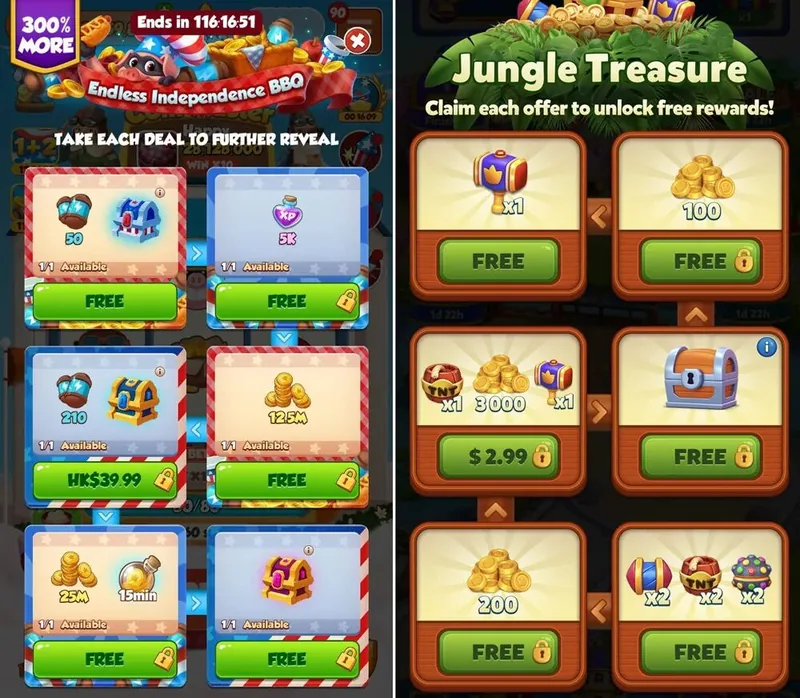
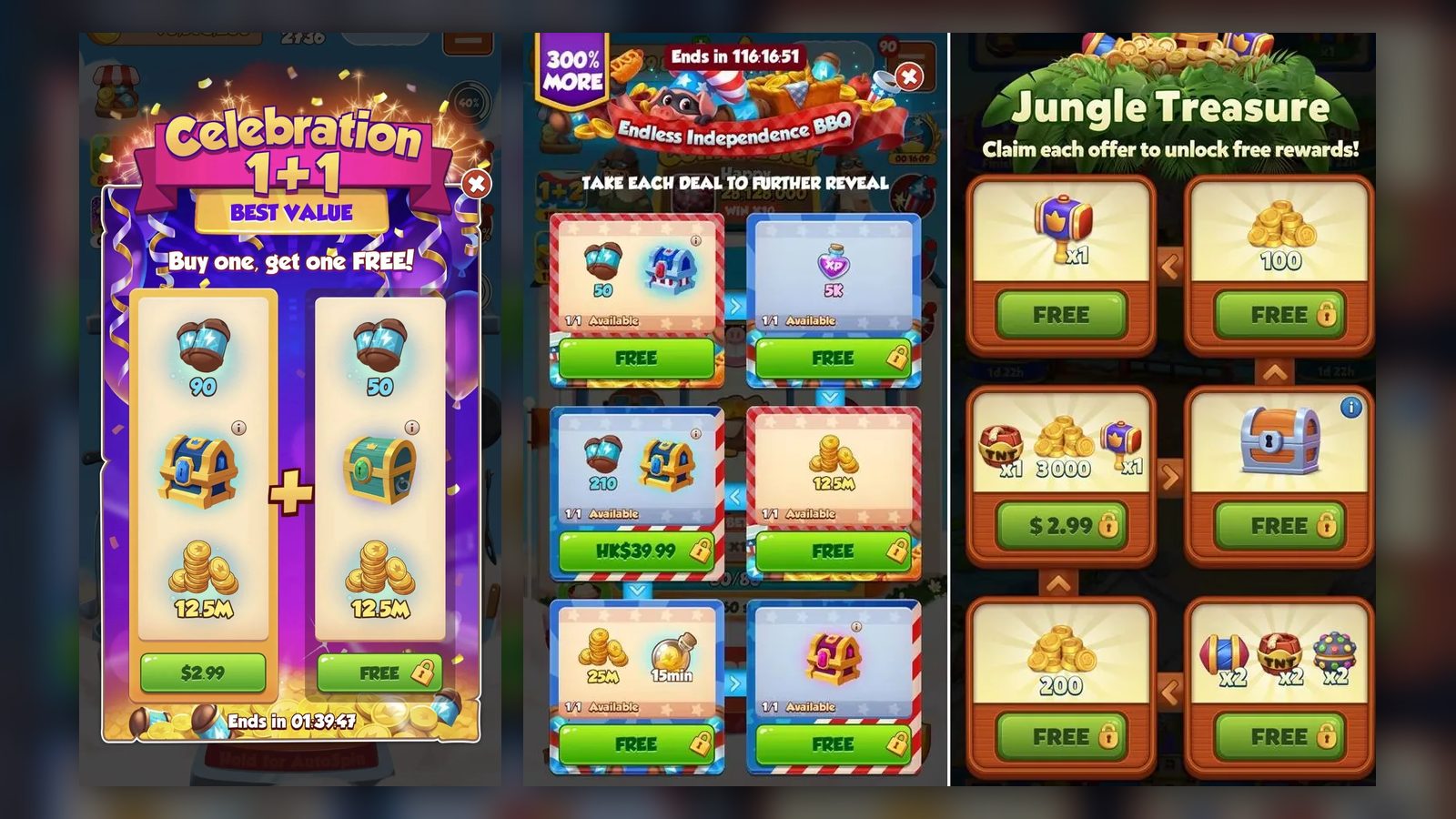
How it works:
- Its defining feature: rewards can only be claimed in order, and each one has to be claimed before the next becomes available.
- At the start, players can claim a large batch of free rewards.
- After paying once, the player can claim another large batch of free rewards.
- As the player keeps paying, prices step up: say $1.99 for the first purchase, $2.99 for the second and $3.99 for the third, and the player can keep buying indefinitely.
Design tips for the endless offer:
- At its core, this offer spreads out the rewards of a purchase and hands part of them to players as free rewards to claim, which makes them more eager to buy. When you set the actual numbers, though, simply splitting the rewards up isn’t enough. Add some extra rewards on top, or players lose interest after a few rounds.
- The more players buy, the better the deal. Because of how it’s built, this offer’s payer rate is double that of other offers. But since the starting price can’t be high, its ARPPU is somewhat lower than other offers’. So everything comes down to the economy tuning: value for money has to rise along with the price. Otherwise most players stay at the first price tier, and the actual ARPU may end up lower than other offers’.
- The free rewards at the start are open to every player, which adds one more source of currency to the economy. The economy math has to be worked out carefully, or the balance will spiral out of control.
Those are the five must-have monetization modules for games in global markets, along with tips for designing each one. In general, midcore and hardcore games include all of them, while lighter games should pick and choose based on what the game is like. More modules don’t make a game better; what counts is designing them around the game’s economy and its pacing.