Daily Login Rewards: 5 Tricks That Keep You Coming Back
How daily login rewards in games like Coin Master and Monopoly GO! use 7-day cycles and a big Day 30 prize to bring players back.
In this article5 sections
If a game greets you with a calendar of free gifts every time you open it, you’ve seen daily login rewards at work. In games built to be played for months, they are a basic feature with two main jobs: getting players to come back every day, and handing out a baseline of rewards so everyone gets at least some play time in. Login calendars go back to the era of PC online games and carried over to mobile, but mobile game design has to adjust them to how phone games work and how players play now, or much of the effect is lost. Here are five design tricks behind them.
Rewards shown in 7-day blocks
First, a classic daily login screen:
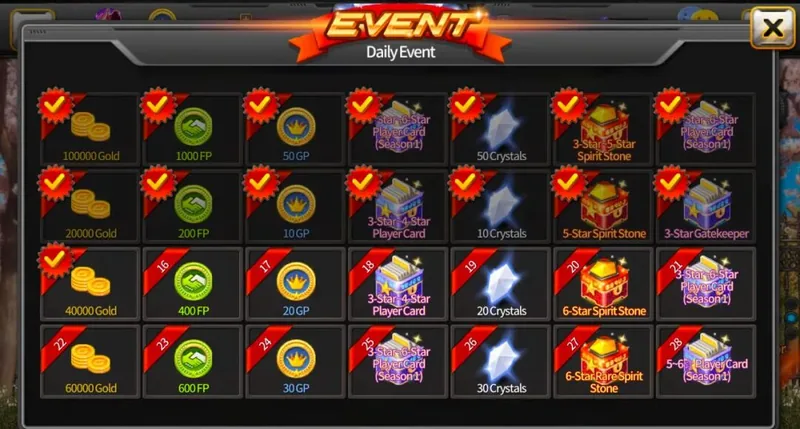
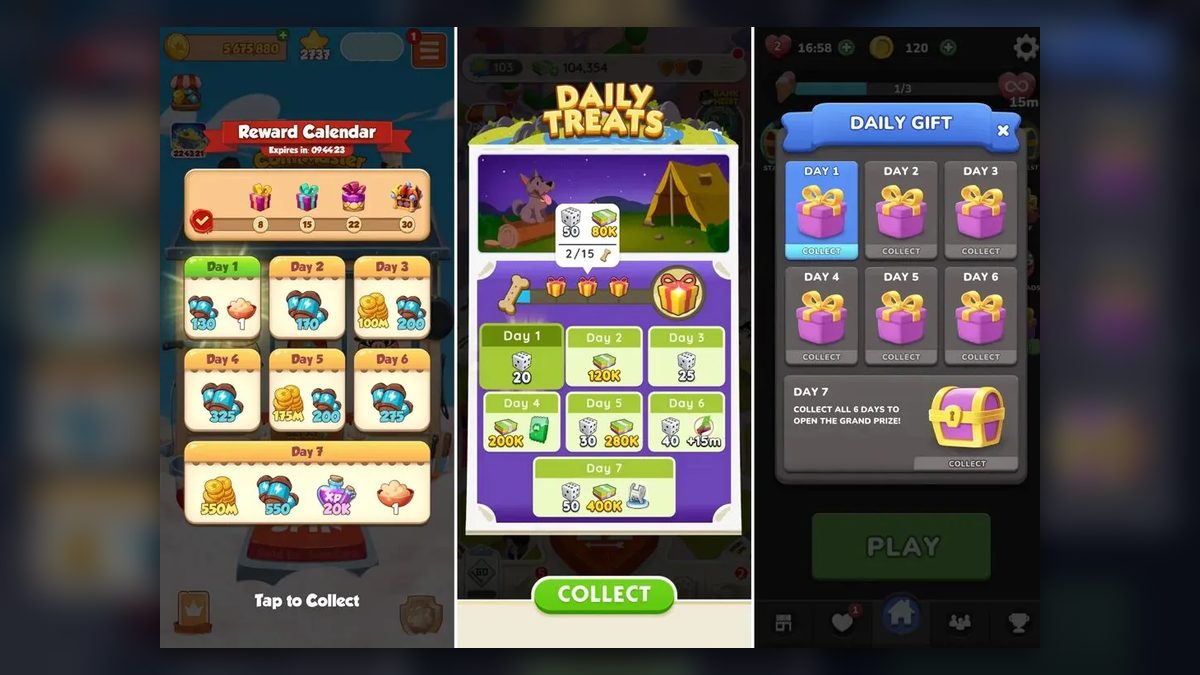
The classic screen works in blocks of 30, showing all 30 days of rewards at once. Now compare the login screens of the biggest mobile games:
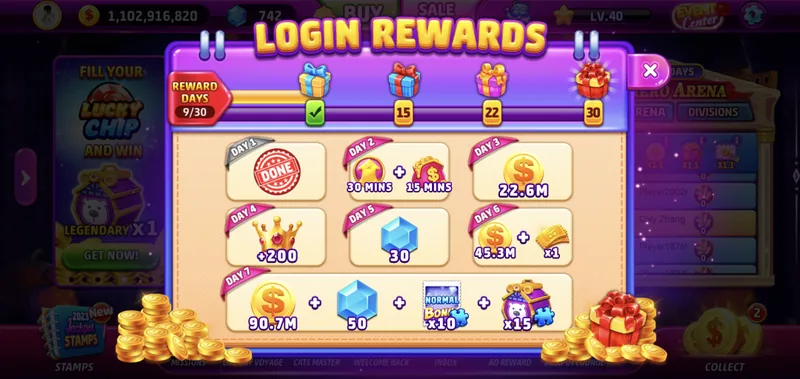
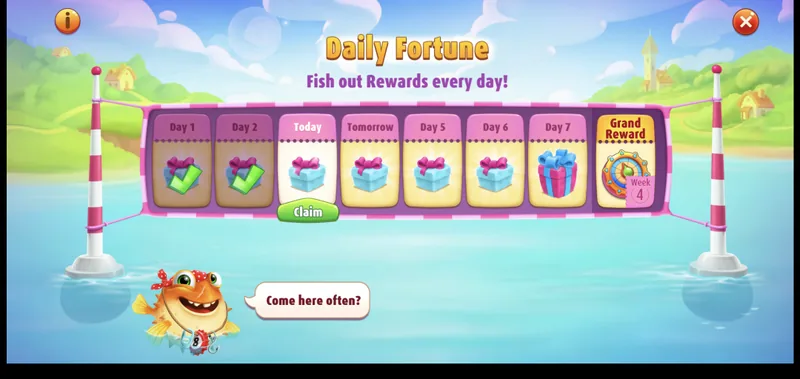
Comparing these screens, one thing is clear: the top games no longer show 30 days of rewards at once; they split them into 7-day blocks and show one block at a time. The main reason is that showing too many rewards at once looks cluttered, and the important ones get lost.
Making Day 7 the big day
Look closely at one of these 7-day blocks:
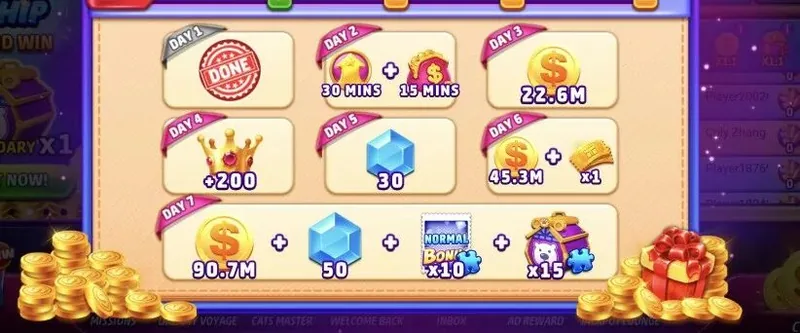
Two things are clear:
- In the layout, the Day 7 reward gets a large space, about as much as three ordinary days take up.
- In the rewards themselves, Day 7 is far better than any other day.
Now look at a few other games:
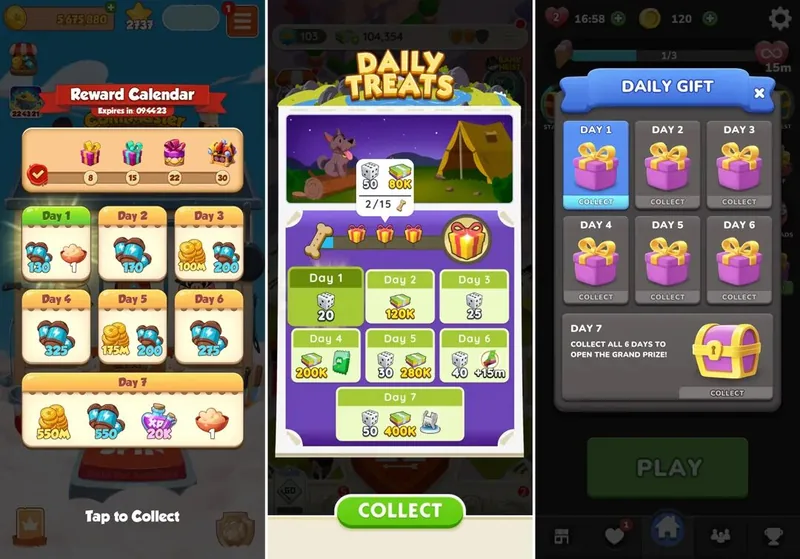
Casual games such as Coin Master (the slot-machine village builder) and Monopoly GO! (the dice-rolling board game hit) have independently landed on a similar design. There are two main reasons:
- A generous Day 7 reward pulls players into logging in every day for a week, which keeps up the number of players still playing after seven days.
- Cutting the required streak down to 7 days makes it easier for players to finish.
Rewards for total days, plus a grand prize
The two designs above mainly protect the first 7 days. So how does a game keep players checking in from Day 8 to Day 30 and avoid a sudden drop-off? Take a close look at the Coin Master login screen below:
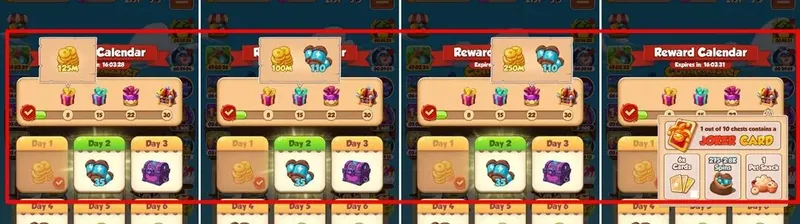
From this screen, we picked out a few key points:
- The rewards for Day 8, Day 15, Day 22 and Day 30 are shown ahead of time and highlighted.
- Day 30 holds a special grand prize to draw players in. Here the Day 30 reward is a wild card and pet food, both worth a lot, and they make quite a strong pull for players.
Total-day rewards don’t need a streak
Here is the same game’s login screen again:
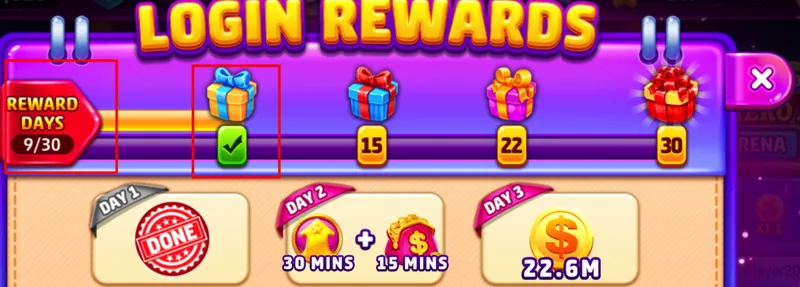
Notice that the screen asks the player to collect the Day 1 reward, yet in the progress bar at the top, the Day 8 reward has already been claimed, and the login counter next to it reads 9/30. In other words:
- Login rewards come in two parts: a 7-day streak reward and a reward for total days logged in.
- The 7-day daily rewards need a streak; miss a day and it starts over from Day 1.
- The total-day rewards don’t need a streak; they are handed out by the actual number of days a player has logged in.
Mobile and casual games are mainly about relaxing, so they can’t demand a 30-day streak the way traditional games did. This design is a compromise: players who log in on and off still get the total-day rewards, and players who keep the streak going get more.
The calendar pops up and pays out on its own
Right now, the top mobile games mostly handle the daily login like this:
- When players open the game, the daily login screen pops up on its own and prompts them to collect the reward. There is no button anywhere in the game for opening it.
- The login screen has no close button, and tapping anywhere collects the reward and closes it. Or it does have a close button, but tapping it collects the reward anyway.
The main point of this design is to make sure the daily rewards actually get collected. Whenever players have to open a screen and tap to claim something, a share of them never do. These are baseline rewards, so the goal is for every player to get them; if some players miss out, the design hasn’t done its job.
On the other hand, making players tap once, rather than collecting the reward fully automatically, comes down to psychology: a reward given for free has to be shown to the player, or it is as if it was never given.
Those are some of the design tricks behind daily login calendars.