Duolingo Gamification: The Game Tricks Behind Your Streak
How Duolingo gamification uses 30-player weekly leagues, monthly badges and an owl that gets more anxious by the hour to keep you coming back.
A streak you can’t bear to break, a weekly table of 30 rivals, an owl that looks more worried as midnight gets closer: Duolingo gamification borrows heavily from the games on your phone. Seeing how a language app puts those systems to work makes it easier to spot why the same ones keep you returning to the games you play.
More than two months of Duolingo lessons later, it’s hard to tell how much real progress they have produced. What is easy to tell is how the app’s carefully crafted experience and its many game-like systems and features took hold, turning us into one of those people who have to log in every day to keep the streak alive.
This was written right after another day’s Duolingo check-in was done.
The learning app everyone is talking about
Maybe you’ve seen a friend post a 365-day streak on their social feed, or scrolled past screenshot after screenshot of streak records on apps like RedNote. Duolingo set off a whole trend: posting daily check-ins, teaming up to split the cost of a premium membership, and showing off league ranks.
So why has Duolingo broken out so far beyond its own users, when other learning apps haven’t? How did a language-learning app (it covers all sorts of languages these days) become an internet trend, even a fashion? What did it get right?
This piece starts from Duolingo’s game-style design and the experience it gives users that other learning apps don’t. From there it takes a brief look at what the app learned from games, and what mobile game design can learn back from Duolingo.
Game mechanics and design inside Duolingo
1. A learning path laid out like a main quest
Duolingo’s main learning path runs down a vertical scrolling track and is organized from large to small: sections, units and lessons. Each section works like a world map, each unit like a chapter, and each lesson like a single level, set out one after another. Inside each lesson, users work through vocabulary, listening, speaking, word order, fill-in-the-blank and multiple-choice exercises, each one its own kind of level.
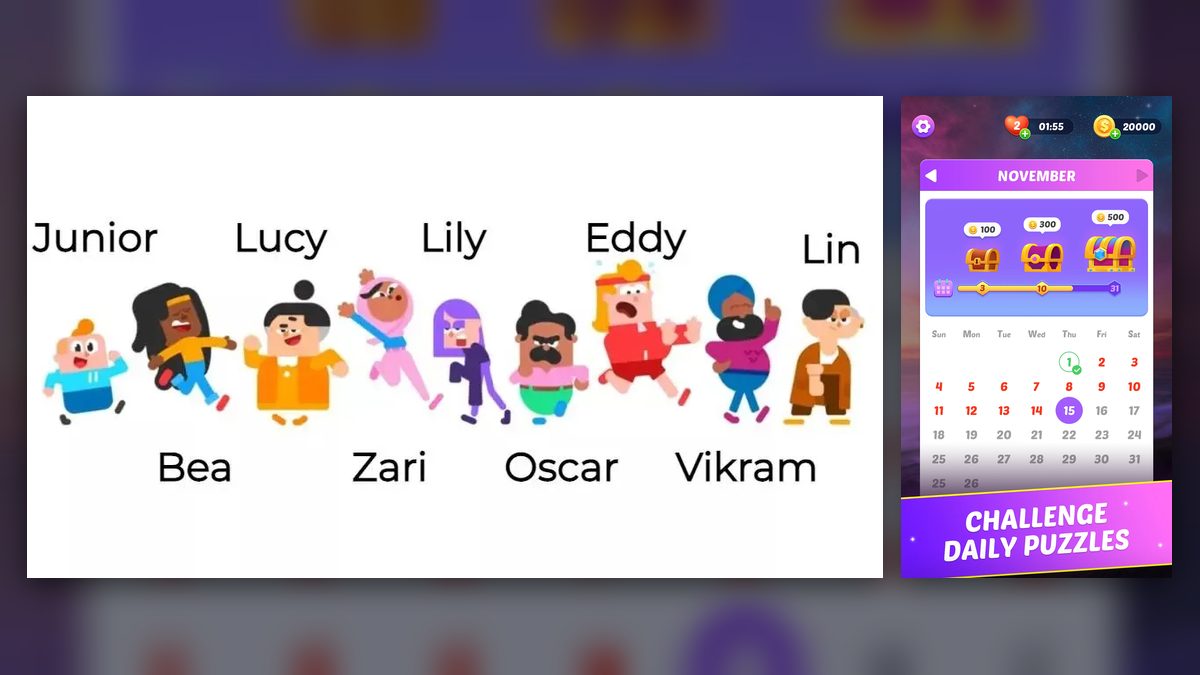
Diamond Diary, for one, lays out its levels on the same kind of scrolling map.
On this scrolling map, progress isn’t limited to the usual straight line of clearing one node after another. Users can also take a gold challenge on each lesson, three-star challenges within a unit and the Legendary challenge at the end of a unit. All of these reuse the map, sending players back into a unit’s lessons through different entry points and in different forms. It closely resembles the normal, hard and nightmare modes of many games’ main campaigns, along with all their replay modes, and it greatly increases how much play, challenge and sense of achievement the main path offers.
2. Daily Quests and monthly badges
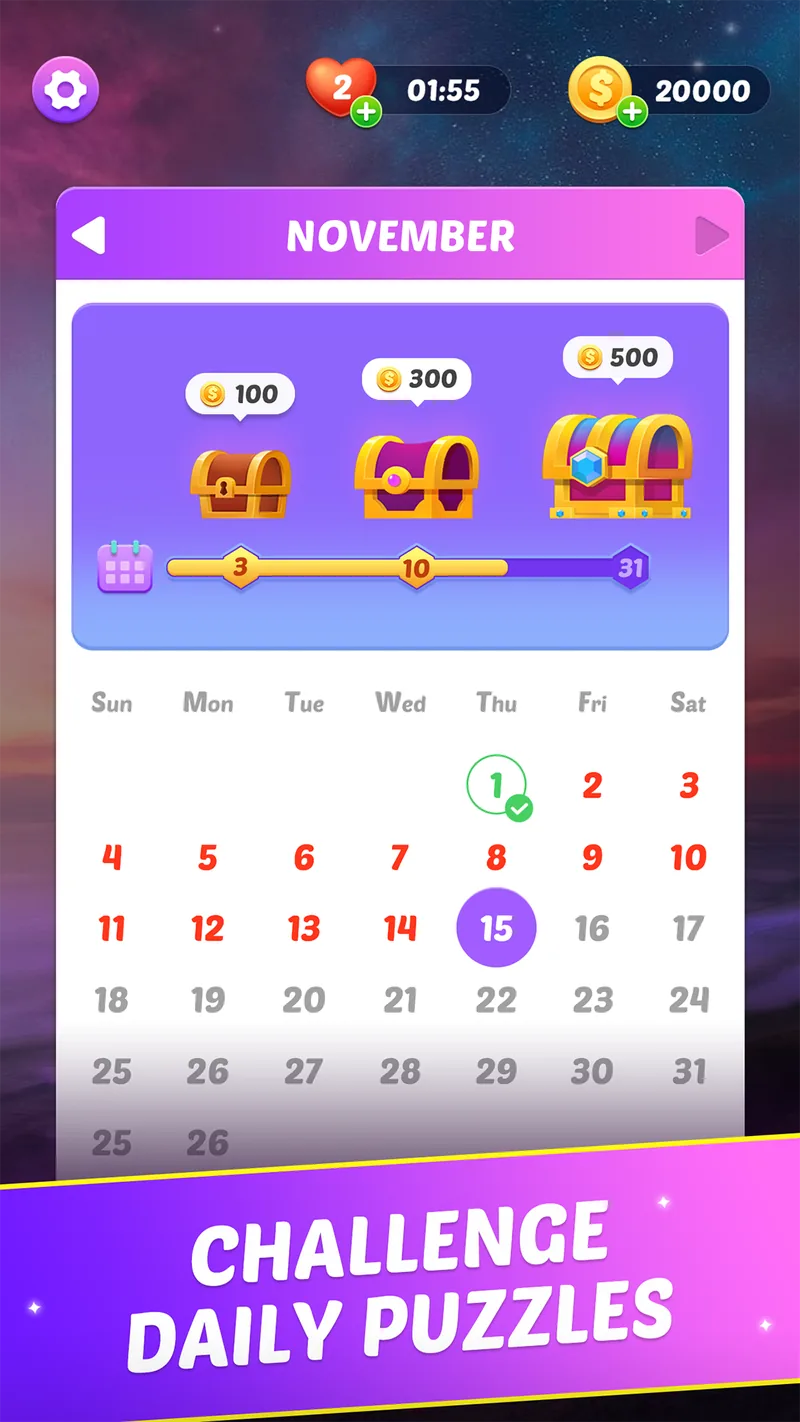
Alongside the main path, Duolingo runs Daily Quests: every day, players get three quests of different difficulty. Learning in any of Duolingo’s modes fills the matching quest’s progress, and finishing a quest earns a treasure chest. Each difficulty comes with a different chest.
Each finished quest also moves a badge tracker forward by one. Complete 30 quests in a month and you earn that month’s badge. Monthly badges are scarce and exclusive: once a month is over, its badge can never be claimed, so for anyone who loves collecting, they are a reward that can’t be missed. They also give users a mid- to long-term goal measured in months and, on top of the daily streak, one more reason to keep logging in and staying active.
3. The league leaderboard
What struck us most was Duolingo’s leaderboard system, which follows almost exactly the same rules as leaderboards in casual games. A new leaderboard opens every week and runs for seven days. During that time, users earn XP (from the main path, leaderboard events and other challenges), and the 30 people in the same league are ranked by how much XP they have. Those near the top move up to the next league, those near the bottom drop down, and those in the middle stay where they are.
Anyone familiar with league leaderboards knows their biggest strength: they create 29 visible “rivals” to go head-to-head with. You get opponents you can actually see, their progress changes in real time, and the back-and-forth chase gives you a strong sense of purpose and rivalry.
On top of that, as you keep getting promoted, you gradually meet a group of people at about your level and get pulled into a more exciting, fiercer and tenser pace of competition.
In Duolingo, the currency of that competition is XP, which really means time spent learning. With only about 15 minutes a day in the app for now, we can only hold on in the Emerald league. It’s easy to predict that in the higher leagues, users have to study 30 to 60 minutes a day, or even longer, just to avoid being relegated.
After the Duolingo leaderboard launched, total learning time among users rose 17%, and the number of highly engaged learners (active more than five hours a week) tripled.
Duolingo wraps learning in a game system that adds competition, and the point of that competition is to keep you learning longer. That has to count as one of the good cases of a product borrowing from games.
There are plenty of other game-like touches too, such as limited-time double XP potions, revive items, timer boosts and dynamic difficulty, too many to go through one by one here.
Taking stock
Duolingo’s design borrows from a wide range of game systems and features at every level. Between the sense of purpose, achievement and competition they create, this learning app ends up with an extremely strong “playability” and an “addictive” pull. Those game-heavy designs also powered Duolingo’s leap forward in 2023 and the huge growth in its results.
By the figures, in the third quarter of 2023 alone Duolingo’s revenue ranked third in its industry and grew strongly over the same period of fiscal 2022, while its monthly active users passed 80 million, up 47% year on year.
Game design deserves a large share of the credit for Duolingo’s success.
What can game designers learn from Duolingo?
In Duolingo, many classic designs that game designers have long relied on get a second life. They come into their own there and finally show what they are capable of. Plenty of game designers have probably built these very features, so why don’t their versions stick in the mind the way Duolingo’s do? Maybe it’s time to take a fresh look at them.
1. Notifications that are effective and fresh
If you’ve used Duolingo’s home-screen widget, you know exactly what this is about. Among all the games and apps we’ve tried, Duolingo’s notification and push system is the most effective, original and truly useful feature so far.
If you haven’t shown up yet today, the owl in the widget keeps reminding you, all day long, that it’s time to study. As the clock gets closer to midnight, the reminder slowly changes color and picks up a red dot, and the owl’s face goes from relaxed and bored to more and more tense, until it turns downright menacing. That changing display, and the pressure it builds as it changes, pushes players to finish their daily session sooner and earlier.
The app shows this message: “Learners who turn on notifications and the widget are 60% more likely to keep coming back than other learners.”
Many of the push notifications and alerts in games we’ve worked on were purely functional, better than nothing, with little effort or imagination behind them. That’s also why we no longer turn on notifications for many games. A game whose notifications or widget were this much fun, and felt this vivid to players, would probably win a lot more affection.
2. A character brand that runs through everything
Here’s a detail that’s bigger than it sounds: each of Duolingo’s teaching characters has a look that matches their voice and tone. They each have their own personality and persona, and the way they speak in the example sentences fits that persona too, which goes a long way toward making each character feel alive.
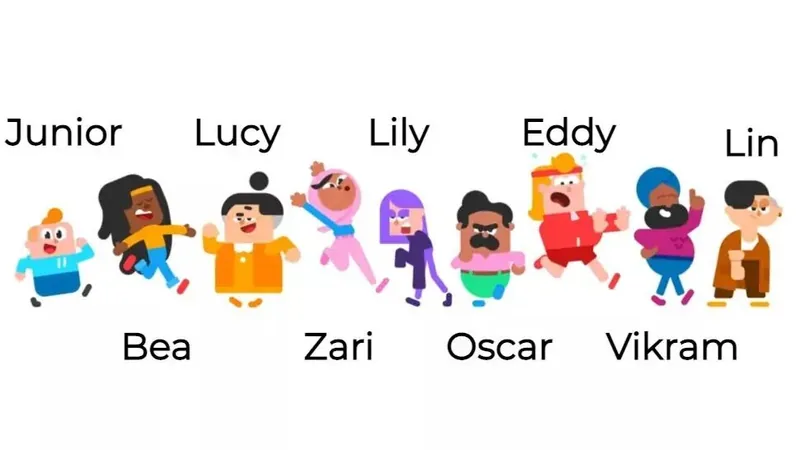
Because of this, users feel a deep attachment to the Duolingo characters, and they eagerly rank their favorites or make fan creations of them.
Among users in China, the favorite is Lily, nicknamed something like “Sassy Sis” by fans there: a purple-haired character with a cool, aloof image and a voice to match, lazy and unbothered.

So if a notification “comes from” her, the tone and wording of that push match her persona completely.
“It’s me, your Sassy Sis.” “Practice or don’t, whatever. I’m not interested in keeping an eye on you.” “Cheering you on is Duo’s job. I can’t be bothered!” Lines with that much attitude almost all come from her.
This is a valuable lesson for anyone writing notification copy and choosing its tone. Replace a neutral, objective, sometimes even cold voice with one that fits the game’s characters and setting. That makes the characters more memorable and more real to players, and it makes notifications far more fun and fresh. At the very least, whenever a Duolingo notification arrives these days, we take a moment to read what the character is “saying.”
3. Design things people want to share
As mentioned at the start, plenty of people post screenshots of their Duolingo streaks: a year, a few hundred days, sometimes even longer. In fact, most games have a login streak, and many use check-in rules much like Duolingo’s. So why don’t their players like showing off those streaks, or bragging about them to people outside that game’s community?
Our reading: the streak in Duolingo carries a different psychological value.
People treat their Duolingo check-ins as a record of learning every day and sticking with self-discipline, rather than a check-in that only shows you played a game and marks you as a core gamer.
Duolingo gives users an emotional outlet. The streak marks the passing of time, and the time that once slipped away doing who knows what finally has a name: learning a language.
Part of this comes from Duolingo being a learning app, unlike other games. Just as much comes from users identifying with what the streak stands for, and from the way that meaning sets it apart from check-ins in other games.
In most games, a “challenge” is a setup that sits a little apart from the game itself. Take Sheep a Sheep, a tile-matching mini-game that went viral. When players shared it with friends, part of the reason was the sharing reward, but there was another case: you had actually beaten Level 2. You knew how hard that level was, and you trusted that the person you shared with would know it too, and would see how good you were. That expectation, and the hope of recognition at the moment of sharing, amplifies the urge to share, because players know the person on the other end will get the effort and value behind it.
Game designers often place a share prompt after a hard level is cleared, or after a player finally gets through following a run of failures, to nudge them to share. But most of these prompts are designed only from the sharer’s side: the assumption is that after a long, hard-fought challenge, the strong sense of achievement at clearing the level will greatly raise their urge to share.
Duolingo’s sharing shows something else. Beyond the sense of achievement users feel inside the product, a share point can also take a form other people can perceive, so it reaches both ends: can the person receiving the share feel your sense of achievement, and do they know how hard it was?
For example, after you beat an extremely hard level in a match-3, Sudoku, bubble shooter or triple-tile matching game, could the person you share it with use that link to quickly try the level on a web page or in an instant mini-game (rather than something that looks like a chance to try the level but turns out to be a download of the whole game)? Could they look at how your run went, feel firsthand what you went through, swap notes with you about it, or truly grasp how good you are? Or the skill a game demands could be turned into a share that conveys the same feeling about dexterity, brains and perseverance.
It’s the same with Duolingo’s streak shares: what gets shared is a streak of so many days or a place in some league, but what you may really want people to feel is the persistence, self-discipline and pride behind it… (To be clear, this is purely a discussion of design, so no flaming, please.)
Wrapping up
At the time of writing, our streak had just reached 72 days, which still counts as beginner level among Duolingo users, so some descriptions of the app here may only scratch the surface. But not one day was missed along the way, and the whole time the experience felt very different from traditional learning and education apps. That feeling is the main reason this article was written.
What stands out is that, besides using so many game designs to feel truly “game-like,” the app gives many designs and features that games have used before a new feel. It pays attention to details game makers may have overlooked or not cared much about. If those details were handled, or those weak spots shored up, every feature in a game could get better, and the game as a whole more complete and refined. These are just a few brief thoughts, offered in the hope that they spark better ideas from others.
The end.
References
The learning app that threatens your whole family at the drop of a hat knows better than mobile games how to get people hooked | BB Ji
The first time today’s young people got truly locked in, it was by Duolingo | Meiri Renwu