Gomoku With Superpowers: A Lesson From Hyper Casual Games
Why gomoku with wacky skills, pool on wild tables and Royal Match's rescue levels feel so good, and what they borrow from hyper casual games.
In this article3 sections

What hyper casual games can teach the games you already play
A silly, over-the-top version of a classic game can be more fun than the real thing, and two 2021 hits show why. Wanning Gomoku (gomoku is the five-in-a-row board game) and Wanning Chinese Chess blew up on Douyin, the Chinese version of TikTok. They then climbed high on the mini-game charts of QQ, a big Chinese messaging app, and Douyin respectively. (Mini-games run inside those apps, with no separate download.) Familiar rules, exaggerated effects and wild imagination won them short-form viewers and the market’s approval too. Beyond the jokes and goofiness, the two games show other games a new design idea, one that comes from hyper casual games: the ultra-simple, pick-up-and-play games built for quick sessions.

Two kinds of games, split by the action-feedback loop
There are many ways to group games. This piece splits them into two rough types by how their “action and feedback loop” plays out: “real-type” games and “super-type” games.
(We first came across these terms in the Super Robot Wars games; where they really started has never been checked.)
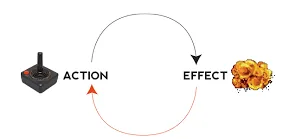
Real-type games: what happens after you act matches what logic leads you to expect
Tap a square on a board and a piece lands there; press a button and your character jumps or attacks…
These games have fairly complex rules and controls, so they take more effort to learn. Their numbers, abilities, controls, difficulty, feedback and presentation all lean toward realism, or toward what players think of as realistic. Most people who play them are after a faithful sense of reality and a stiff challenge. In terms of genres, most hardcore action RPGs, board and card games, large-scale strategy war games and real-time strategy games belong here.

Super-type games: what happens after you act goes beyond what you expect
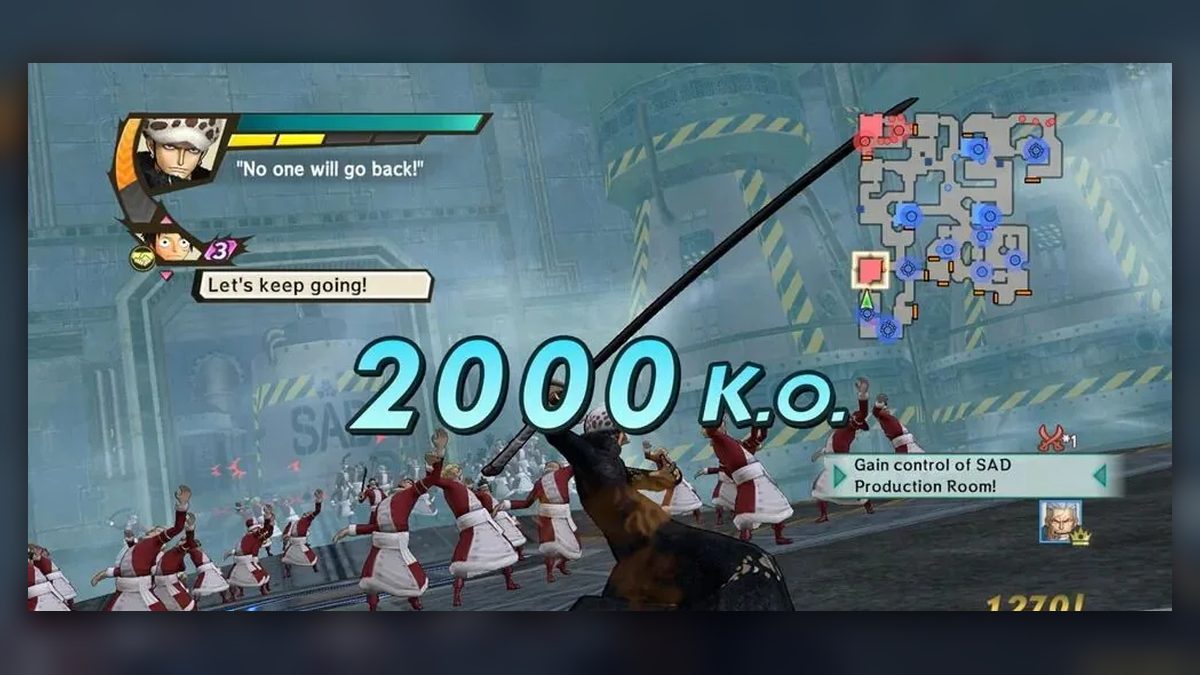
A single critical hit for 999, one sweep of a laser sword that cuts every enemy around you in half, a Gatling gun mowing down a horde of hundreds or thousands of zombies…
These games have fairly simple rules and controls, so they are easy to learn. Their numbers, abilities and presentation are all exaggerated: players can play the invincible hero, show off all kinds of flashy moves and take on an army single-handed, and it feels great. They also reach a wider audience. Besides players who play for that rush, people who don’t usually play games can pick up the fun easily thanks to such strong positive feedback, so the fun of “super-type games” reaches more people.
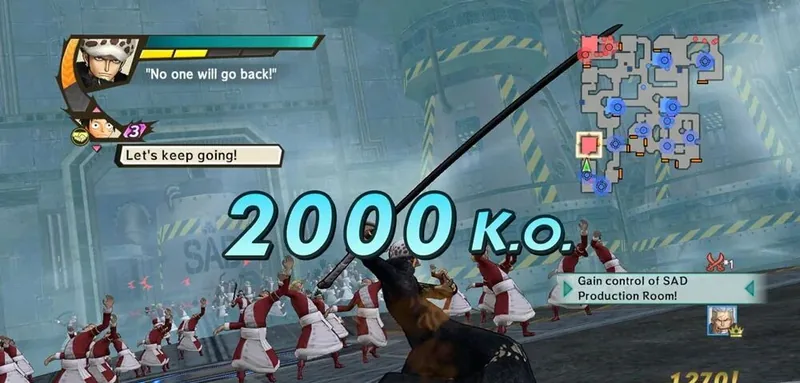
In the same way, the breakout success of the Wanning games can be read as one take on making real-type games super. They keep the classic, standardized rules and play, exaggerate the feedback and presentation, and give players over-the-top effects they don’t expect from a rather rigid real-type game.
Making a real-type game super
Wanning Gomoku was the first of the 2021 Wanning games to catch on. The concept came from a Douyin comedy creator’s sketch series “When the School Holds a Contest.” In the school gomoku tournament episode, the creator has the students cheat in every way imaginable. Two players sit there looking like they’re playing gomoku in all seriousness, then pull all sorts of bizarre props out of their jackets. This breaks the ordinary rules of gomoku, and the contrast hands the audience a goofy surprise.
Mini-game studios with a sharp nose for trends quickly built a “cheat mode” gomoku around the idea. Players can use all kinds of skills and formations to drop a pile of stones in an instant, even though the core rule underneath is still gomoku’s: the first to get five in a row wins.
Under rules this exaggerated and this much fun, though, players are no longer really chasing the win itself. The jolt from all the wacky skills and on-screen reactions is what makes the game so hard to put down.
Back in 2020, another game with much the same idea came out, this time built on pool. Its basic rules were ordinary billiards, using the cue ball to knock balls into the pockets, but tables in all kinds of shapes, huge numbers of balls and an exaggerated feel to every shot gave players a reaction very different from traditional pool.
Both games did very well after launch. If you spend a lot of time with casual or hyper-casual titles, you may notice a hyper-casual kind of finish in them. The line between how action is presented in hyper-casual and other games is hard to pin down. As we see it, though, what sets these two apart is that they start from a classic way of playing, then take its presentation apart and rebuild it.
They throw out the realistic or traditional feedback players expect from the classic game and use exaggerated effects to create big payoff moments, which also gives more people an easier way to connect with the game.
Lessons and doubts from commercial games
In the commercial games business, buying new players through ads is a battlefield, and much of the goal is to get high-quality players at a low price. Many companies run fake ads that show play the game doesn’t have, or ads in a hyper-casual style, to bring in cheaper players, then use all sorts of tricks to win them over inside the game. Top War and Hero Wars, for example, are practically a grab bag of minigame ads: their ads play like minigame compilations, and nearly every kind of minigame shows up in them to draw new players.
Designers who go a step further try to hold on to these cheap players by building minigame modes into the game that sit outside its core design, such as the dream levels in Homescapes, or, a typical recent case, the hyper-casual levels added to a card game. Playing both games, we felt a very strong disconnect between the minigames and the core game. Some developers have done their best to soften it by keeping the art style consistent, picking the right kind of minigame and aiming for a similar flow, but overall this kind of design does leave players a little uneasy.
Companies keep doing it, of course, because they want hyper-casual presentation to draw in more players and to put the natural strengths of hyper-casual play to work: rules that are easier to understand, play that’s easier to learn and feedback that pulls people in. That is exactly what a mature game’s own core play can’t do. Still, from a designer’s point of view, setting aside commercial rules and the “project needs” that come with the job, an idealistic designer would rather not build this kind of thing, because it turns away from the fun at the heart of game design and is a clear compromise for the sake of money. (As the old saying goes, people mind their manners once the granary is full. Everyone has to eat, so there’s no way around it.)
Wanning Gomoku and the pool game are different. In our view, their design still works within the framework of the game itself, and their presentation is a hyper-casual-style reworking of the game’s own rules. Playing them doesn’t come with nearly as strong a sense of being tricked, or the same discomfort. Perhaps you’ve had the same impression.
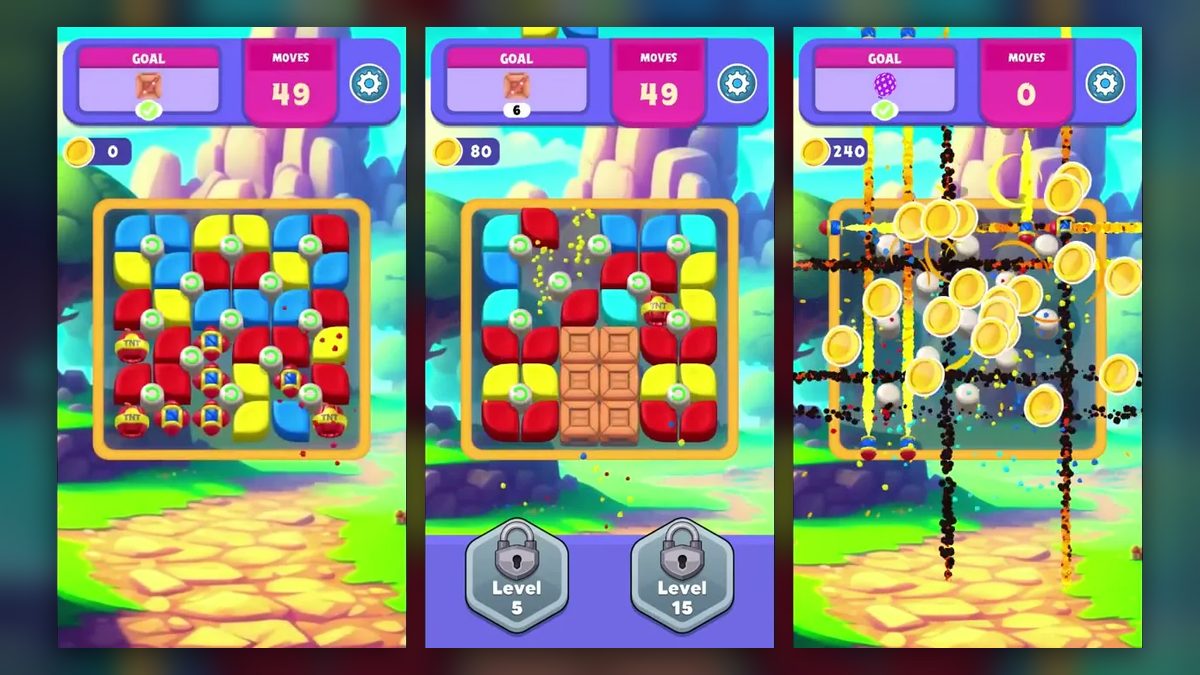
Royal Match, the king-themed match-3 hit that became a phenomenon in 2021, uses the same thinking in its level and gameplay design. Within the rules of a match-3 game, it brings in built-in timed rescue levels and coin levels every so often. These levels look and react in a more thrilling, more direct way, and because they are special levels designed inside the game’s own rules, they feel far less bolted on, out of place or likely to break the spell. There’s no detailed data to back this up, but we believe Royal Match’s ads can keep the cost of each new player low and still show better player numbers than those of its rivals.
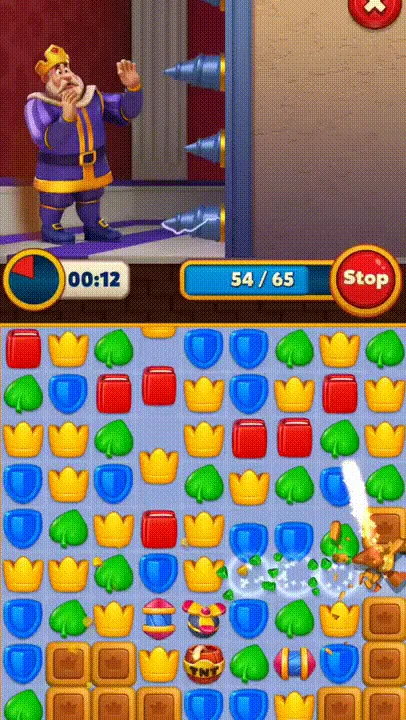
Innovation has always seemed both very easy and very hard, and after going through the gameplay of several thousand hyper-casual titles, that view is only firmer. Still, once designers know more about where hyper-casual presentation and feedback come from and how they work, they have more room for creativity, in commercial mobile game design and in ad design alike.
We believe that in the games of the future, many classic games, modes and rules everyone already knows will be taken apart and rebuilt with hyper-casual presentation and feedback, and games that are already running will add more hyper-casual-style modes that fit their own rules and core play. How far this goes depends on how creative producers and designers can be when handed a set brief, and how deeply they understand the idea of “making real-type games super.”
No copying or rewriting, please.
- END -