Mobile Game Monetization: 3D Hide-and-Seek's 7-Day Payback
Voodoo says hyper-casual is dead, yet a 3D hide-and-seek game pays back in 7 days: a mobile game monetization model built on ad revenue alone.
In this article4 sections
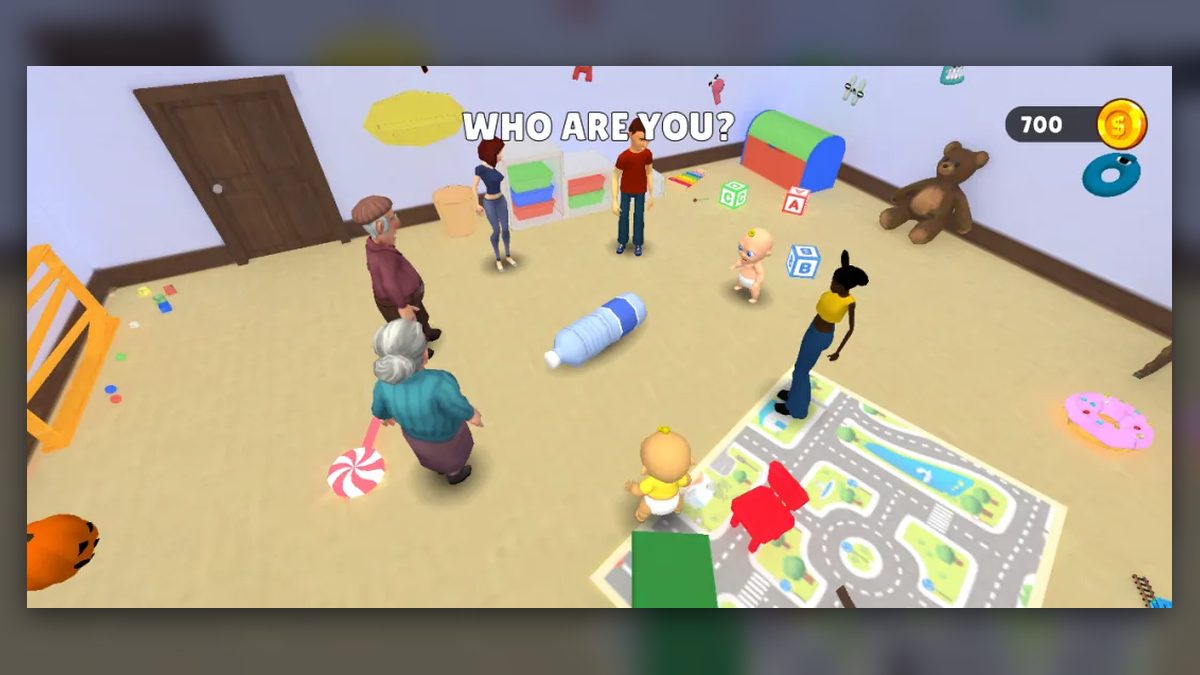
Voodoo may say hyper-casual is dead, but plenty of hyper-casual studios are still turning out hits. This time the game is Where is He: Hide and Seek, and the topic is the mobile game monetization behind it. The game is an original take that blends two gameplay types with an art style: puzzle + role-play + 3D.
The aim here is a model estimate, so this article looks only at Google Play data for the US. The game’s only purchase is a $0.99 ad removal, so the figures below cover ad revenue only, with no IAP.
Estimated payback period
The conclusions first (the full model is worked out below):
| Metric | Value |
|---|---|
| ARPU | $0.11 |
| CPI, paid UA only (launch period) | $0.3 |
| Payback period (paid UA only) | 7 days |
That is our payback estimate assuming paid UA only, and it mostly reflects the launch period. The game has since slipped into the 20s on the free chart, which means CPI has gone up a lot and the payback period has stretched out considerably.
How the game works
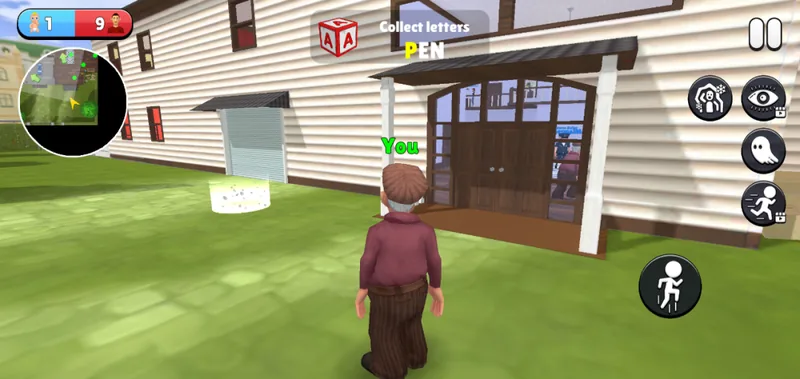
At its core the game is hide-and-seek, just in 3D.
At the start, the game randomly assigns the player a role:
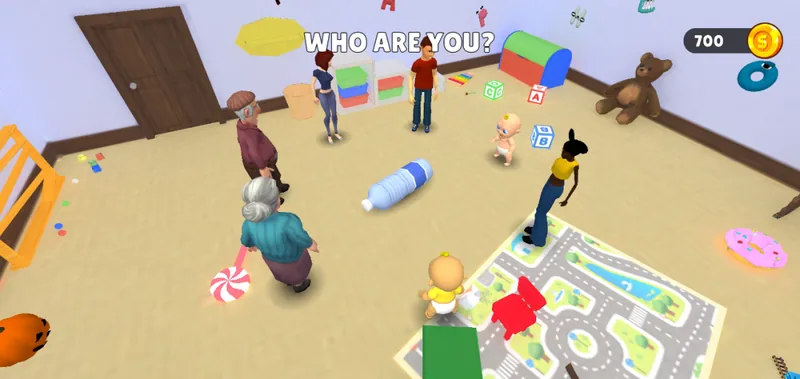
The first roll is most likely Dad, whose goal is to “find and catch all the kids”:
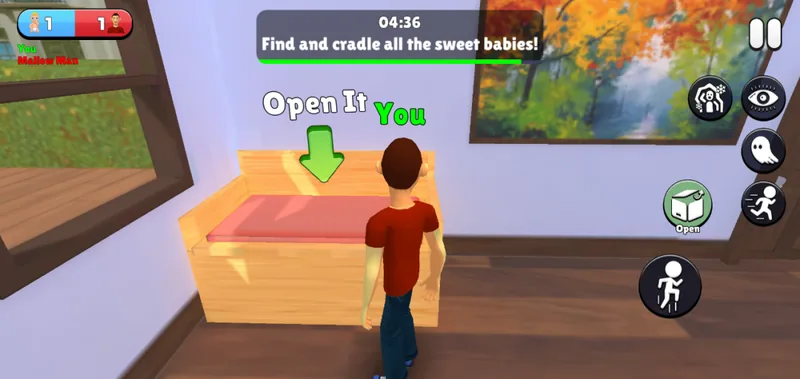
A kid may be hiding inside a box or disguised as an object. Get close and an action button appears on the right. Find the kids and you win.
Roll a kid and the goal is to hide and keep the family from finding you for a set time.

Roll Grandpa and the goal switches to finding certain words, which mixes in Word gameplay as well.
Players who would rather not leave it to chance can watch a rewarded ad to lock in a specific role’s task and goal.
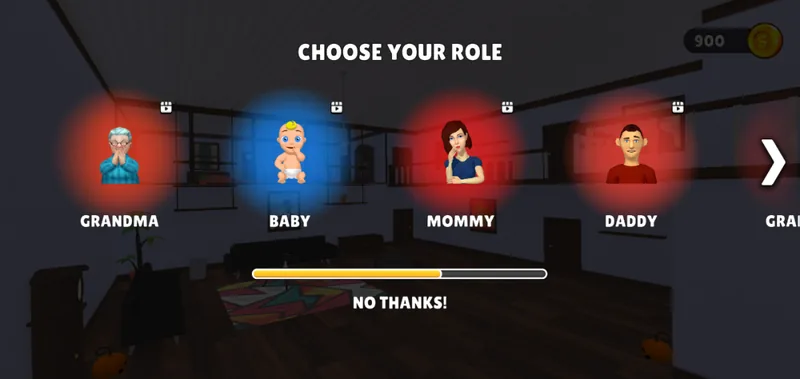
So every round is the same 3D hide-and-seek, and the role you get decides the goal.
Why it worked
Hyper-casual success is fairly random, so it’s hard to pin down very specific reasons. Still, plenty of hide-and-seek games have been showing up on the free chart lately, which suggests the mechanic has some real advantages. Here is what makes the theme fun:
- Hide-and-seek is a puzzle in itself, and American players’ obsession with puzzle gameplay goes far beyond what you’d imagine.
- Hide-and-seek comes from real life. American adults all played it with other kids growing up, which makes it easier for players to put themselves in the game.
- Switching roles taps into the fun of role-play and lets adults experience what it’s like to be the kid the grown-ups are looking for.
The payback model in detail
1. Estimated retention:
| Day N | Value |
|---|---|
| D1 | 42% |
| D7 | 16% |
| D14 | 6% |
| D30 | 2% |
Those are retention rates on the key days. The retention estimate mainly serves to calculate LT (lifetime).
As an example, start with the game’s 30-day LT:
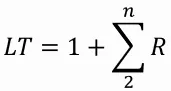
Retention for the days in between is derived with a power function.
7-day LT = 1 + 42% + 30% + 28% + 21% + 19% + 17% + 16% = 2.73
2. Monetization and UA baseline data (US):
| Metric | Value | Notes |
|---|---|---|
| Interstitial eCPM | $10 | Recent industry average |
| Rewarded ad eCPM | $13 | Recent industry average |
| Banner eCPM | $0.2 | Recent industry average |
| CPI (paid UA only) | $0.3 | Estimated from hyper-casual benchmarks and the gameplay |
3. Estimated ad monetization behavior (US):
| Metric | Value | Notes |
|---|---|---|
| Daily playtime (minutes) | 26 | Estimate for this game based on the 20-minute hyper-casual benchmark |
| Interstitial impressions per user per day | 6 | From hands-on play (1-minute cooldown) |
| Rewarded impressions per user per day | 3 | From hands-on play (boosters) |
| Banner impressions per user per day | 52 | Refreshes every 30 seconds, so 2 per minute; 26 minutes of play gives 52 |
| ARPU | $0.11 | Calculated from the data above:; ARPU = (6 × $10 + 3 × $13 + 52 × $0.2) / 1000 |
4. LTV calculation
Combining the data above with the formula gives the game’s LTV:
LTV = LT × ARPU
For example, since the game’s 7-day LT is already worked out above, its
7-day LTV = 2.73 × 0.11 = 0.3
So this game can pay back paid UA within 7 days, and faster still once organic installs are added. That only holds for the launch period, though: as UA volume scales up, CPI rises and the payback period gets longer.
That is the full breakdown of the UA payback model for Where is He: Hide and Seek. Some of the data comes from third parties, and some from hands-on play and estimates.
If you have a better approach or think the logic is off, corrections are welcome.