How rhythm games spread from dance mats to Hi-Fi RUSH
Dance mats and turntables, Deemo's story, then Hi-Fi RUSH's beat-timed fights: how rhythm games grew beyond their hardcore roots.
A longtime love of rhythm games
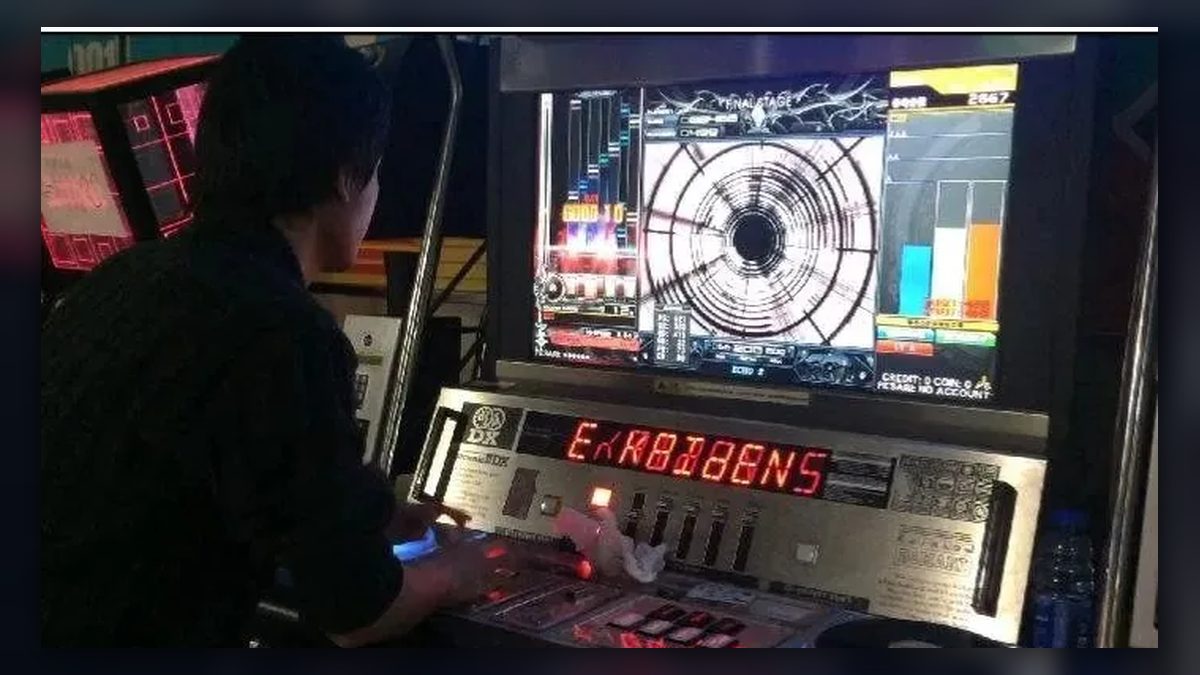
Tapping along to a song is one of the simplest pleasures in gaming, and rhythm games are built on it. We’ve been fans of the genre (also called music games, or MUG) for a long time, and for personal reasons the first one was probably VOS. Childhood memories of the late-1990s TV drama My Fair Princess and of Final Fantasy explain the songs replayed in it again and again: the show’s “Rain Butterfly” and Final Fantasy’s “Eyes on Me”…
Many more followed over the years, big and small and on all kinds of platforms, and along the way we saw the genre go through some real changes. Still, even fans have to admit that rhythm gaming remains a niche, given how hard it is to get into, how steep it gets and how small its fan circles are.
Drawing on that history, this piece sorts the genre’s development into a few directions, then looks at several games from recent years that show where music games may be heading.
The rise of rhythm game controllers
Since the genre first took off on home consoles, it has been tied closely to dedicated hardware: from dance mats to beatmania IIDX, from Taiko drum controllers to jubeat…
If you see someone playing with a flashy controller you don’t recognize, odds are they’re playing a rhythm game.
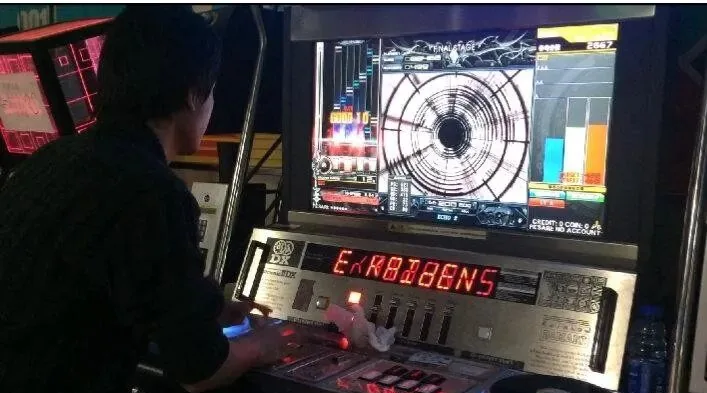
The genre and its hardware have always lifted each other up and depended on each other. On one hand, controllers make the games more immersive, improve the player’s experience and make them more fun to watch.
The new kinds of input these controllers offer turn difficulty, at the level of pure execution, into an art of its own.
Take a top The King of Fighters or League of Legends player. Much of what makes their play impressive can only reach spectators through the game screen itself: reaction speed, split-second skill choices, the order in which they fire off abilities, and so on. With an expert rhythm game player, the audience only has to watch an endless chain of Perfects on screen and hear the music flow without a break, so more of their attention, and more of the show, goes to the player.
This also gave rise to freestyle play built around the controllers: clearing a song while moving in a looser, showier way that’s more fun to watch.
Dance Dance Revolution (DDR) freestyle players at Seoul Teck Festival 2012 are one example.
On the other hand, the unusual ways these controllers are played give designers more room, and more dimensions, for building charts, the note patterns that make up each level.
A chart can add special notes on special lanes, such as knobs or sliders. Played on the matching controller, it feels a world away from playing with a keyboard and mouse or a gamepad.
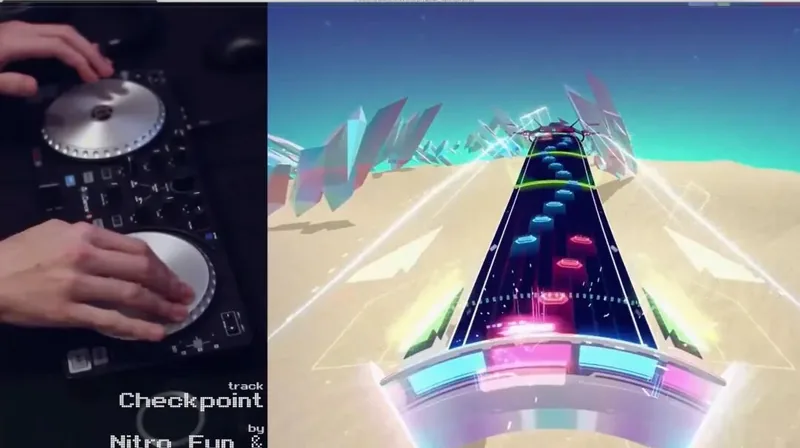
Ultimately, a controller is just input for a rhythm game, given one physical form or another.
The upside is that different controllers, through their different forms of input, give players immersion and the fun of new ways to play, along with the spectacle that comes from pairing hardware with music.
In many of these games, the beauty of how a player plays is an important part of the experience, beyond the game’s own content.
And a skilled chart designer (a “charter”) builds levels that are as good to watch as they are to play.
The downside is that a controller is still just a form of input device, so in the end it hits the ceiling of how fast players can react and move. Whatever the hardware, it all ends at the same place: the reaction limit of the player, or of the human body itself. That’s a common problem across hardcore esports, and rhythm game communities tend to gather around specific games and controllers, turning into arms races among small groups of geeks.
At the very top, the world’s best players pull off feats that look like science fiction, and they’re beautiful to watch.
Rhythm game + X: the content grows
In the genre’s early days, limited by music styles and platforms, most games leaned on high-energy music: electronic tracks, DJ dance music, J-pop and K-pop. Or designers turned well-known classical and pop songs into charts. That left the games with little story or content of their own. Booting one up was like walking into a chart buffet, where players served themselves whatever they felt like playing.
After 2010, the most appealing change was the arrival of more themed titles, each built around a different style of music. Those styles, in turn, gave the games different emotions and kinds of content to express. Yes, this is where we rave about Deemo.
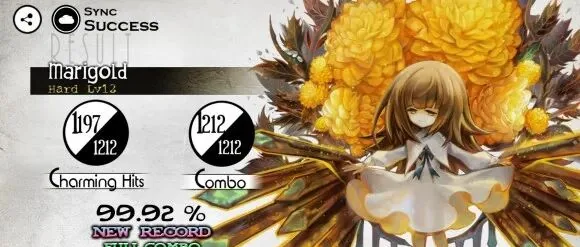
Deemo was the first rhythm game we played that moves forward through a main story, one song at a time, with the style and mood of the music rising and falling as the story unfolds. Its piano-led soundtrack and finely drawn artwork, every piece good enough to use as a wallpaper, were impossible not to love back then. The game also turned the musician VK into a favorite.
By this point, beyond the artistry of the music itself and the challenge and play the genre already offered, a music game could also tell a story and carry real content.
Another fairly representative example is Lost in Harmony. Besides telling a main story, it adds more on-screen interaction and visual flair to its levels on top of the charts. Paired with mostly orchestral music, each song becomes a short, playable movie scene.
Dream 2 in Lost in Harmony is one such scene.
At its core, a rhythm game asks you to act in time with the beat and the melody, and that taps into a pleasure humans are born with (in plain terms, people move to music by instinct, without being taught).
When the visuals, the theme, the content and the rest of the design are also tightly tied to the rhythm gameplay, the fun and immersion grow even stronger.
Adding story and content on top of a rhythm game that already sounds good and is fun to play is, in our view, a very good way to widen the genre’s audience. It also shows that designers are already expanding what’s playable beyond the core rhythm gameplay.
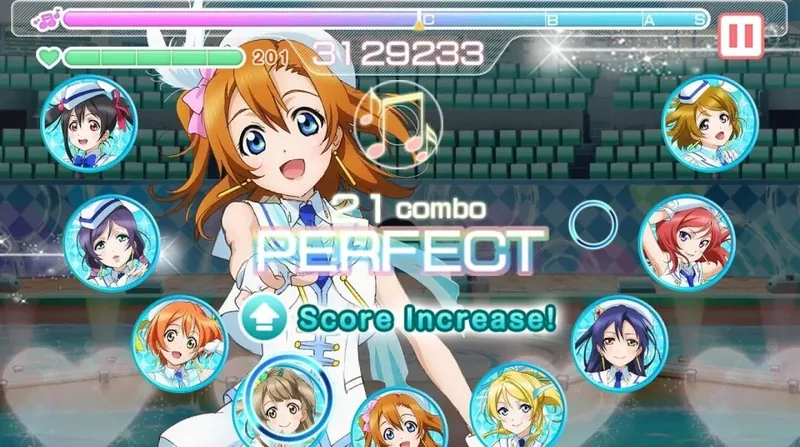
Later games released alongside manga and anime, such as BanG Dream! and Love Live!, can be seen as a kind of merchandise for anime fans, but also as an extension of content that fuses the core rhythm gameplay with a setting and a story.
X + rhythm game: the core mechanic spreads
In recent years, the genre’s development has picked up a new dimension.
Many new games add rhythm game beat-matching mechanics and gameplay to their own design to sharpen their sound and visuals, their sense of rhythm and the tension of play.
Put simply, the game adds a beat, and players who play in time with it get rewarded. One example is Hi-Fi RUSH, a hack-and-slash game that feels like brawling on a dance floor.
Fighting enemies to the beat makes clearing a stage easy and punchy.
LittleBigPlanet, a big casual hit, even has a level built around “Uptown Funk”: the whole stage plays out to Bruno Mars’s track. That saves a lot of people the trouble of putting on music while they play, and it ties the level tightly to the song. Players and viewers alike love the energy.
It really starts to feel great partway through the level.
Games like Crypt of the NecroDancer and Rhythm Fighter, whose core play is built tightly around hitting the beat, won’t be covered in detail here.
Strip away the genre’s overly hardcore side, the high APM (actions per minute) and the steep skill barrier, keep the beat-matching at the heart of the gameplay, and blend it with all kinds of other genres: that has become a new way for rhythm mechanics to branch out in recent years.
The genre has gone from rhythm game, to rhythm game + X, to X + rhythm game.
Seen from another angle, more and more designers are adding rhythm-game fun to their own games, blending it into their design to make their projects more entertaining and more replayable. It’s an unusual path for the genre, a case of one door closing and another opening.
To wrap up
What makes rhythm games special is that they turn the goal from how to clear a level into how to clear it perfectly, and in style. Along the way, you get a rush from sight, sound and touch working tightly together. Unlike music in other games, the music in a rhythm game is so closely tied to the design that you can’t play properly without listening. (Players who time everything by sight, please don’t argue. Fine, you’re right.)
As music game design matured and more designers from other genres brought in their own take on what makes it fun, rhythm became a boost to the whole experience, adding the pleasure of sound and a deeper sense of immersion on top of the story, gameplay and theme players already enjoy. As fans of the genre who also make games, there’s nothing we’d rather see.
The end
Thanks for reading
Fellow rhythm game fans are welcome to get in touch at support@playtruffle.com.