How the Battle Pass Is Built to Keep You Playing
More than half of top-grossing US games run a battle pass; here's how its length, rewards, pacing and price are set to keep players coming back.
In this article6 sections
If you play mobile games, you’ve likely met the battle pass: a reward track with a free row and a paid row. More than half of the top-grossing games in the US have one, and it has become nearly a standard part of hit mobile game design. Here is how it’s put together, from how long it runs to what it costs and how many players are meant to finish it.
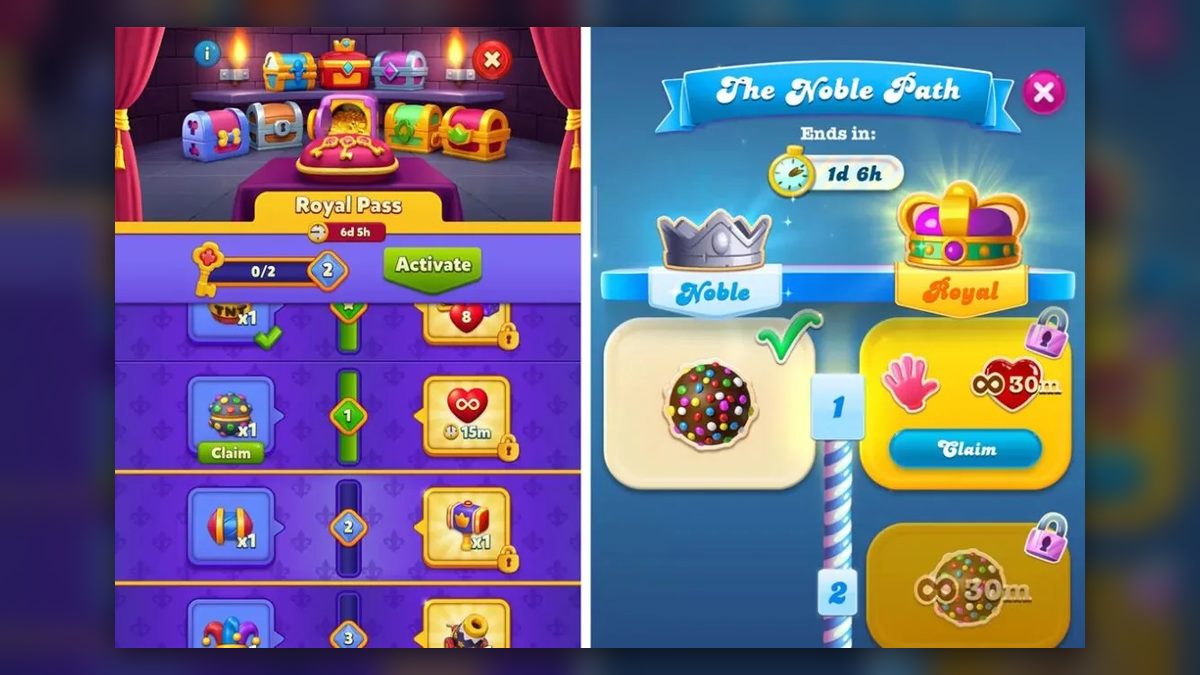
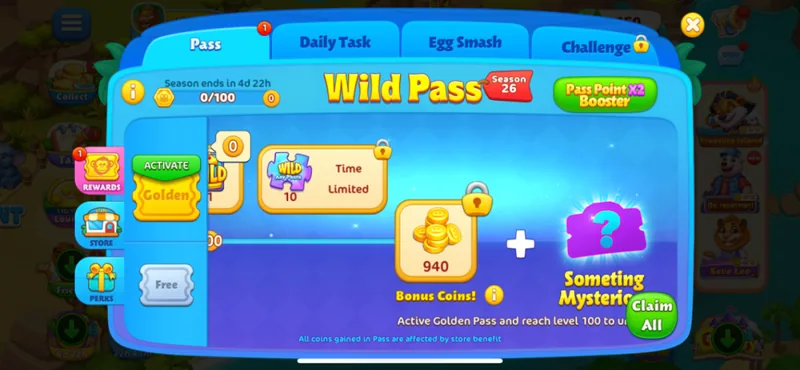
The idea goes back to 2017, when Fortnite’s designers reworked the battle pass from Dota 2. Their main change was to build two tracks running side by side, one free and one paid. Here is the basic layout:
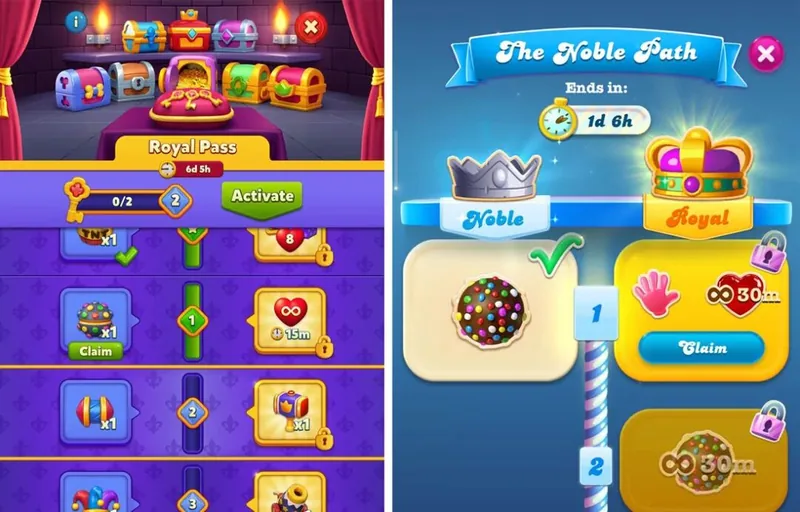
Players earn points to move along the pass either by playing the main game or by completing pass tasks, depending on the game’s design. In Royal Match, the king-themed match-3 hit, points come from playing the main game. In Bingo Story, shown below, they come from completing pass tasks:
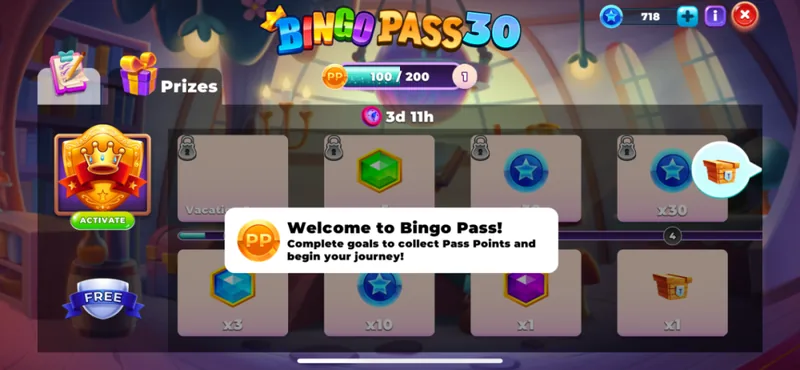
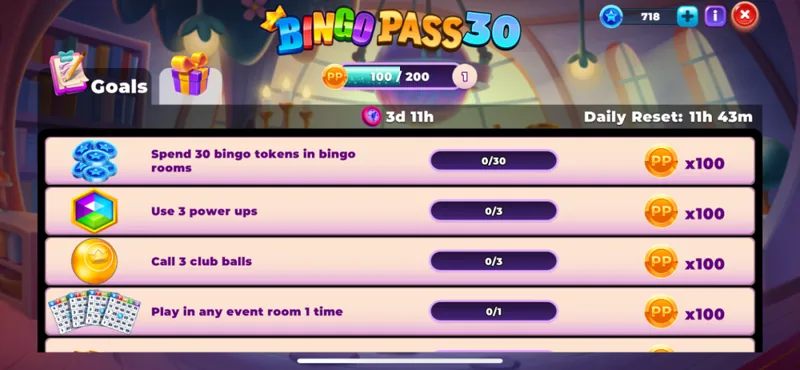
How a pass works:
- Players move the pass forward by earning points from tasks or from the main game.
- Once a set point on the track is reached, every player can claim the free rewards, but the paid rewards are only for those who buy the pass.
- After buying, a player can claim only the rewards up to the progress already reached; the rest unlock as they keep moving up.
- A pass usually repeats on a cycle, and the cycle is mostly one of three lengths: a week, two weeks or a month.
Below are the key factors to get right when designing one.
How long a pass runs
As a rule, if a game has only one pass, a one-month cycle is the recommended length. The main reason is the pass’s role in the game: nearly everyone who decides to stick with the game buys it, which makes it standard kit for players who stay. Once players buy the pass, they play along with its pace to collect the rewards. Here’s how the different choices of length work out:
| Pass length | Price and rewards | Result |
|---|---|---|
| Under 1 month | Low price, few rewards | Not appealing enough to players |
| Under 1 month | High price, many rewards | Slow to fill, too pay-heavy, hard to finish |
| 1 month | Moderate price, moderate rewards | Recommended: 1 month |
| Over 1 month | High price, many rewards | Hard for less active players to finish |
| Over 1 month | Low price, few rewards | Not appealing enough to players |
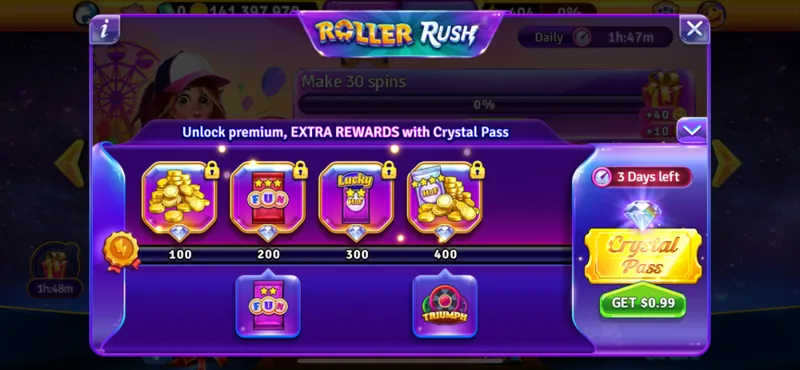
So, if a game has only one pass, a one-month cycle is the recommended length. If the game has enough content, it can also add a shorter pass, or blend a pass into each part of the game that earns money, such as this game’s daily-task pass:
What the pass gives
As the section on length showed, the rewards have to fit the cycle. Beyond that, a few more points matter:
- The rewards should be worth 10 to 20 times what the shop or other bundles give, as rewards that are too small or too large both cause problems.
- Pass rewards worth 10 times those of other features won’t wreck the game’s economy, because they are spread across the cycle and players have to play to build up the progress that unlocks them. Split over each day and weighed against the time players put in, the amount is reasonable for the economy.
- Besides in-game currency and items, it’s best to put drops from collection and decoration systems (such as card packs in a card-collecting feature) among the pass’s higher rewards, which makes those drops feel more valuable and also helps keep the pass from giving away too much.
- The free track’s rewards need to be kept strictly in check.
How fast the pass fills
The pacing curve of a pass needs careful design. The main logic:
- Base how points are earned and how fast progress moves on data from players who stick around, such as how long they play each day and how many rounds.
- The tempo has to match the cycle. If the pass runs for a month and the numbers are meant to have players finish it around the 25th, there needs to be a daily cap on points so very active players can’t finish too early. Otherwise they lose their reason to keep playing once the pass is done, and may even drift away from the game.
- For the rhythm itself, we suggest designing it in three stages.
What the pass costs
Setting the price is a very important step, because the price has to fit the cycle and the rewards and also stand apart from the game’s other offers. These are the key factors (for a game with only one pass):
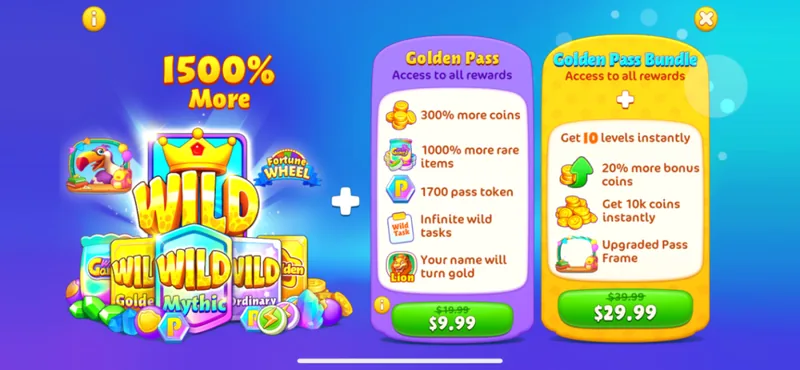
- The pass can’t be priced too low, or it clashes with other promotional bundles. At $1.99, for example, setting aside the cycle and the rewards, the price alone collides with the piggy bank (a stash of coins that builds up as you play and is unlocked with a purchase) and the first-purchase deal. That leaves players unsure which to pick and also hurts bundle sales.
- We suggest a starting price of $9.99; once a player buys it, the next month’s price goes straight to $19.99, with the rewards changing to match. If the game sorts players into spending groups, it can judge a player’s value the first time they open the game and start high-value players at $19.99 right away.
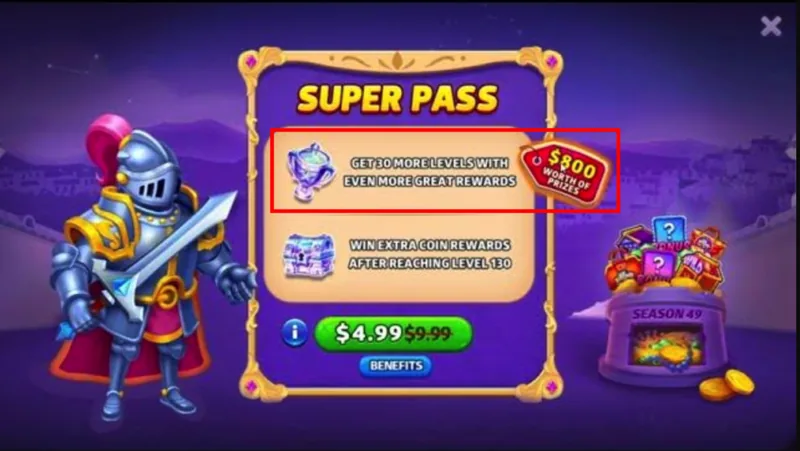
- Offer a higher-priced pass for players who both spend a lot and play a lot.
- Once a player clears the whole pass, pop up an offer to buy an extra stretch of progress bar, or add a chest that opens as more progress builds up.
How many players should finish
We’ve covered the pass’s pacing and length, but one more important question sits inside them: when the numbers are tuned, what share of players should be expected to finish the pass? The suggested figures:
- A reasonably tuned pass has at least 70% of the players who bought it finishing it. A share that’s too low or too high both dampen players’ wish to buy the next pass. The exact figure varies by game, but there needs to be a sensible baseline.
- Most players’ progress should get beyond 50%, to tempt those who haven’t bought the pass into buying it. That’s because the pass is a progress reward: if a player reaches the end of the month and finds they’ve completed less than 30% of it, buying it looks like a bad deal. If instead they’re already past 60%, the urge to buy is strong, since buying hands them a big pile of rewards at once. That is also why pass purchases spike a little at the end of each month.
Use the pass with care
We’ve laid out many of the pass’s strengths, but it isn’t a cure-all for mobile game monetization. It has drawbacks too: it can lower spending on the game’s other paid features, and the free rewards can hand out too much, among others. Here are some points on passes for different kinds of games:
| Game type | Advice |
|---|---|
| Hyper-casual (bite-sized, one-mechanic games) | Don’t add a pass |
| Midcore games | Skip it too if there’s little room to spend or too few items |
| Strategy games, RPGs and other hardcore games | The pass mustn’t lower what big spenders pay on average, but should still be a must-buy for light spenders |
Those are all the key points of pass design. Space is limited, so some parts couldn’t be covered in full detail.