How the Piggy Bank in Mobile Games Wins Your First Purchase
How the piggy bank in mobile games fills up as you play, why it beats the shop's value by 20% or more, and the five choices behind it.
In this article5 sections
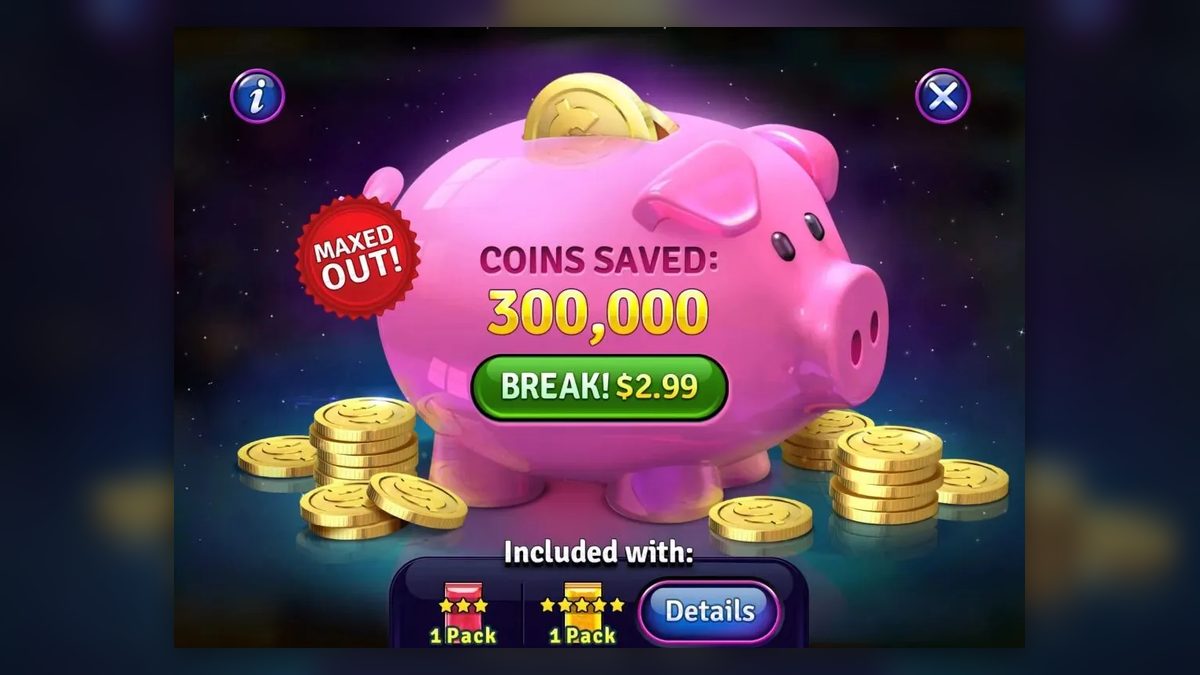
Plenty of casual games keep a piggy bank on the side: a savings jar that fills with coins while you play, which you can pay to smash open. The piggy bank in mobile games is often the first thing a player ever pays for, and five design choices explain why. Here’s what one looks like:
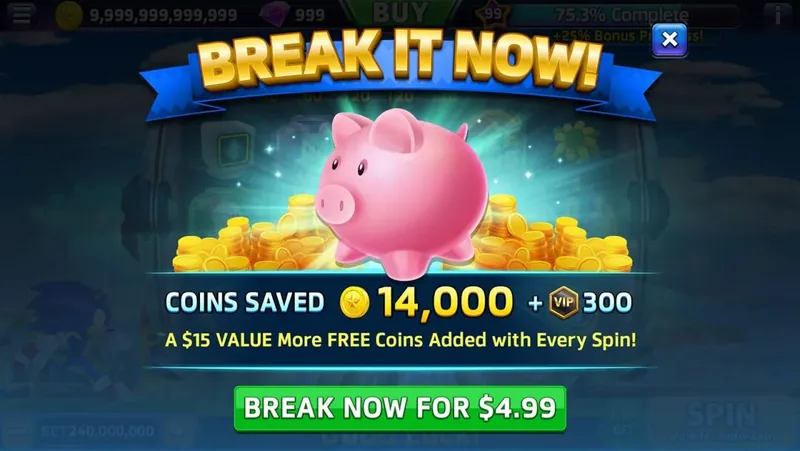
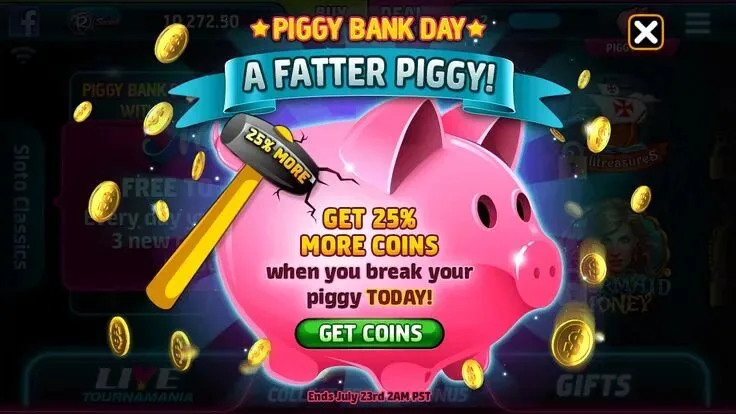
How it works:
- At the start, the jar is empty or holds only a handful of coins.
- As you play, the game adds coins to the jar according to set rules. In bingo games, for instance, the coins on cards that didn’t hit a bingo go into the jar at a reduced rate.
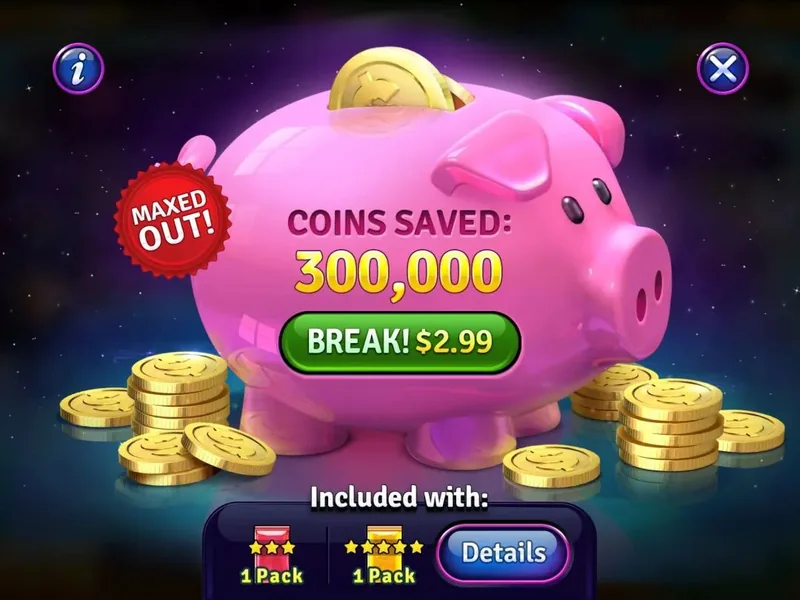
- Once the jar is full (you can smash it early, but it isn’t worth it), the game tells you that you can pay to break it open and take the coins. This offer is excellent value, usually at least 20% better than what the shop sells.
- In games made for Western players, the feature goes by the name Piggy Bank. Americans have a special fondness for the idea of a “bank,” and the offer is great value, so in many games the piggy bank is the best icebreaker: the offer most likely to get a player to spend money for the first time.
Some developers are puzzled that the piggy bank in their own game doesn’t sell nearly as well. A few key factors make the difference, and we’ll go through them one at a time.
Exceptional value for money
As mentioned above, the piggy bank is designed to win that first purchase, so it has to be a great deal. When players weigh value, they usually compare an offer with the shop first and then with the game’s other sale bundles. Here’s how it measures up against each:
Sale bundles are usually at least 10% better value than the shop.
A piggy bank is generally at least as good a deal as the sale bundles, and usually a better one.
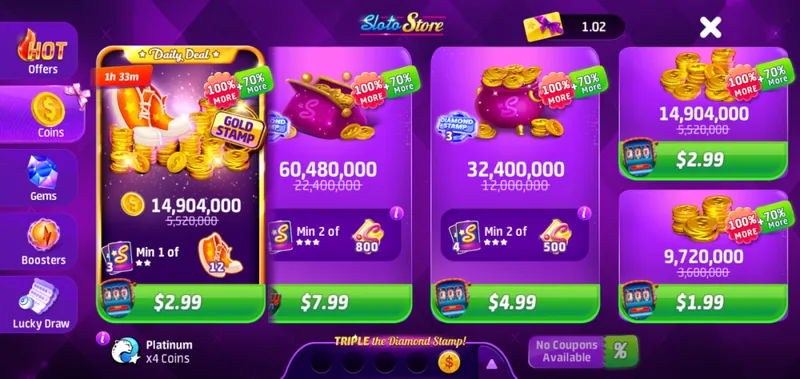
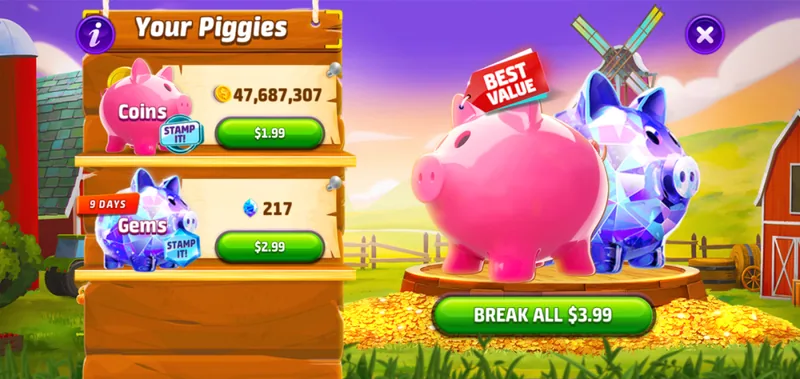
In the game pictured above, $1.99 buys 9,720,000 coins in the shop, while $1.99 in the piggy bank buys 47,687,307 coins. That’s 4.9 times what the shop gives, which is outstanding value.
A starting price that’s neither too high nor too low
Games usually sell several kinds of in-app purchases side by side. When they’re planned well, they don’t get in each other’s way: buying one doesn’t make a player any less keen on the others.
- Take the season pass, a paid track of rewards. Its role is to serve players who stick around: it doesn’t return much in the short term, but as long as you keep playing, it pays off well.
- Sale bundles mostly win players over with limited-time value, like a supermarket’s time-limited discount. The idea is that grabbing one means you’ve come out ahead.
- The piggy bank is a savings-style offer: its value goes up as coins pile up from your play. That makes it similar to the pass, aimed at players who keep coming back, except that it hands out its reward all at once.
Even among just these few features, each plays a different role, so each should have a different price, with clear gaps between them. A pass costs $9.99 at the least, for example, while sale bundles span a wide range, starting at $0.99 with no upper limit. The recommended starting price for a piggy bank is $2.99 or $3.99, and never below $1.99; it’s best kept neither too high nor too low, or it will clash with the sale bundles.
The game shown earlier prices its piggy bank at $1.99 because it has two piggy banks that can be bought together for an extra layer of value. The whole point is to get you to buy them together.
Price and reward that grow together
Beyond being an excellent first purchase, the piggy bank can keep selling pretty well afterward. As a rule of thumb, if its rules are well designed, it should bring in at least around 10% of a game’s daily revenue from purchases.
Here’s how that works in practice:
- The starting price comes with very high value, such as 3 times the coins for $2.99.
- After a player buys it once, the price and the value change together, for example to $3.99 for 1.5 times the coins. That’s less value than the first-purchase deal, but still better than the shop and on par with the sale bundles.
- After the next purchase, price and value change again (this can also happen only after several purchases), for example to $5.99 for 1.2 times the coins. It shouldn’t drop below the value of the sale bundles, though.
- Even when the value is the same as a sale bundle’s, many players still choose the piggy bank, and that comes mostly from the fondness for banks in American culture.
A fill time that fits the event window
At the start, the jar is usually empty or holds only a few coins. At that point it’s poor value and almost nobody buys it: players wait until it’s full. That puts the pacing of the numbers to the test. A few guidelines:
- Run the piggy bank as a limited-time event rather than a permanent feature. When time is up, its icon disappears, and when it opens again it starts from zero. That gives players a sense that if they don’t buy, they’ll miss out.
- First of all, the time it takes to go from empty to full has to match the game’s rhythm, and it shouldn’t be too long: in terms of regular play, the jar should fill within one or two days.
- The event can’t run for less time than the jar takes to fill, and it can’t run much longer either. If filling takes two days, for example, the event can last five or six days. That way, less active players can still fill it, and very active players fill it at least once during the event, possibly twice.
Strong prompts
The piggy bank is purely a paid feature, so it usually doesn’t get a prime spot on the screen. Without prompts, players easily overlook it, so the game needs to prompt them at different strengths in the following situations.
| Jar status | Prompt strength | How to prompt |
|---|---|---|
| Not full | Low | Hardly any prompt needed |
| Coins going in | Medium | Animate coins flying into the jar on the results screen |
| Full | High | Pop-up on key screens |
| Smashing the jar | Medium | Play up the smash and the reward of coins spilling out |
Those are the main ways to make a piggy bank work better.