Ladder Quests: Mobile Game Design That Keeps You Playing
Royal Match, Coin Master and Monopoly GO! all use the same mobile game design trick: a timed ladder of quests that keeps you playing one more round.
In this article3 sections
The mobile game market is mature now. New games of every type keep coming out, and even for a single style of play, players often have quite a few games on their phones and switch between them. In mobile game design, that sets the next goal: once a game’s core play has hooked you and the game has found its footing, it wants more of your time.
Developers have built a great many systems and features to make people play longer. This article looks at one that top casual games all use, from the king-themed match-3 hit Royal Match and the slot-machine village builder Coin Master to the dice-rolling board game hit Monopoly GO!. Its job is to stretch play time, which developers call “driving engagement.” Based on how it works, we gave it a name: the “ladder quest”.
What a ladder quest is
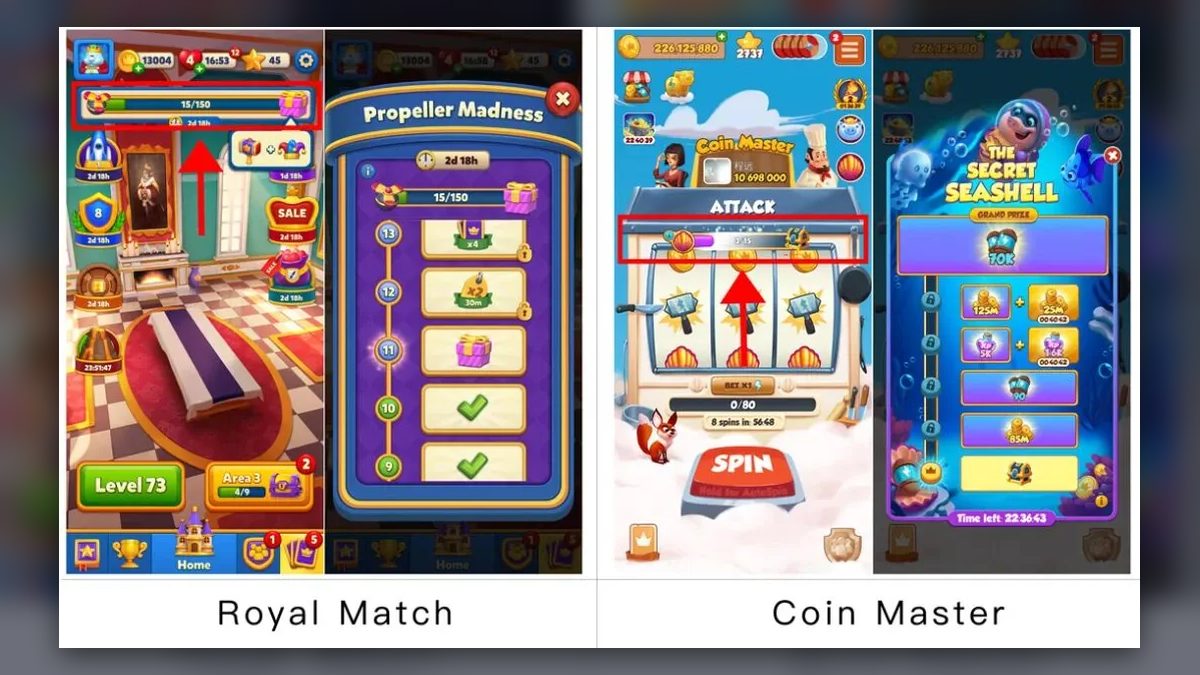
First, a look at the screens:
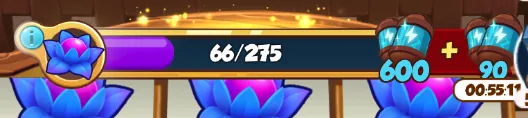
As the screenshots show, the system takes up only a small part of the screen, but it sits on the main screen. Here is how it works:
- It is a quest system with a collection goal for each stage. Every stage asks for a certain item and pays a reward when the quest is done. Finishing one quest starts the next one automatically, and the quests are laid out in steps along a progress bar.
- The items the quests ask for usually come from playing the main game, and once a quest is done, its stage reward is collected automatically.
- The first quests are very easy, but the difficulty climbs step by step. How hard each quest is depends closely on how long people play on average: each target sits slightly above what that amount of play can finish.
- The system runs as an event. It opens only once certain conditions are met, and it has a time limit. How long it lasts depends on the kind of game, usually from one hour at the shortest to a few days at the longest.
- There is a huge grand prize, but it is very hard to reach. The quests keep getting harder, and by the time you could finish them, you would have spent more in-game currency than the grand prize is worth.
Why it works
At first glance, the system seems a lot like daily tasks, and its purpose seems to clash with theirs. Look closer while playing, though, and it has advantages of its own:
- The rewards are very tempting. Daily tasks are usually a kind of baseline allowance: rewards you earn for a small amount of time, so they are easy and pay little. Here, both the difficulty and the rewards climb as you go, and each reward can be set to match how hard its quest is, so the game can afford to hand out big numbers, which makes it quite appealing.
- The quests have a faster pace. Up to a certain difficulty, a single round is usually enough to finish several quests at once. A quick run of big rewards stimulates the senses, and the fun of playing rises noticeably.
- It noticeably increases how long people play. The numbers are set so that each goal sits slightly above what a player can finish in an average session, which leaves players feeling that a little more play will win the reward. One quest follows another, and there is no stopping.
- It drives spending. Some stage rewards come with a bonus on top, but the bonus is timed: you get it only if you finish within the time limit, and once time runs out, it is gone. That plays on players’ feelings at the crucial moment and keeps them playing. Push players to use up more of their resources while offering discounted bundles at the same time, and the game gets more people to spend money on in-app purchases.
Getting the design right
To do what it is designed to do, the system also depends on a few key points:
- The difficulty curve. This is purely a numbers problem.
- Reward design. Rewards have to be calculated from what it costs to finish each quest. Rewards for easy quests need tight control, and rewards for hard quests have to be both tempting and reasonable. Giving out extra rewards just to lure players in would wreck the game’s economy.
- Event length. Events need different lengths depending on a game’s pace. Coin Master is light to play and each round is very short, so its events are usually short too, often just one hour. A round of Royal Match usually takes three minutes or longer, so quests get finished at a slower pace, and it clearly makes sense for its events to run longer, even a few days.
- When the event opens. The purpose has to be clear: this system exists to get people playing more, so it is aimed mainly at active, longtime players. New players, and players who only log in each day to collect the daily login reward, should not get it by default. It should open only after certain conditions are met; otherwise it simply hands them more free rewards. Coin Master, for example, opens the event only after at least a few spins.
- Timed bonus rewards. This feature does a great deal to drive spending, but its rewards need careful calculation, and it is generally best placed after the harder quests.
Those are the main features, advantages and design tricks of the “ladder quest”. Many casual games already use the system widely, with very good results, and we strongly recommend that developers adapt it to fit their own game and build it in.