Mobile Game Market Research: Who Plays in the U.S.
What mobile game market research says about the U.S. audience: a near 50/50 gender split, a core of players 45 and older, and casual games on top.
In this article4 sections
Picking the project is the most important stage of game development. As the saying goes, the greenlight decision is life or death for a game, and its importance needs no explaining. The decision raises a long list of questions, and this article covers one of the most important in mobile game market research: the target audience.
A plan has to answer at least three questions to earn a passing grade:
Who plays? How many people will play? What genres do those players play?
The answers affect every part of the game, including art style, economy balancing and pacing, UX and interaction, and systems design. The rest of this article focuses on players in the U.S.
Who is playing
To find out, here is how the audiences of the top 10 games on the Google Play top-grossing chart break down:
| Game | Male / Female | 45+ | Under 45 |
|---|---|---|---|
| MONOPOLY GO! | 51% / 49% | 44% | 56% |
| Royal Match | 40% / 60% | 61% | 39% |
| Candy Crush Saga | 40% / 60% | 54% | 46% |
| Coin Master | 47% / 58% | 48% | 52% |
| Roblox | 52% / 48% | 33% | 67% |
| Honkai: Star Rail | 57% / 43% | 27% | 73% |
| Pokémon GO | 60% / 40% | 29% | 71% |
| Evony | 63% / 37% | 46% | 54% |
| Jackpot Party | 52% / 48% | 62% | 38% |
| Bingo Blitz | 31% / 69% | 60% | 40% |
Note: the data comes from third-party platforms and is an estimate of relative proportions, not absolute numbers.
The table leads to several conclusions about U.S. mobile game demographics:
- The U.S. gaming audience is split almost evenly between men and women
- Women make up a clearly larger share than men in categories such as bingo, Coin Master and match-3
- Middle-aged and older players (45+) hold an important place in the U.S. game market, and younger players account for less than 30%
- Among middle-aged and older players, men like the same genres as women and also like strategy games (SLG)
To check the data, we also looked at reports from U.S. statistical organizations:
These figures broadly match the table above, which shows the analysis is on the right track.
Still, these numbers look very different from the player base in China.
By gender, China’s market is still mainly male, and men contribute most of the revenue, while female players are on the rise. In the U.S., men and women are about even, and women are sometimes even the larger group.
By age, the paying core in China is players born in the 1980s and 1990s. In the U.S., the paying core is older: 45 and up at the least, and players over 60 can even be the main spenders.
These are two mistakes developers from China often make when they take games overseas. A team that keeps designing the way it would for the home market can guess how that ends.
How many people play
Third-party reports put the numbers as follows:
The chart offers two takeaways:
- The U.S. has 215 million players. As a share of the U.S. population, 65% of adults and 71% of children play games
- 66% of U.S. players play at least once a week. In our experience, many players spend more than 42 hours a week online in games, and on weekends they often play more than 10 hours a day
What genres they play
Here again are the 10 top-grossing games, this time by main genre:
| Game | Genre |
|---|---|
| MONOPOLY GO! | Board game, casual |
| Royal Match | Match-3, casual |
| Candy Crush Saga | Match-3, casual |
| Coin Master | Casual, casino |
| Roblox | Adventure, simulation |
| Honkai: Star Rail | Adventure, RPG |
| Pokémon GO | Adventure, casual |
| Evony | Strategy, 4X |
| Jackpot Party | Casino, slots |
| Bingo Blitz | Board game, bingo |
The table boils down to the following:
- Casual games hold the largest market share, and the bigger subcategories within casual are match-3, bingo, slots and board games. Bingo and slots count as casual here because they involve no real-money cash-out and are played purely for fun.
- Adventure, anime-style and strategy (SLG) games make up the second-largest share.
Putting it all together:
- Men and women make up almost equal shares of the U.S. gaming audience
- Middle-aged and older players hold an important place in the U.S. game market, with more than 60% of the market
- Many U.S. players spend more than 42 hours a week online in games, and on weekends they often play more than 10 hours a day
- Casual games hold the largest share of the U.S. market, followed by adventure games, SLG and others
- Casual has a great many subgenres, and puzzle games are the most popular of them
- Hyper-casual games are aimed at the entire U.S. population rather than at gamers alone
Advice for teams greenlighting a game for overseas markets
Our specific recommendations:
- Small and midsize teams should avoid games aimed purely at men: the market is comparatively smaller, and these are mostly categories that need big budgets and face brutal competition, SLG and anime-style games above all
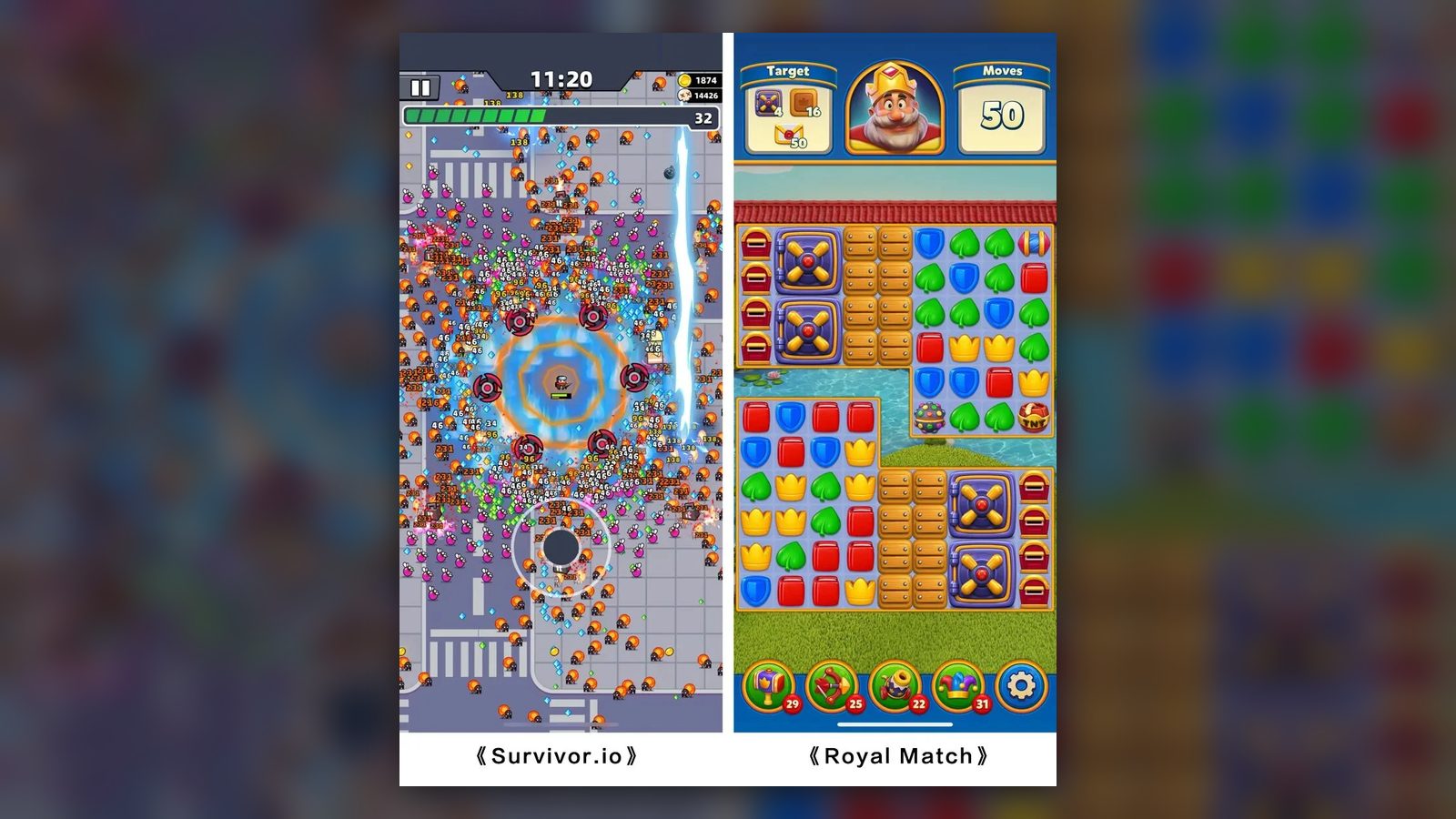
- Start with casual and pick a subgenre your team is good at; pairing puzzle mechanics with other gameplay is especially worth considering
- If your team is stronger at male-oriented games, try combining them with casual; Habby is the case to study
- Think twice before making games with no long-tail effect, such as bingo and word games
- Hyper-casual looks undemanding on art and cheap to make, but the sunk cost is high: it takes at least 30 games before one has a chance to make it
- When designing, account for the fact that older players make up a large share of the audience and women make up half, and tailor the art style, systems design and gameplay design to them
That wraps up the profile of the U.S. target audience; how these traits should shape a game’s design is a topic of its own.