More Than a Reskin: The Mobile Game Design of Monopoly GO!
Why Monopoly GO! beat its look-alikes to the top of Google Play, from Jail and Chance squares to the mobile game design formula behind it.
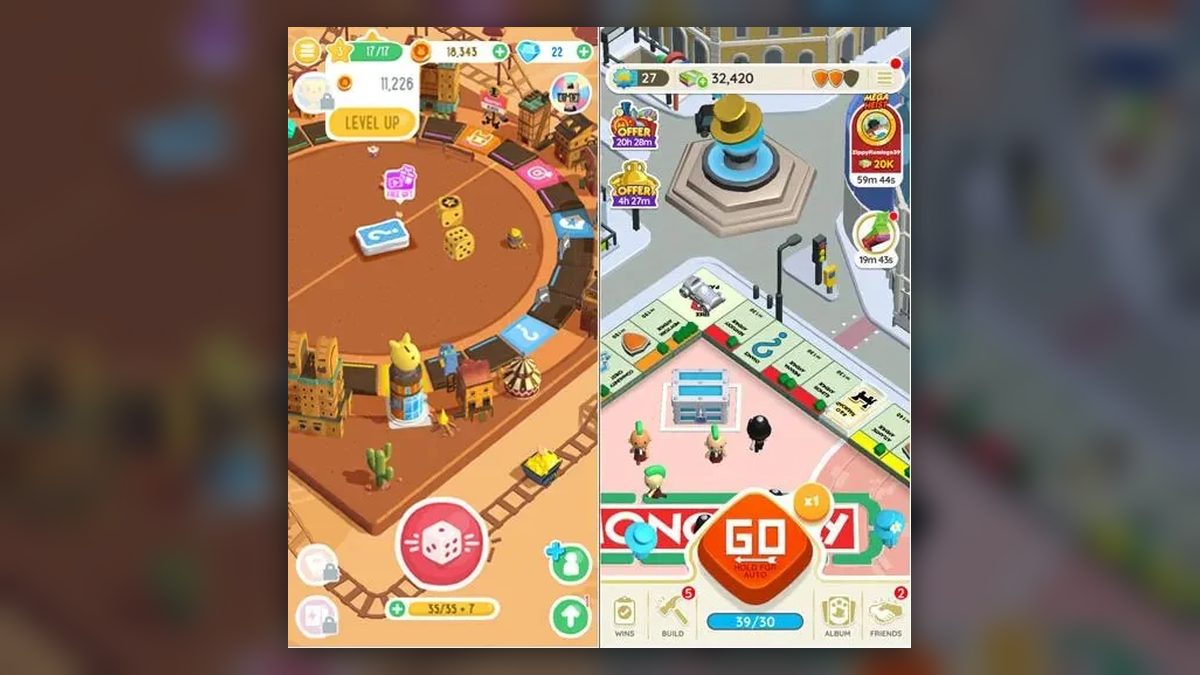
Monopoly GO!, the dice-rolling board game hit, is this year’s biggest surprise. It has held the top spot on Google Play’s US download and top-grossing charts for a long stretch. The reasons behind that say a lot about mobile game design and about why some games keep you rolling while their look-alikes stall.
The game still has a lot of room to grow, and it’s hard to tell yet how big it will get. Many people have written it off as a reskin of Coin Master, the slot-machine village builder, that only became a huge success because it carries the Monopoly name. Is that really all there is to it? Three questions help sort it out:
1. Why haven’t other Coin Master reskins had much success?
2. Why haven’t other games carrying the Monopoly brand had much success?
3. Why haven’t games that play a lot like it, such as Board Kings, been nearly as successful?
The rest of this piece takes them one at a time.
1. Why haven’t other Coin Master reskins had much success?
We looked closely at two Coin Master reskins:
- Dice Dreams
- Piggy Go
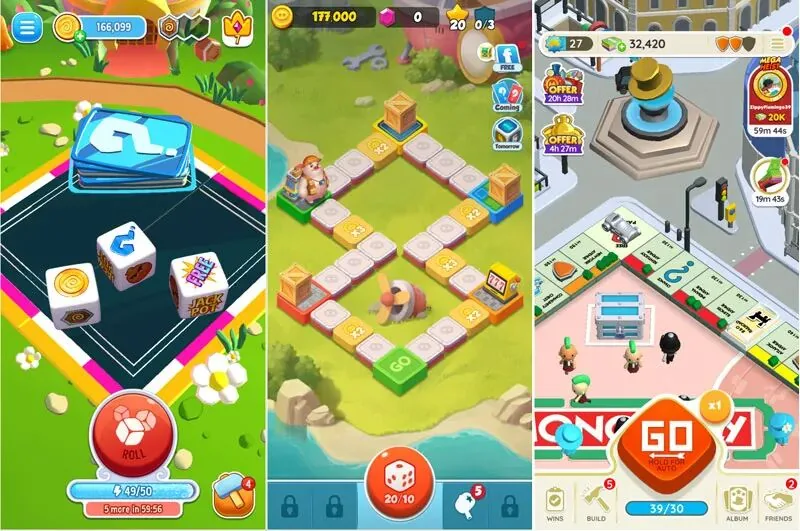
The focus was on how their core gameplay and features differ from Coin Master’s.
| Game | Core gameplay vs. Coin Master | Surrounding systems vs. Coin Master |
|---|---|---|
| Dice Dreams | Swaps the slot machine for 3 dice | Building + social + collecting |
| Piggy Go | Swaps the slot machine for a board of squares. It looks a bit like Monopoly, but it only spreads each reward out across the board | Building + social + collecting |
| Monopoly GO! | Swaps the slot machine for Monopoly-style play, dropping some multiplayer features such as “buying property” but keeping touches that add variety, like “Chance” and Jail | Building + social + collecting |
Side by side, these reskins hardly differ in how their systems are built. The difference lies in how each one changed the core gameplay. Monopoly GO! handled the Monopoly formula just right: it keeps the board game’s core fun (making money) while also working as a game you play on your own.
That fits the common view: a game that only tries something new in its systems and its setting, without changing the core gameplay, can’t become a huge success.
Seen from this angle, one conclusion follows:
Monopoly GO! is a game built on a fresh idea in how it plays, not a reskin.
On to the next question.
2. Why haven’t other games carrying the Monopoly brand had much success?
Once again, we started by playing the games:
- Monopoly Tycoon
- Monopoly
- Monopoly Slots
- Monopoly Poker
- Bingo Bash
Same approach as before: break each one down and see what the Monopoly brand actually does in it:
| Game | What the Monopoly brand does |
|---|---|
| Monopoly Tycoon | Drops Monopoly’s move-around-the-board play and puts more weight on building; the goal is to become a property tycoon. |
| Monopoly | Paid game ($3.99). A complete recreation of Monopoly in 3D, with single-player and multiplayer modes. |
| Monopoly Slots | Uses Monopoly characters as the symbols on the slot reels, which is really just packaging and setting. |
| Monopoly Poker | Monopoly is only packaging and setting. |
| Bingo Bash | Monopoly is the packaging and setting for events. |
| Monopoly GO! | Monopoly is the main gameplay, minus some multiplayer features such as “buying property”, while keeping touches that add variety, like “Chance” and Jail |
The table shows that some of these Monopoly-branded games use the brand only as packaging, while others fold its fun into something else and turn it into a different kind of fun. Monopoly Tycoon, for example, puts the spotlight on building, which is the fun of a management game. Bingo Bash comes from Scopely, the same company as Monopoly GO!, but there Monopoly only works as packaging, and only for events. The main bingo game has very little to do with Monopoly, and the core fun is still the bingo.
Monopoly, the paid app, recreates every part of the board game, and its art is very good too. But it sticks so closely to the original that a game takes a long time, and the thrill along the way isn’t that strong. Above all, you can’t play with friends, only with strangers matched online, which gets rather dull. Even so, for a paid game its download numbers are already very good, which shows how much market potential Monopoly’s gameplay and brand have.
Monopoly GO! trims the Monopoly formula to a degree but keeps its core fun, and it retunes the overall pace of rewards so the game delivers more of a rush. Around that core it adds the goal systems and blended gameplay the market favors right now, namely building and social features. These create a second layer of goals plus interaction between friends, and they do a great deal to keep players coming back.
3. Why haven’t games that play a lot like it, such as Board Kings, been nearly as successful?
Same routine here, starting with a long stretch of play in Board Kings.
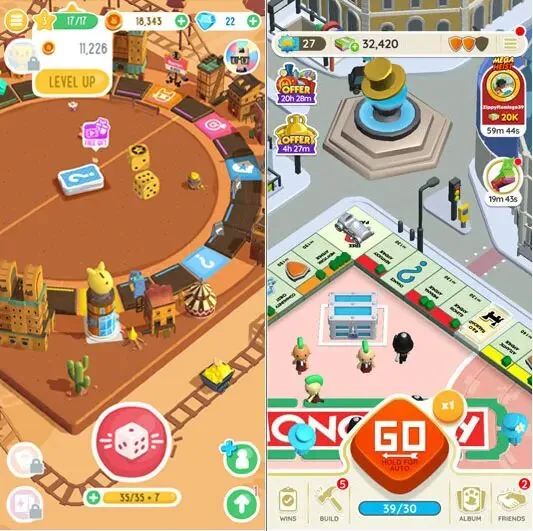
Here is how the two compare in core gameplay and in the systems around it:
| Game | Core gameplay | Surrounding systems | Who plays |
|---|---|---|---|
| Board Kings | No Monopoly brand, but it plays like a Monopoly board: players roll dice to move forward, and the squares hold different content or rewards. | Building + social + collecting | Mostly women; Mostly 45 and older |
| Monopoly GO! | Monopoly is the main gameplay, minus some multiplayer features such as “buying property”, while keeping touches that add variety, like “Chance” and Jail | Building + social + collecting | Close to an even split, slightly more men; Mostly 45 and older |
Compared this way, the two games’ surrounding systems are nearly identical.
The gap in core gameplay isn’t that big either. Board Kings has no Monopoly brand, but it plays very much like Monopoly GO!, and both put luck-driven rewards front and center. In both, the ups and downs of the early game feel great.
After a week with both games, we did find a difference. Monopoly GO! has far more going on in its board squares: besides rewards there are penalties, Jail and more. In themselves these designs aren’t hugely different, but because the outcomes are random and social features back them up, together they make the game much more playable and raise the anticipation of every roll. The game feels more addictive, and players stick with it longer.
As for who plays, both games’ players are mostly 45 and older, which suits how little hand skill these tap-and-let-luck-decide games ask for. Monopoly GO! probably benefits from the Monopoly brand here: men are more willing to give it a try, so the share of male players is high as well.
Board Kings is a very fun game in its own right. Since launching in 2017 it has built up a huge number of downloads, an impressive record. Monopoly GO! improved on that foundation and added the Monopoly brand, so it makes sense that it has done this well.
4. The method behind the success
With the three questions from the start answered, the game’s structure can be written as a formula:
Monopoly gameplay and packaging + luck-based rewards + building + social + collecting
The formula looks fairly ordinary, like something anyone could have come up with. Still, it left us wondering: how did this developer arrive at it, and can success built on a formula like this be repeated?
Take that formula one step further into the abstract and you reach the method behind Monopoly GO!’s success:
Innovation = Distill + Break Down + Recombine
Note: this theory was first put forward by Game Design Theory.
It is in fact the “small twist” approach to innovation that is popular in China’s games industry. The three steps work like this.
1. Distill: Sum up a game’s core fun, its structure and so on, then sort them into categories with some method, so the next step can break them down further. Distilling this way produces a classification shaped like a pyramid.
From its base (packaging) to its peak (emotion), the pyramid traces the process of boiling a game down to what it really is.
Packaging is the first thing a player sees. Next, the player experiences the game by following its various systems, such as quests. Along the way, goal planning sets the player’s pace. In the end, what players are really after is the fun of the core gameplay. The experience is a blend of many emotions that gives players different kinds of fun, and finally, by touching the player’s emotions, it carries them into a state of flow.
Flow is really the product of emotions being set off, so emotion is what games are about at their core.
2. Break down: Use those categories to take the game apart further.
- Emotion doesn’t need breaking down, since it is the top layer of fun.
- Experience is a mix of emotions at different rhythms, and it is the heart of a game. There is no best experience, only a better one, and making an innovative game really means creating a different experience.
- Core gameplay needs no explanation: it describes the main way the game plays.
- Goal planning mainly means the overall pacing of rewards and progress.
- System structure is what’s usually called the surrounding systems, and it works hand in hand with goal planning.
- World and packaging is mainly the presentation layer: art style, music, sound effects, interface, story and so on all belong here.
Some examples of what breaking down turns up: the core fun of Monopoly; the sense of order you get after tidying things up in real life (the inspiration for many item-organizing games); the fun of dressing up in dress-up games; the fun of running a business in management games; the unpredictability of random rewards; the rush of fast-moving numbers; the sense of achievement from collecting; and so on.
3. Recombine: By this point the answer is close to obvious. Monopoly GO! used exactly this method to create a hit, which makes it a fitting example of this step:
First: distill what made Coin Master work, namely luck-based rewards + social + building + collecting.
Second: distill the core fun of Monopoly - Classic Board Game and of the real-world board game, with special changes for solo play.
Finally: put all that fun together, then keep polishing the game’s details and its overall systems until the result is a hit.
In fact, this way of innovating has already produced a lot of hit games:
1. The Gardenscapes and Homescapes series
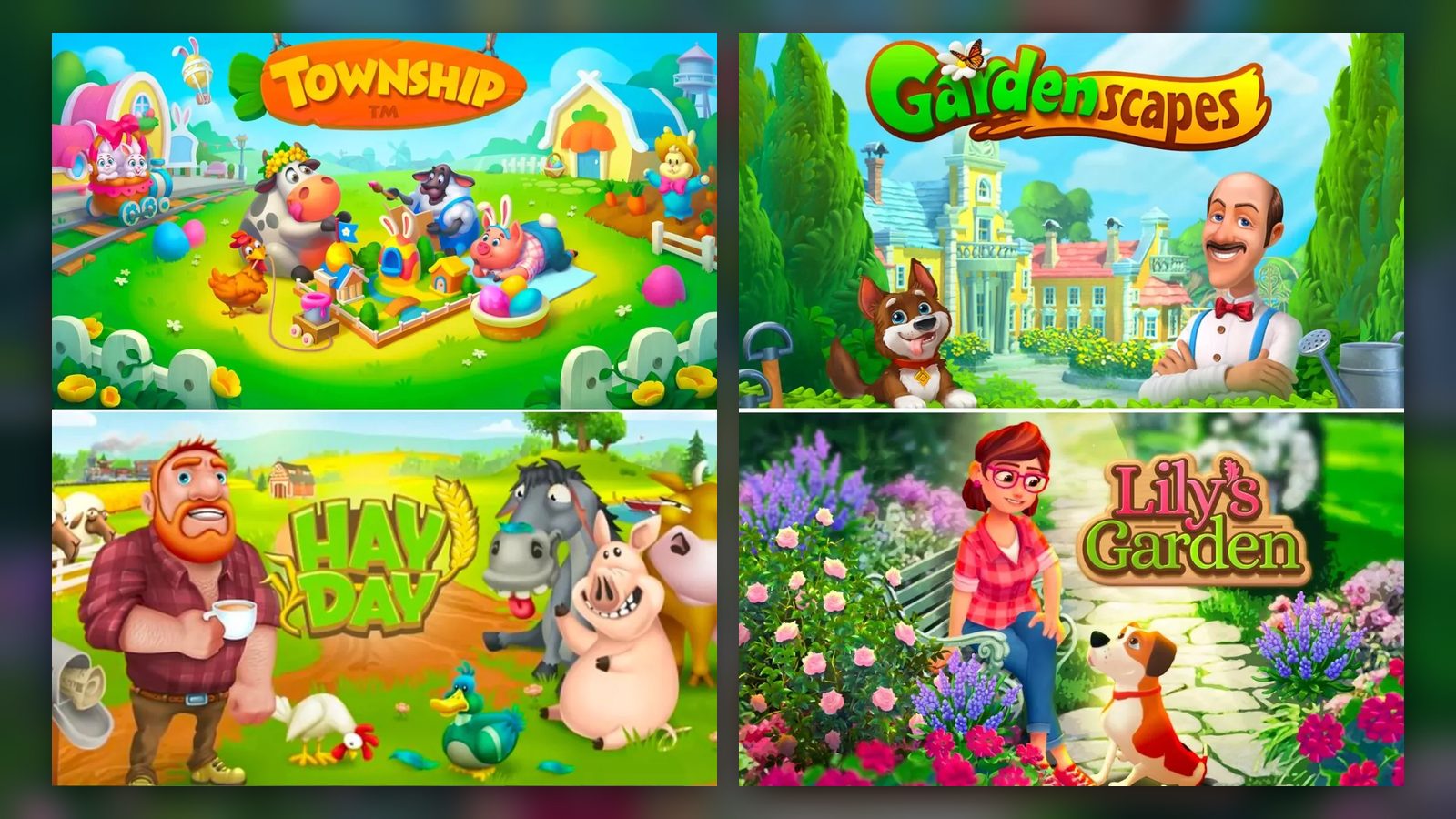
These pair the core fun of match-3 with the fun of a management game (cut down until only the fun of decorating is left).
2. Survivor.io and SSnaker
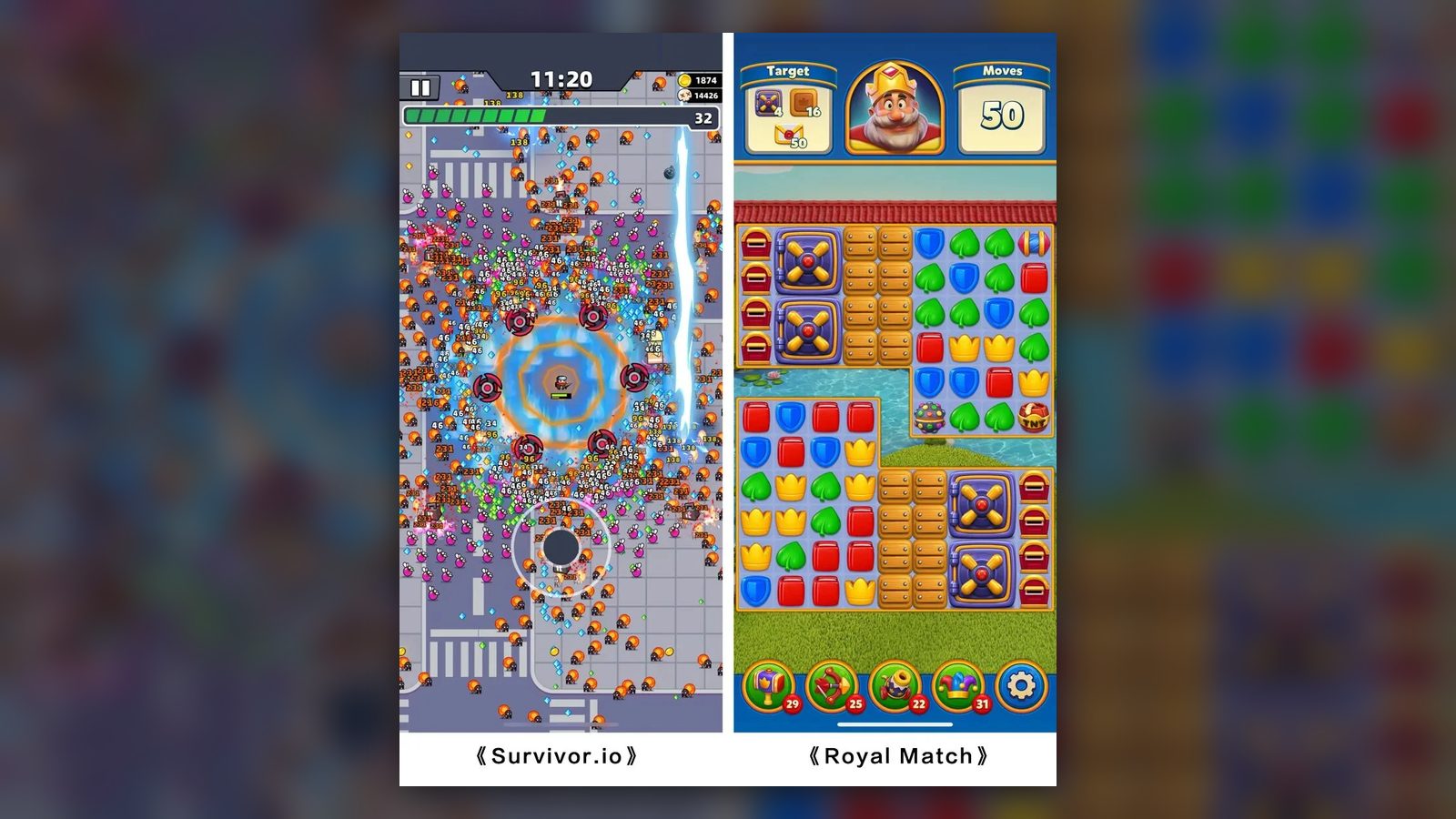
Habby, the publisher behind two hits in a row this year, innovates in exactly this way. It has stuck with hybrid casual games all along, which really amounts to recombining the packaging of casual games, the gameplay of mid-core games and the number-heavy progression of hardcore games.
3. Popular hyper casual games such as DIY Boba
Many people have long assumed that these ultra-simple, pick-up-and-play games can only come from pure invention. In fact, the Western studios making them use this same method; the experiences they distill simply come from a much wider range of places, other games and everyday life alike. DIY Boba essentially takes the fun of mixing cocktails and applies it to drinks.
The games industry has many more hits born from recombining like this, too many to list here. The point is that this method can be repeated in full, and it deserves close study.
It is also how innovation works across every content industry. Lost in the Stars, the Chinese thriller that became a smash hit this year, follows the same method: at heart it recombines a Southeast Asian detective story, best friends helping each other, the real case of a pregnant woman who fell from a cliff in Thailand, and the film Trap for a Lonely Man.
One last word:
Even with this method studied and explained in detail, holding it doesn’t guarantee a hit. Games are very complex: they span a huge range of areas and involve a great many details, and how to blend the pieces well once they are recombined is work that game designers have to dig into. Only by trying again and again can anyone make a hit.
Here’s hoping every developer gets to make the hit they dream of. Go for it.