Royal Kingdom vs Royal Match: What the Sequel Changes
Royal Kingdom vs Royal Match: the same match-3 boards and events, plus castle raids, a war-and-magic theme and a potion-based build system.
A follow-up to a match-3 giant
Comparing Royal Kingdom vs Royal Match shows what a studio keeps and what it changes when it follows up a huge hit. Royal Match, the king-themed match-3 hit, is the breakout casual mobile game of recent years and the only game today that can go head to head with Candy Crush Saga in match-3. It has grown into one of the highest-grossing mobile games in the world, it has made its developer, Dream Games, the hottest mobile studio of the moment, and it has pushed match-3 games into a third era, the Royal era (counting the first as the Candy Crush era and the second as the “Scapes” era of Homescapes and Gardenscapes).
In April, Dream quietly released the Royal Match sequel, Royal Kingdom. It has now been on iOS for half a year and is still in testing on the iOS stores of the UK, Canada, Turkey and the Philippines. We’ve played 300 levels of it lately, so this piece starts from what it shares with Royal Match and where the two differ, then looks at what Royal Kingdom is trying to do and whether it can repeat the first game’s success.
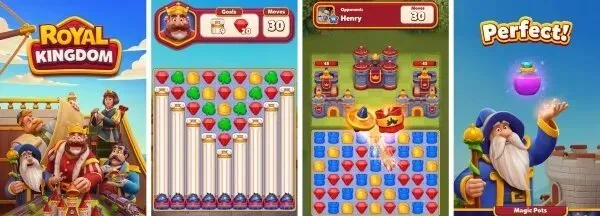
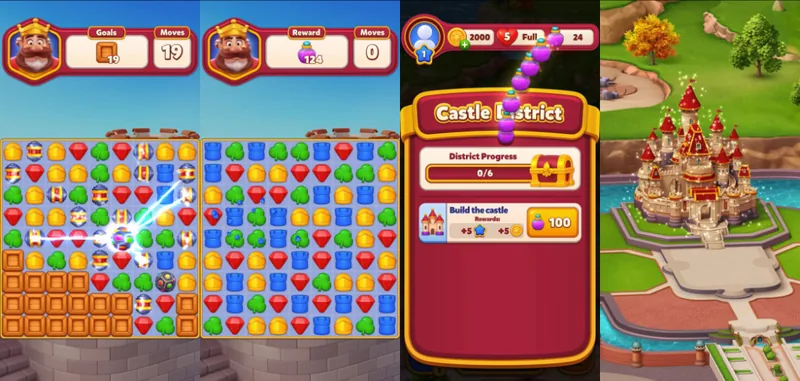
First, a quick look at how Royal Kingdom plays. You play King Richard and earn Potions in match-3 levels. Outside the levels, you spend those Potions to build your castle, adding areas and buildings that give you experience and coins. Coins buy boosters to use in levels, and experience raises the king’s level, which pays out level rewards. The overall feel and the loop of play are very close to Royal Match.
What Royal Kingdom shares with Royal Match
Pieces and levels that carry straight over
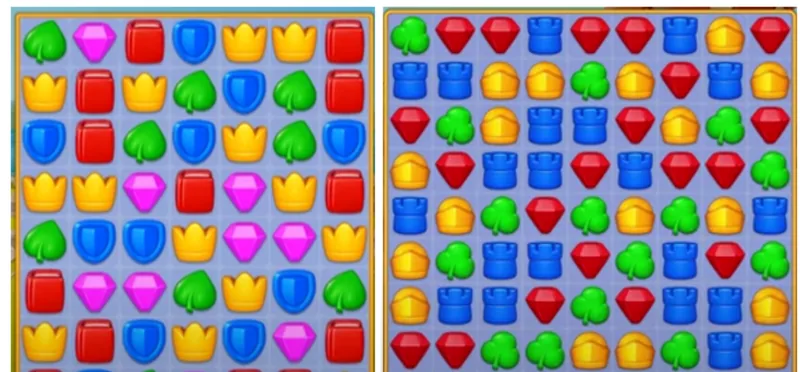
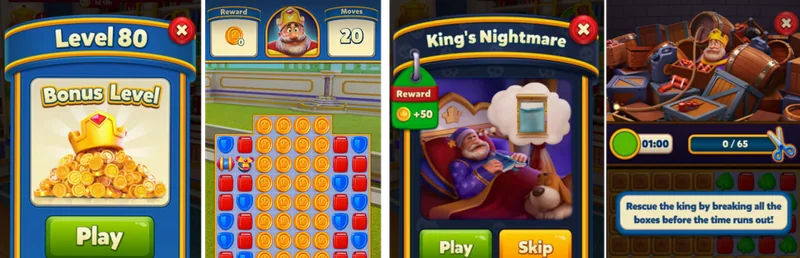
Royal Kingdom’s levels are designed almost exactly like Royal Match’s. From the way the pieces look to the way the obstacles and special effects feel, the two games are very close in feel and style, clearly from the same family. The difficulty curve and the setup of normal, hard and super hard levels are also exactly the same as in the first game. On one hand, this carryover shows Dream’s confidence in the Royal-era experience it created; on the other, it shows how determined the studio is to build a “Royal” franchise.
Almost the same world and story
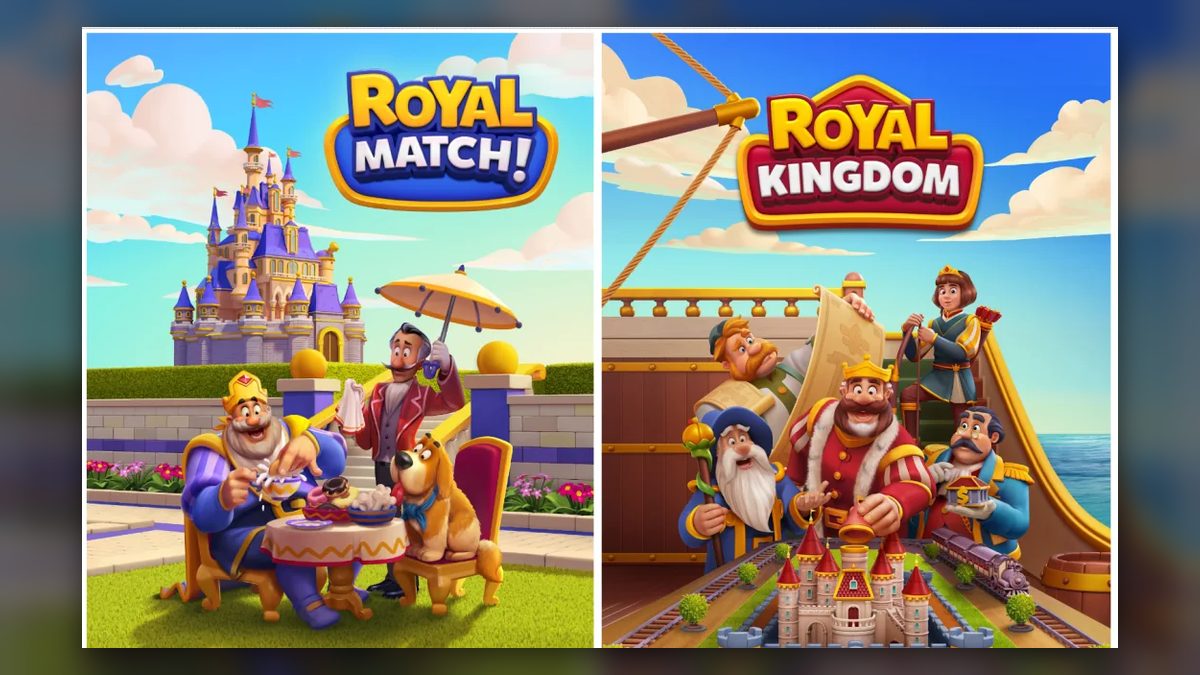
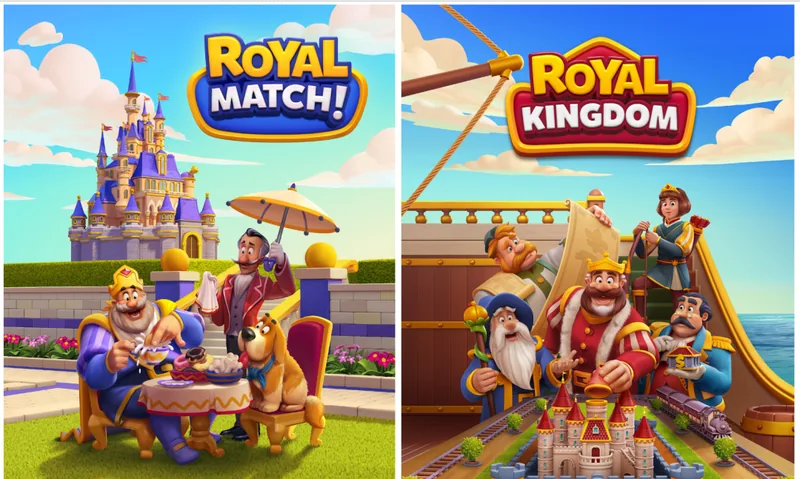
As in Royal Match, you again play a king in Royal Kingdom, though this time he has a different name. You may or may not have noticed what the king in Royal Match is called, but both games show their kings’ names fairly clearly. The difference is that Royal Kingdom’s king is younger than Royal Match’s, and Royal Kingdom has more kinds of characters with more different jobs.
Roughly speaking, Royal Match is mostly about the retirement of old King Robert, who spends it fixing up and building his castle with his butler and his pet. Royal Kingdom uses King Richard, a king in his prime, and his many ministers and helpers to tell a new story of a kingdom that grows, goes to war and conquers new land.
Events from the same playbook
Royal Kingdom also inherits Royal Match’s events system, the most successful part of its design. Win-streak events, leaderboard events, piece-collection events, the Battle Pass and more: the events outside the levels are almost identical in the two games, and they form a very connected loop between the levels and everything around them, snappy and rewarding and hard to put down.
Right now this setup is also the model that casual games around the world follow for their events.
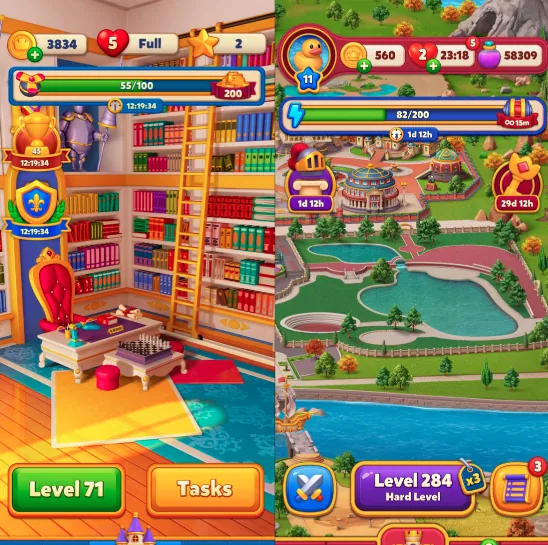
So if you’re a match-3 fan, or a loyal Royal Match player, moving over to Royal Kingdom takes almost no effort and nothing new to learn. All that’s left is to get used to the new mechanics Royal Kingdom brings.
What Royal Kingdom changes
Castle battles against other players, kept very simple
As mentioned earlier, in this game you play King Richard, a king in his prime who goes to war and conquers new land. “Going to war” means attacking other players’ castles, one after another. In Royal Match, a “special level” comes up every few dozen levels: a more thrilling, tense level with a bigger presentation that gives players an unusual and richer match-3 experience.
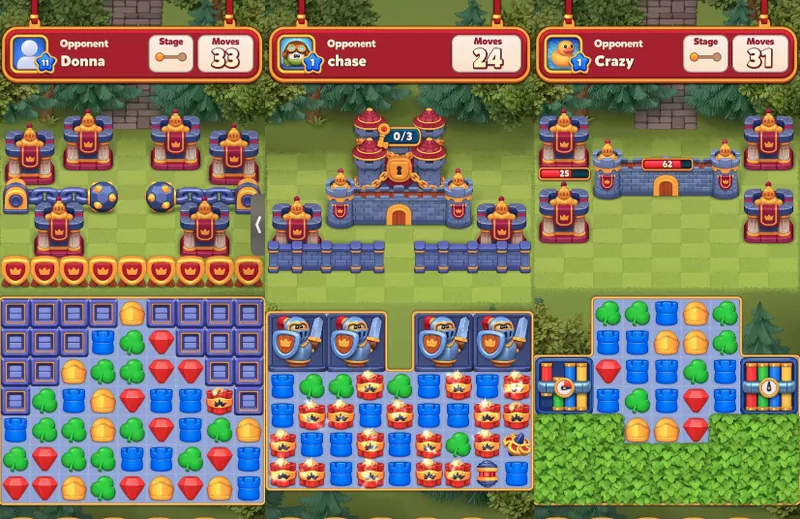
In Royal Kingdom, those levels are replaced by a new kind: attack levels. Every 10 levels on the main path, you’re matched with an opponent, and every move you make on the board in the lower half of the screen turns into an attack on the enemy in the upper half. Beating an enemy castle pays out a big haul of Potions and shields. Overall it feels like a very light take on Empires & Puzzles, the match-3 battle RPG.
Shields work like the shields in Coin Master, the slot-machine village builder: they give extra protection against opponents’ attacks. But in the nearly 30 castle battles we’ve played alongside the main levels, no enemy castle layout has come up twice so far, and nothing anywhere in the game shows how to lay out your own castle. So these enemies are most likely just an “ID”, a player name attached to levels that were designed in advance, and the game hasn’t yet built a strong system of social play and real competition.
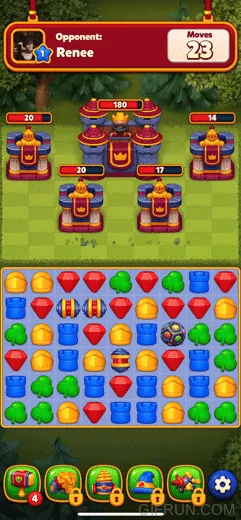
Still, it has to be said that this design does give the game some sense of “competition” and makes it a bit more tense.
A look and feel aimed more at male players
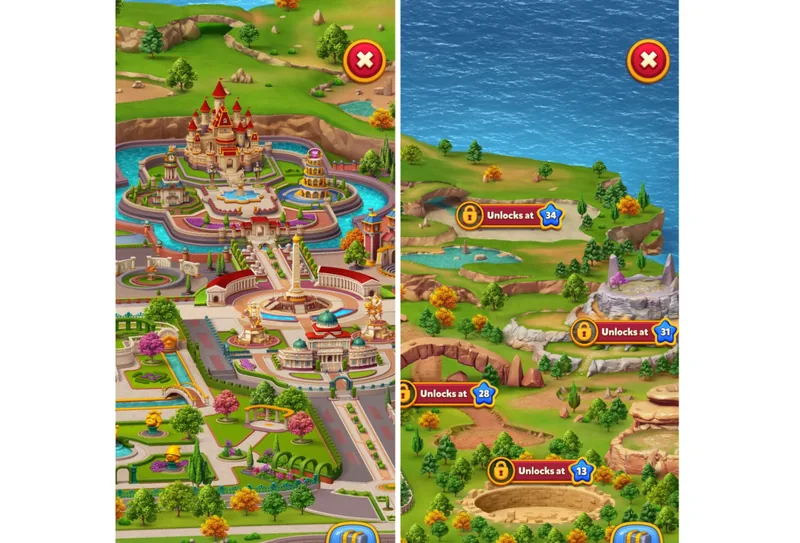
Royal Match unlocks one room or area at a time, keeps the camera inside it and puts the stress on fine decoration. Royal Kingdom works differently: it stresses the castle as a whole, and how each area looks and feels as part of it. We take this as a sign that Royal Kingdom is aimed at more mature players who love competition and social play, players who also prefer the sense of building that comes with this wide view.
Beyond the more male-oriented dressing of the castle building outside the levels, many obstacles and special pieces inside the levels also get more masculine theming and design than earlier casual match-3 titles: dragons, knights, wizards, TNT, marble pillars and other pieces of medieval war and magic.
Levels that go boom, boom, boom
Progress driven more by numbers
The Potions mentioned several times above are a currency new to this game, and a common kind of currency in games. Both clearing levels and building the castle run on it. Royal Match used stars to move things forward, and its building outside the levels works more like the Homescapes and Gardenscapes series: the steps are big, progress feels very jerky, and each chapter can’t hand out many rewards, because a star system breaks very easily.
Royal Kingdom instead moves things forward with a currency-based building system, like the ones in Project Makeover and Property Brothers Home Design. This gives the designers who tune the game’s numbers more room for rewards, and it makes building and growth in the game finer-grained, with more layers.
This kind of number design can stretch across more levels, and it also leans more toward the way male players read and enjoy numbers.
Where this leaves Royal Kingdom
Royal Kingdom keeps the first game’s excellent levels (especially the near-fail wins, scraped through with almost nothing left, that make it so hard to stop), and on top of that it adds more heavily social play, castle building, battles and other content aimed at men, which strengthens “competition and rivalry” across the whole game. It looks like Dream’s attempt at a match-3 game for male players.

In recent years, the success of Match Masters and Chrome Valley Customs has shown that match-3 games don’t have to be a pleasure only for women who play casually.
To be fair, we don’t think Royal Kingdom in its current form is a mature, hit-ready game yet: its player-versus-player side is fairly thin, its grand story hasn’t had time to unfold, and its events lineup isn’t as rich as the first game’s. But Dream will surely use Royal Kingdom’s design and future updates to bring more new and distinctive ideas, and some real shake-ups, to the match-3 market.
Further reading
Royal Kingdom: Will It Usurp the Throne or Just Be a Royal Relative?
Can Dream Games repeat the trick with Royal Kingdom?