The T-Spin: Puzzle Game Design That Made Tetris a Fight
A puzzle game design lesson from Tetris: how the T-Spin, which can send 6 rows to a rival in Tetris 99, turned a score chase into a fight.
Fair warning: this one gets technical. Almost everyone who plays Tetris, the falling-blocks classic, learns to leave one column open and wait for the long bar. This is the story of the T-Spin, the single rule that broke that habit and turned a casual puzzle game into a competitive battle royale, and of what it says about puzzle game design.
Background
Tetris is a classic, and its rules need no introduction here. At launch it was a puzzle game of quick hands, played for a high score. Across the versions and changes that followed, it gradually grew rules that are more competitive and more challenging.
This piece looks at the Tetris T-Spin and the part it played in changing both how the game plays and how it is played competitively.
Classic Tetris: how it plays and how matches were scored
In the most classic version of Tetris (the 1989 NES version), the goal is points. Players try to score as high as possible before game over, when the blocks stack up to the top of the screen. There are two main ways to score big: clearing more lines at once, and surviving more levels (that is, more waves).
Here are the rules of the classic NES Tetris:
Line clears: 1 line scores 100 points; 2 lines score 200; 3 lines score 400; 4 lines at once, a Tetris clear, scores 800.
Level bonus: each level cleared adds 1 to the score multiplier.
Final score: line-clear points × level multiplier.
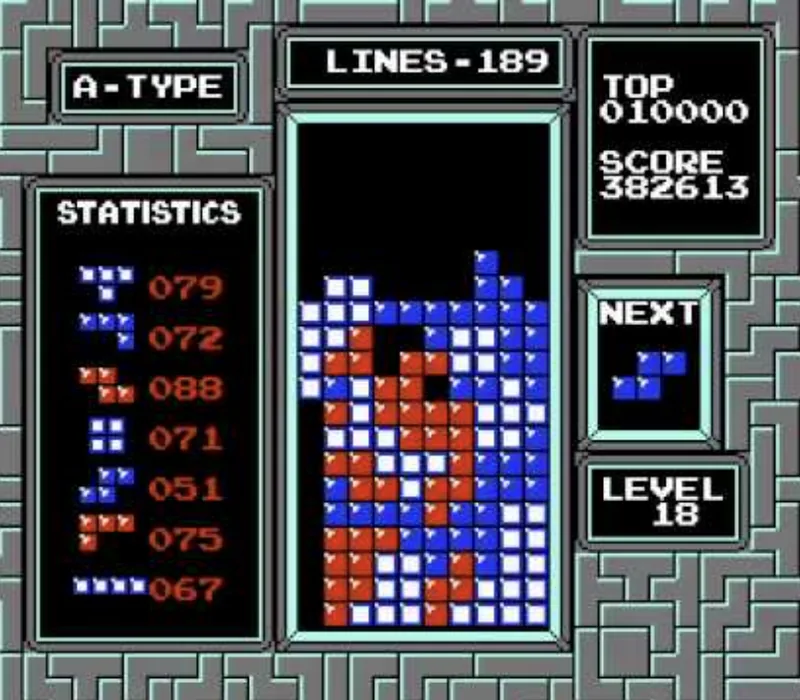
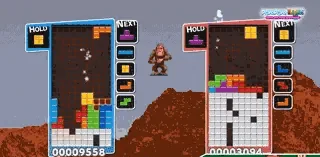
In the screen above, the player is on Level 18, so clearing 4 lines at once would score 800 × 18 = 14,400 points.
Anyone who has played Tetris probably knows this from experience: a Tetris clear, 4 lines at once, is the way to squeeze the most points out of every move. That’s why so many players always leave one column empty and wait (though for plenty of people it’s probably just the easy option). Head-to-head scoring was also how the earliest Tetris competitions were decided.
How classic Tetris competitions are scored
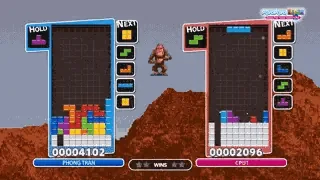
Since 2010, Tetris has had an official Classic Tetris World Championship. It is played on the 1989 NES Tetris, one on one: two players compete for points, and the higher score wins.
This scoring makes matches easy to understand and easy to relate to, because the players in a match think the same way regular players do: “build a wall, wait for the long bar.” The pros simply move countless times faster and stack far more efficiently.
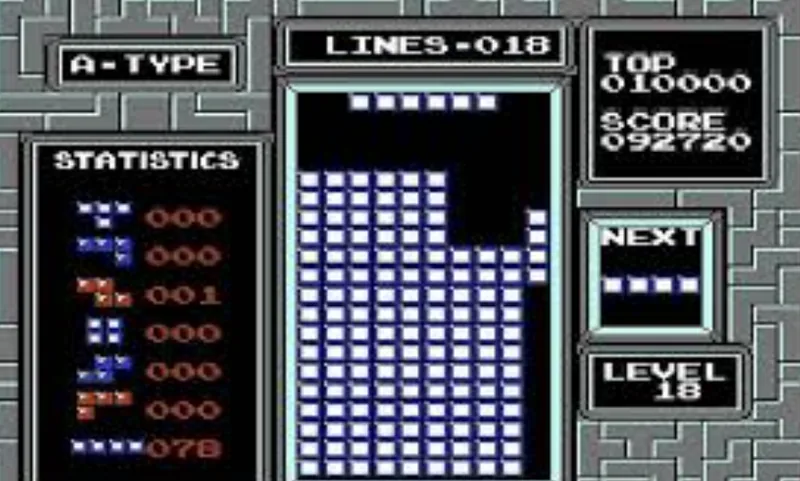
For most Tetris players, building a wall and waiting for the long bar is the best approach.
And because the classic scoring rewards going for Tetris clears, every player’s board and the flow of every game end up looking the same. That exposes the weakness of classic Tetris as a competition decided on points.
The weakness of classic Tetris competition rules
As mentioned above, classic Tetris competitions are decided on points, and a Tetris clear is the only way to score the most.
So under these rules, every player’s game goes the same way: stack a wall with one column open, wait for the long bar, land a Tetris clear, stack again with one column open, wait for the long bar, land another Tetris clear, over and over… until one slip, a scramble, no way back, game over.
Pros can train to run that loop faster with higher APM (actions per minute) and push the slip further and further away. The result is classic Tetris matches that feel repetitive to watch, drawn out, and stuck in an APM arms race. (Techniques like hypertapping and rolling, and how the APM race escalated, are easy to look up, so they’re skipped here.)
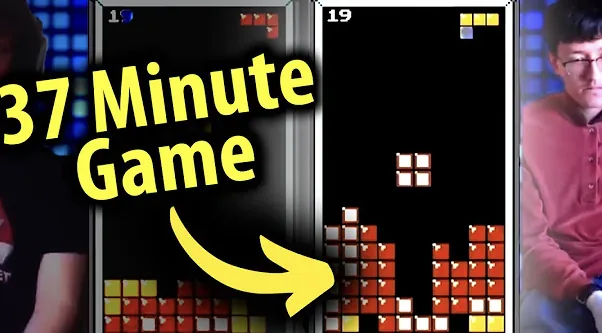
Out of that experience came competition rules with more strategy, more attack and more aggression.
Battle royale arrives, and anything can be one
Head-to-head Tetris had been around for a long time, but in our view the battle royale Tetris 99 is the more representative release. It seems to have launched as one of the flagship games for the Nintendo Switch Online membership. It introduced many more players to a more aggressive set of Tetris competition rules.
These rules are faster and more thrilling than the classic ones, and more aggressive too. Players can use all kinds of moves to send extra blocks to their opponents and speed up their downfall.
And the core mechanic that grew out of these rules is the T-Spin.
What a T-Spin is
The T-Spin first appeared in The New Tetris for the N64 in 1999, as a fairly advanced technique. Put simply, it means maneuvering a T-shaped piece (some versions also allow S and Z pieces) into a T-shaped gap and earning bonus points for it.
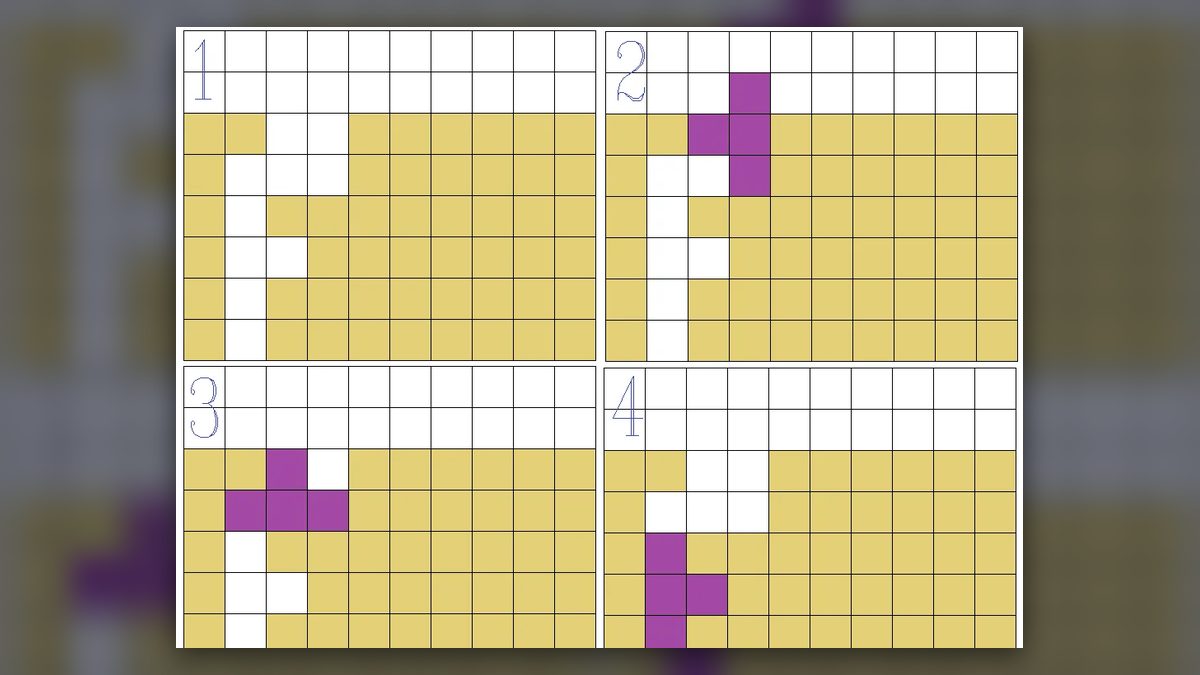
Slipping one T piece into a T-shaped gap by rotating it after it touches down, and clearing 2 lines at the same time, is called a T-Spin Double.
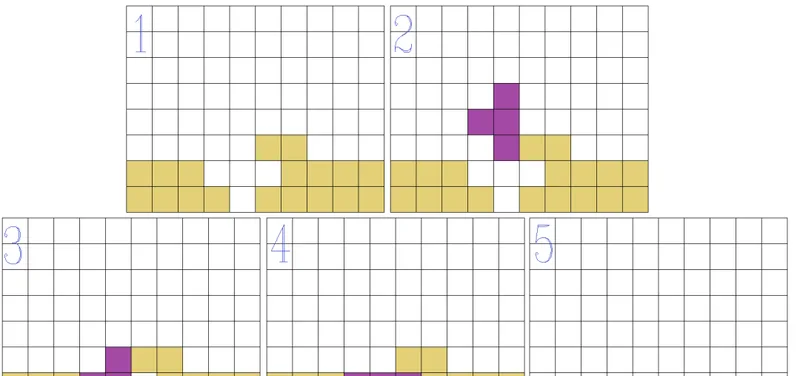
By the same logic, if the same move clears 3 lines, it’s a T-Spin Triple.
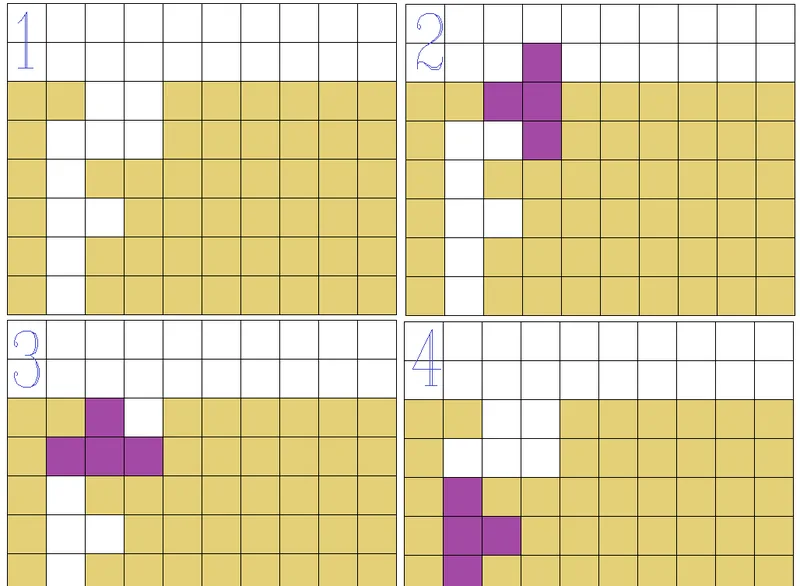
There are also moves like the T-Spin Single and the T-Spin Mini, which are left out here…
In short, the 1999 The New Tetris made a point of supporting pieces that can still rotate after touching the bottom, and that rule gave rise to the T-Spin, a technique that is harder to understand and harder to pull off.
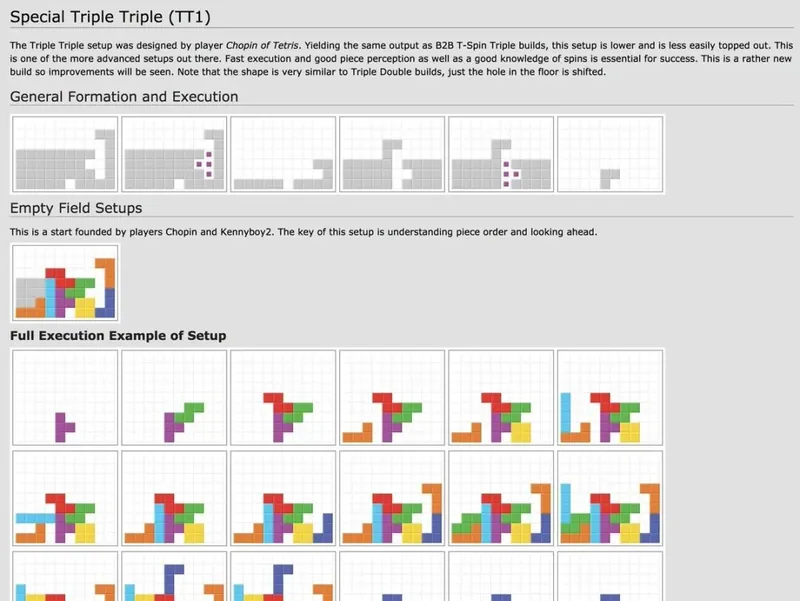
As the diagrams show, a T-Spin setup looks different from a classic Tetris board, and solving it takes a different way of thinking. That goes double for the T-Spin Triple: most players probably can’t follow its rules or how it’s built. The T-Spin, you could say, was a new way of understanding the traditional rules and taking them apart. And developers gave it extra attack power on top.
How the T-Spin improved Tetris competition
As noted earlier, play in classic Tetris competitions ends up as a mindless race for APM. The T-Spin adds strategy and challenge: setting one up takes more planning and more deliberate board building. That fits well with the competitive Tetris that Tetris 99 stands for.
In the many versions of Tetris built around head-to-head and competitive play, landing a T-Spin earns the biggest reward in the game: sending the most rows of blocks to the opponent.
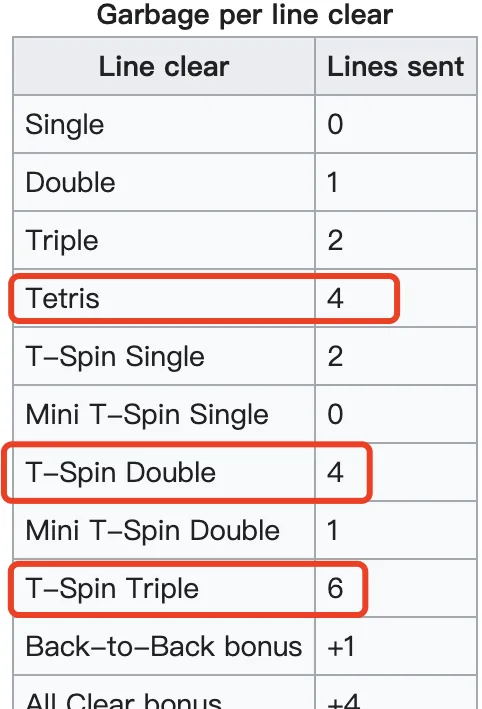
The table shows that in Tetris 99, a T-Spin Double hits as hard as a Tetris clear, and a T-Spin Triple hits hardest of all, adding 6 rows to an opponent’s board at once. Stack the bonuses for combos and BTB (back-to-back hard clears, which add extra rows) on top, and in theory a player can knock an opponent out in one go (20 rows at once).
The T-Spin became the new favorite of competitive Tetris. Its designers also hoped it would break the old habits of classic Tetris, in how it was played and how it looked to watch, with a more demanding and more aggressive way to play that makes the game more “spicy” (the word used by Alexey Pajitnov, the creator of Tetris).
Another Tetris producer, Henk Rogers, described the T-Spin this way:
“When we came up with the T-Spin, we made it slightly more valuable than the ‘I’ piece and the reason for that is because if we didn’t, people just continue playing for the ‘I’ piece… We wanted to create a set of players that were playing T-spin…”

The T-Spin was created, and then strengthened, to turn players who only chased Tetris clears into T-Spin players, to give the game more ways to play and more styles, and to build a new group of players.
The T-Spin’s downsides
Anyone who doesn’t play Tetris may have been lost by the T-Spin explanations above. Even for experienced players, building a T-Spin is far harder than setting up a Tetris clear, and there are countless T-Spin setups online to memorize, so the T-Spin is a hard way to play in itself.
T-Spin play is also hard to watch: viewers may well not understand what a player is doing while the setup is being built. And a pro T-Spin player’s experience is very different from the line-clearing feel that traditional Tetris offers, so to some extent the T-Spin clashes with the game’s basic fun. That’s one reason the T-Spin is hard to understand, hard to set up, and played by relatively few people.
The bigger picture
As time passed and players’ taste in competitive Tetris changed, the game became more competitive and more thrilling than the original version, with less pure execution and less monotony. The T-Spin is the core rule that carried that change in the game’s character.
The T-Spin grows out of the game’s core line-clearing mechanic, but trades a more strategic, harder-to-build approach for more attack and aggression. Arguably, nothing shows how the style of Tetris has changed better than the way this mechanic was born and evolved.
Turn it around: in many traditional games and rule sets, picking one mechanic, taking its core apart, and building sensible rewards and penalties around it can change the whole experience of a game.
We find reading puzzle game design this way, from one small rule out to the whole game, interesting, which is why it’s shared here.
The end.
References
Wikipedia
https://zhuanlan.zhihu.com/p/57021569
Thanks for reading.