Why the Fortnite Battle Pass Gets Free Players to Pay
How the Fortnite Battle Pass turns hours of play into a reason to pay, and how the V-Bucks it hands back can make the pass almost free.
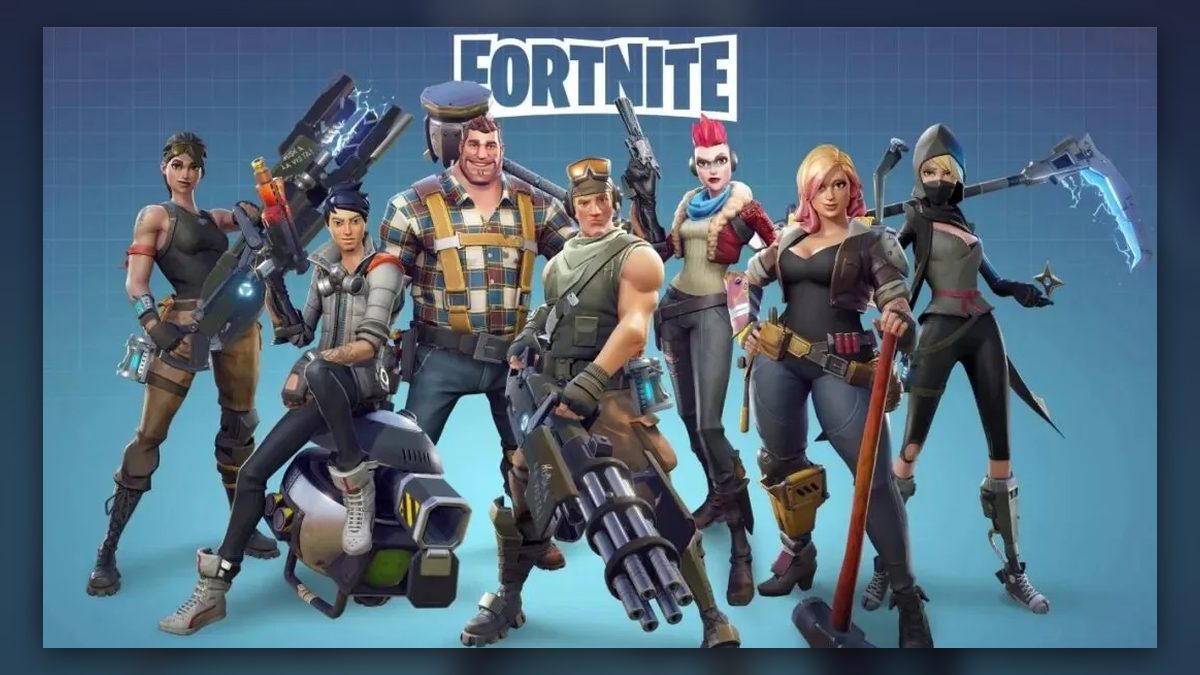
The Fortnite Battle Pass came up only briefly when we wrote about Honor of Kings, Tencent’s mobile battle arena game. We rate the design extremely highly and expect a lot from it, but the topic back then, and the time there was to prepare, left no room to go into it. This piece starts with how it came about and looks in detail at how the Battle Pass is designed, how it works and what it is like to play through, and at how it is likely to change the way the free games you play ask you to pay.
Fortnite and the Battle Pass
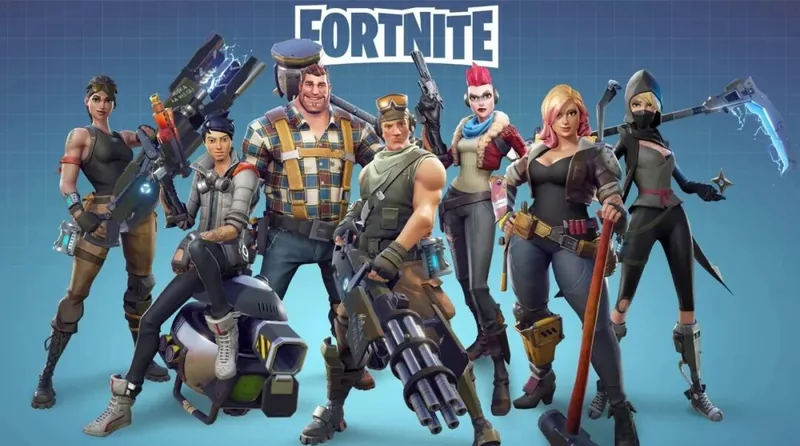
Fortnite started life as a “showcase” Epic Games built for its own Unreal Engine. After it added a battle royale mode and went free to play in late 2017, it reached 30 million players in five months. With annual revenue of $2,400,000,000 ($2.4 billion), it topped SuperData’s figures as the highest-earning free game of 2018. The Battle Pass, its main source of income, naturally deserves much of the credit.
Plenty of media outlets and writers have made a big deal of tying Fortnite’s success to the arrival of the Battle Pass. An initial search turned up no published figures that directly link the Battle Pass to Fortnite’s huge revenue. That is no dead end, though: the revenue data tied directly to the Battle Pass, and how the feature has performed in other games, still give an answer.
According to SuperData, Fortnite brought in more than $200 million in April and more than $300 million in May, including over $50 million on May 1 alone. The reason for that huge single day: the old season had ended, and the new Battle Pass for Season 4 had gone on sale.
What is a Battle Pass?
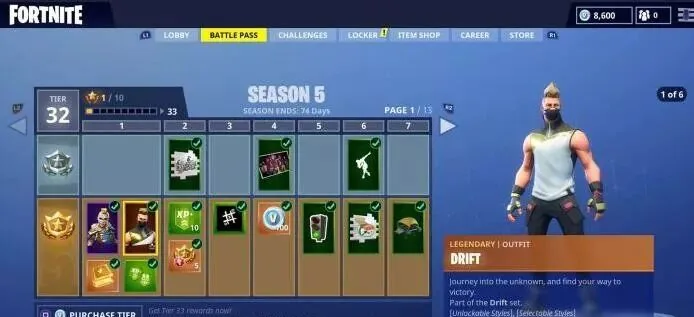
In this article, “Battle Pass” means specifically the feature Fortnite introduced with its second season in December 2017. It runs season by season. Playing earns experience that levels up the Battle Pass, and the higher its level, the more rewards a player unlocks: V-Bucks (the game’s premium currency, the equivalent of gems in other games), characters, skins, pets, back bling, harvesting tools, gliders, sprays, emotes, loading screens and more.
During a season, the Battle Pass adds new challenges every week, and completing them gives a large amount of experience that raises the Battle Pass level quickly. The pass comes in two tiers: one is free, the other is bought with V-Bucks. Players can also spend V-Bucks to buy Battle Pass experience directly and level up faster.
Put simply: you play to earn rewards, the more you play the more you get, and paying unlocks even more. If that sounds convoluted at first, the new season pass in Honor of Kings works the same way.
The Battle Pass gets this much attention here because, in our view, it is more than the “payment revolution” so many people call it. It also marks the start of a new era for players, a big step by developers toward the people who play their games. Over the decades that free online games have been evolving, the way they charge has gone through several shifts.
How the way games charge has changed
The rise of free games, meaning free online games here, changed how players get into a game: from the “buy first, play later” of games paid for up front to “play first, buy later.” That in turn made “how to get free players to spend money, and to spend more” the question developers had to answer.
1. Paying directly for power
Paying players can buy gear, upgrade items and other things free players can’t get, so that within every kind of system they crush free players on stats.
Typical examples are Chinese MMORPGs (big online role-playing games where huge numbers of people play together) such as ZT Online, Perfect World and Jade Dynasty.
(ZT Online wasn’t actually where this started, but it is so famous in China that it has become the symbol of the model.)
All designers had to do was build a system framework wide enough, pile in every kind of system (wings, mounts, gear, gems, enchantments, magic treasures, secret manuals, pets…), give each one a chunk of stats, and sell it to players. Big spenders flocked to it. The problem is that this model is very unfriendly to free players: no matter how seriously they play or how much time they put in, they can only watch the stat gap between them and paying players grow as new systems open up. So the share of players who pay in these games is usually not especially high, but the top-spending “whales” pay so much that the games still do fine. To this day, mobile games modeled on Legend of Mir, a classic online RPG in China, keep coming out one batch after another, and the formula keeps working.
At this stage, one yuan (about 14 US cents) bought one point of combat power, and how strong a player was rested almost entirely on how much they paid. Free players had little room to survive and usually couldn’t get a great experience or much fun out of the game.
2. Raising power through gacha
Players draw and upgrade the resources they need through gacha (capsule-toy style random draws), treasure chests, 10-pull draws and similar mechanics, and probability decides the quality of what they get
Typical examples are card-collecting gacha games: Puzzle & Dragons, and in China, Wo Jiao MT and Fangkai Na Sanguo.
Compared with buying stats outright, these games ask players to spend more time, because the tokens for draws can be bought with real money but can also be earned through all sorts of in-game activity. Different spots in the game are filled with different kinds of draws: odds-based draws, points draws, post-battle draws, limited draws and so on.
Gacha has another unusual side to the experience: it works like a lottery draw. It is really a gambling mechanic, which makes it very easy to get hooked on, and once probability is part of it, gacha reaches a wider crowd and can attract more paying players. To get players spending big, of course, it still has to be paired with the first model.
At this point the payment system was actually moving closer to small and mid-level spenders. Bringing in chance gave lucky players an opening to win big with a small stake, and indirectly, to some extent, it softened how badly the biggest spenders outclassed small spenders on stats.
3. Time investment
Players who pay get far more currency than the normal rate, but they have to log in every day, or level up, to collect it.
Typical examples are weekly, monthly and yearly cards, growth packs, subscriptions and investment plans.
Time-based currency deals, with the monthly card as the best known, are really a further compromise by the payment model toward free and casual players, because the first two models are, frankly, still pretty hardcore, and the wall in front of free players is still there. The monthly card works to break down that wall and narrow the gap between free and paying players. At the same time, it gets the most out of how active players are: the very real value in a monthly card keeps players coming back and playing, so they stay longer.
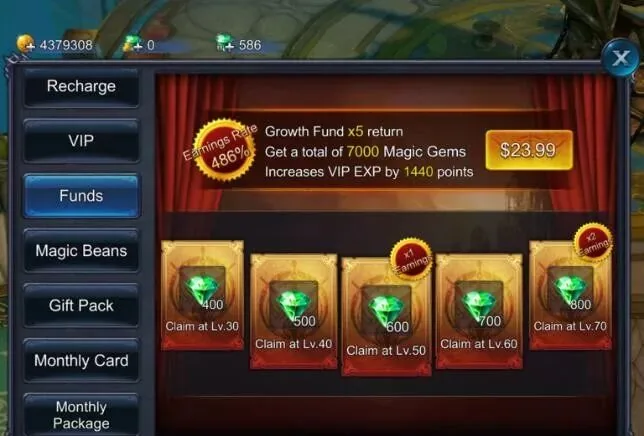
Subscriptions have also begun to catch on in games outside China, mostly casual ones. Compared with ordinary currency-based time investment, a subscription is actually a better deal for developers, because what they hand out is not currency but a monthly VIP membership.
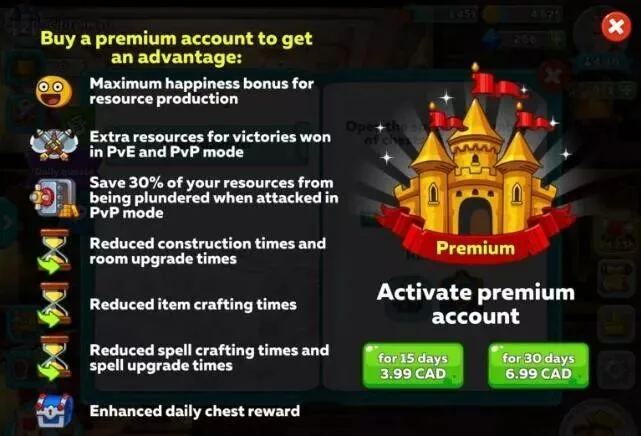
Once Chinese developers fully figure out subscriptions, they will probably spread in China too. In apps, the best example of subscriptions done well is Netflix, which makes you wonder whether China’s big streaming apps (you know which ones) are all still sitting on the fence.
4. Gameplay investment
Players play first, and as they keep playing, a bundle’s contents become a better and better deal.
Examples include Battle Pass-style systems, Dota 2’s Compendium booklet, the season pass in Honor of Kings and the piggy banks found lately in some Western casual games.
This new model differs from the earlier ones in roughly these ways.
Rewards, rather than the quests or main storyline used before, guide what players do.
Players can “get” rewards but not “open” them, so the rewards are more direct and clear-cut.
The more players play, the stronger the pull to pay: they put in time first, then pay to cash in that value.
On the Battle Pass levels, time is roughly money (free players level up with time, paying players buy levels with money).
Once a player’s Battle Pass reaches a certain level, they can take more V-Bucks out of it than they put in
Fortnite states specifically that nothing in the Battle Pass affects how strong a player is
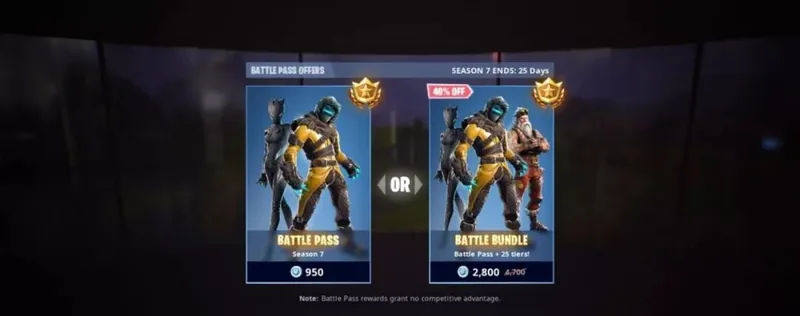
Together, these mechanics make a very attractive package and a habit-forming sense of progress, and they are helping games like this rack up huge numbers for how many players keep coming back and how many play every day. By some counts, after the Battle Pass launched, the share of Fortnite players who pay reached an astonishing 70%, something every developer dreams of.
The beauty of this payment model is that it lets free players finish the mental groundwork for paying before they ever convert. A free player probably won’t pay at the start of a season. But as the season and their play go on, they have already earned plenty of rewards, and their thinking turns into: “I’ve already reached such a high level. If I just buy the Battle Pass, all those rewards are mine. If I don’t, once this season is over, won’t all of that go to waste?”
So what makes the Battle Pass so admired is that players pay the cost of being active first. The more of that cost a player has paid, the easier they are to convert into a paying player, because they weigh the price of paying against what they have already put in, and talk themselves into it.
In Fortnite, the Battle Pass is also bought with V-Bucks (the equivalent of gems), and leveling up the pass gives V-Bucks back. So the more a player plays, the cheaper the Battle Pass gets, to the point of being free: play long enough and it costs next to nothing. Honor of Kings clearly doesn’t dare do this. Its core earner isn’t the pass but skin sales, and Chinese regulations play a part too (under the game’s anti-addiction system, which limits play time, players can hardly grind their way to earning it back).
Built on the in-app purchases of today’s free online games, the Battle Pass is about as friendly to free players as a payment system can get. That friendliness also shows up in a positive, encouraging way, so this model is a trend for other games to learn from, and a good guide for developers on how to treat free players.
The Battle Pass in other games
The pass format is only the packaging. At its core is the idea mentioned earlier: players put in active time first, then turn it into spending, and the choice to make that switch stays in the player’s hands. In modern games, that is in a sense a form of respect for free players.
After PUBG Mobile (the international version of Tencent’s Chinese PUBG mobile game) added a Battle Pass in its June 19 update, it climbed from outside the top 100 on the top-grossing chart into the top 20 and held steady there, and its revenue multiplied several times over. It has stayed high on the top-grossing chart ever since. (Given where the Chinese version stands now, our prediction is that once it starts taking payments, its payment system will also be built around a Battle Pass. Time will tell.)
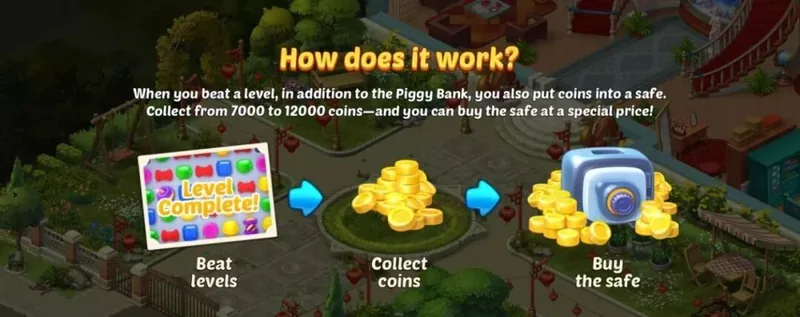
In casual games, the most typical design that carries the Battle Pass experience is the “piggy bank”: playing levels earns a discount bonus on buying currency, and the more levels you clear, the bigger the discount. This simplified Battle Pass fits the systems and the audience of casual games better. Word from teams that had just added the feature is that once the piggy bank went live, it brought roughly a 30% rise in the share of paying players without hurting other revenue numbers, which is a very strong conversion.
So the Battle Pass works for more than Fortnite: it also proved effective when brought to other battle royale games. And a reworked, simplified Battle Pass can fit even more kinds of games and reach even more players.
That is why the mechanics behind the Battle Pass deserve this close look. Its success was no accident. Beyond the excellent production values of the game itself, the feature is a great one in its own right, and it pays off well wherever it goes. Even while this piece was being written, new games kept turning up with Battle Pass-style features. So our advice to friends in the industry is to seize the chance: as long as you don’t copy blindly and you find how well the feature suits your own game, a Battle Pass will not disappoint.
What the Battle Pass’s success teaches the industry
Players of free online games have long been split into two camps: put simply, free players and paying players. Developers have always worked hard to turn free players into paying ones, with one-yuan packs (about 14 US cents), limited-time packs, value packs and so on. Anyone in the industry knows just how hard that is.
On the other hand, as noted before, the loop behind a game is a process of taking part and being rewarded for it; in other words, of putting in and getting out. Developers build what goes into a game around two dimensions, time and money, which really stand for two groups: free players and paying players.
Developers have also always been balancing these processes and dimensions against each other, aiming at several goals at once: not driving free players away, getting free players to spend money, and keeping paying players happy.
But as free games develop and competition gets fiercer, it is plain to see that the room free players have in free games keeps shrinking, pushing them to choose quickly between paying and leaving.
It’s easy to see that an ordinary free player who doesn’t put in a lot of time soon hits a wall where the game forces them to pay. (That wall can come quickly or slowly; in the casual games we have played lately, it usually comes after about one to two hours.) The game then keeps creating new walls, nudging players to pay from every angle and at every level. It isn’t only casual games: developers build every kind of free game around this idea.
Exaggerating only a little, in many games, if you don’t pay, the fun is gone after a few hours. Either pay, or grind your way past it with lots of time. And according to current statistics, more and more players are giving in and paying.
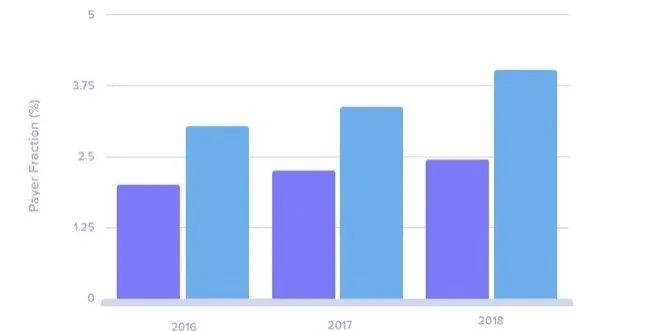
But while the share of free-game players who pay rises every year, overall spending has fallen. According to deltaDNA, average lifetime value (what a player spends over their whole time with a game) dropped 6.58% on iOS and 17.69% on Android. Big purchases are slowly becoming rarer; this is an era in which free games run on how many players pay. With things heading this way, finding better mechanics that offer a better experience and convert more free players will be the first problem developers need to solve in the time ahead.
Beyond giving makers of cosmetics-driven games (where paying makes you look cool rather than stronger) a new way to think about pricing, the Battle Pass also shows developers how to talk to more free players. What does it really take to win them over? Keep selling stats, promotions and discounts as before? Developers would do better to look at these players from a different angle.
Maybe they aren’t unwilling to pay. They just don’t want to be whipped into paying.
The Battle Pass’s success also shows that when developers are willing to show players goodwill and understanding through a game’s features, players will surely give back the reward and recognition that deserves.
In the words of Fortnite producer Collem:
“We don’t want it to come down to balance between a paying player and a free player. We don’t want it to seem punitive if you don’t spend money. But we do want people to feel value for money. So it’s that weird dichotomy where we don’t want people to feel bad for not spending, but we do want people to feel value if they spend money.”
“That’s our goal for Fortnite – to have that kind of freedom and that level of communication with our community. I think if you nickel-and-dime people, they’re not gonna show up.”
“If we hit millions of users and only a fraction of those people pay, we’re still gonna be able to pay our bills. We’ll still feel successful.”
In plainer words: it shouldn’t come down to a balance between paying and free players. Nobody should feel shut out of everything for not spending, but those who do pay should feel they got their money’s worth.
The aim for Fortnite is the same: give players plenty of freedom and stay close to the community. Penny-pinch players, and nobody will want to play your game.
With millions of players and only a small share of them paying, the studio would still have no trouble keeping the lights on, and would still see the game as a success.
Working for the fun and happiness of more players, and treating players with respect and love, instead of penny-pinching while designing and thinking about how to squeeze more money out of them: in our view, those are the features, systems and games a good game maker should create.
Players should pay to keep their fun going and to create more of it, not to ease or end their pain.
If you have kept going in the game industry for years and come through one downturn after another, you must be an idealist, because creating games, which means creating joy, excitement, emotion and awe, shouldn’t weigh practical concerns too heavily. Never design something purely to make money, because that really isn’t romantic.
References
How Fortnite avoids pay-to-win, according to its producer
Fortnite passes 200 million registered players, with revenue over $1 billion
What’s the big deal with battle pass?