Mobile Game Localization: 5 Keys Beyond Translation
Mobile game localization goes far past translation: rewrite copy for local habits, avoid taboos like pig art in Indonesia, and support local payments.
In this article5 sections
Developers launching games overseas worry about cultural differences more than anything else, and that is why localization matters so much. Yet many developers have not figured out how to do mobile game localization well, and most of them put their effort into translation. Translation is only one part of localization, and not even translation in the usual sense. Doing localization well means getting these five key points right.
Rewrite copy to fit local language habits
Game translation covers a large amount of in-game text and can look unimportant, but it shapes how players see the game. If players can follow the meaning of the text but it always feels off (like hearing a foreigner speak your own language), their trust in the game drops sharply. That affects every part of the game, retention and monetization included. Our advice on translation:
Start from the original copy and rewrite it to fit local language habits, instead of translating it directly.
Take a player’s first purchase in a game. The home-market label is usually a plain “first top-up,” and when making the English version, many developers translate it literally as First Top-Up.
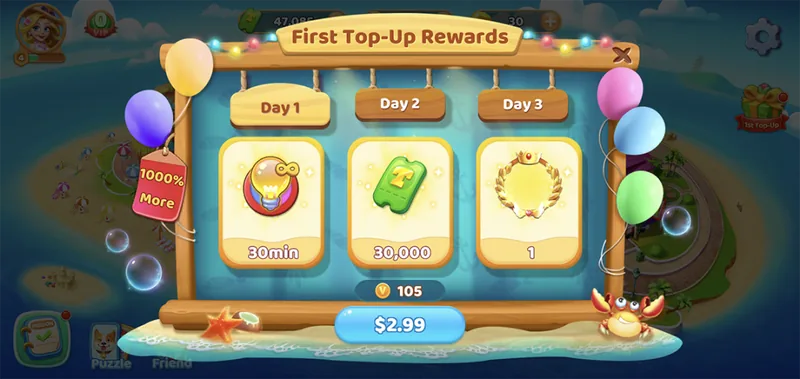
The meaning is right, but it sounds awkward. Here is what fits English usage.
In general, a first-purchase offer can be called:
- First Time Offer/Deal
- First Timer Pack
- Starter Pack
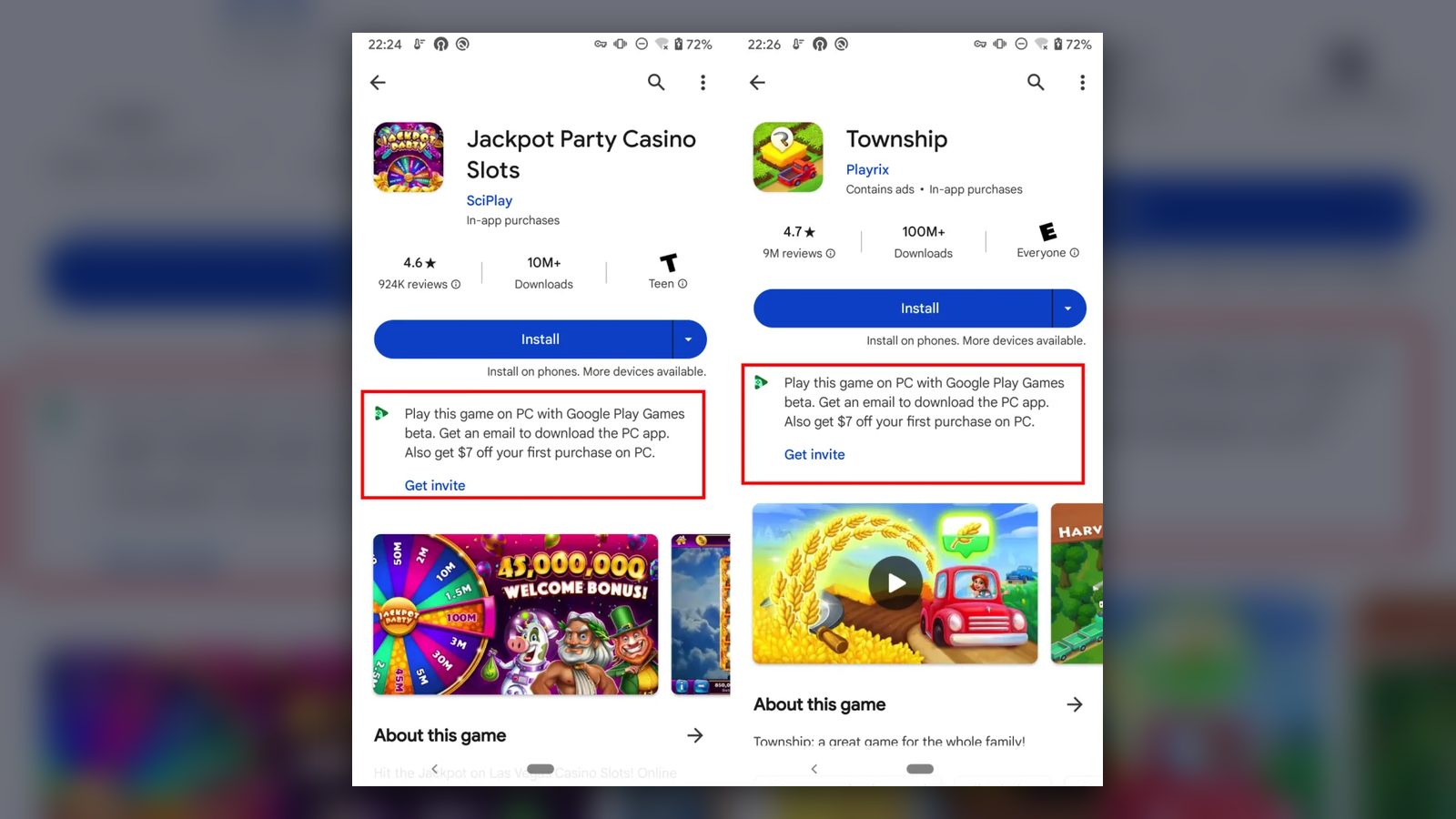
Another example is how a slots game with large player bases in both Hong Kong and the US presents itself on its Google Play listing.
A few key points stand out:
- The English and Chinese copy are two completely different texts; neither is a translation of the other
- The game’s name is not translated from the English; it was chosen separately to suit the local culture
- The icons differ, and the Hong Kong version’s icon includes the game’s name
This game handles copy localization fairly well.
Avoid local cultural taboos
For a game to succeed overseas, the first requirement is not to break too many cultural taboos; otherwise it won’t even get the chance to be downloaded.
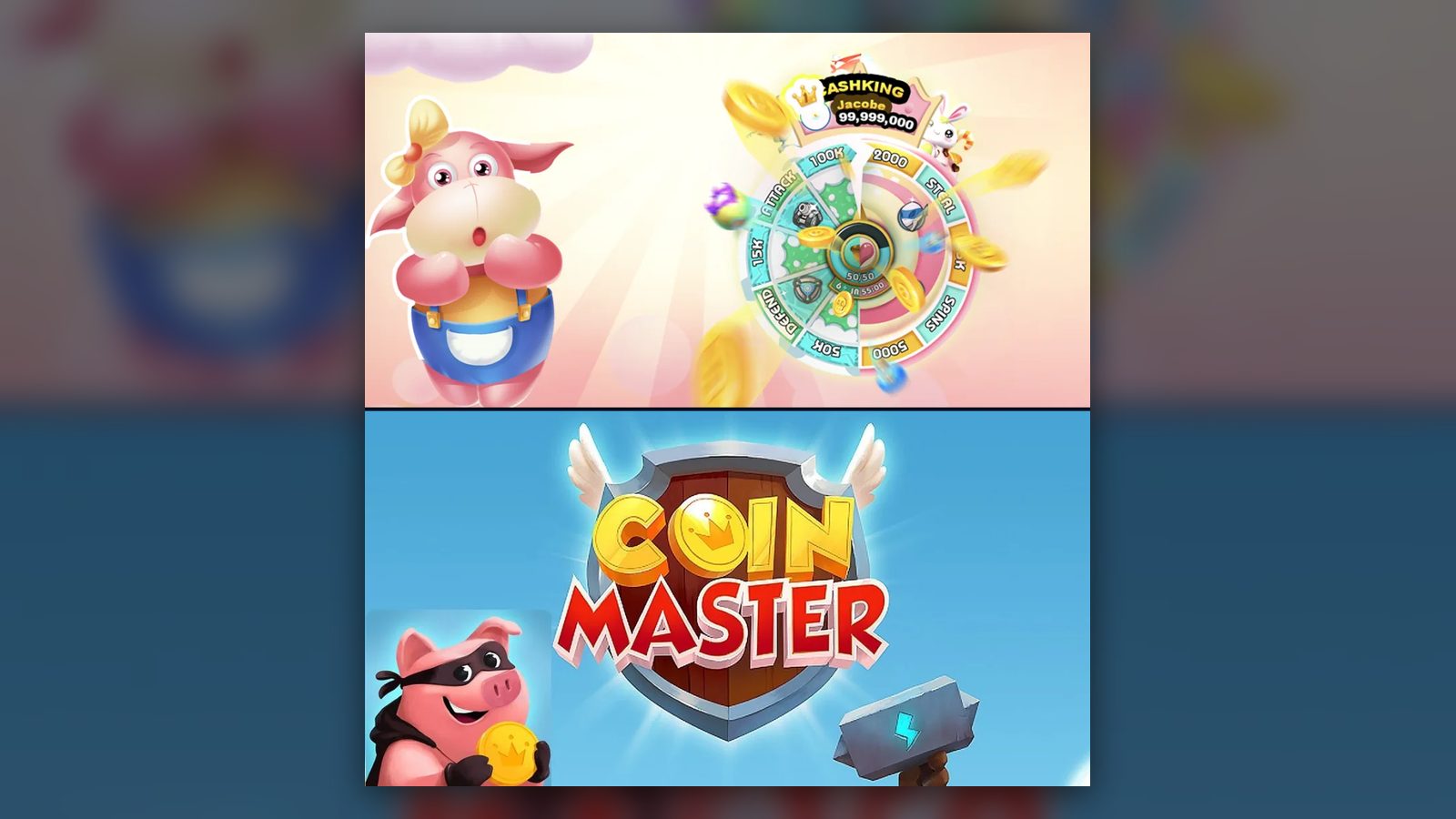
For example, a few years back we worked on a Coin Master reskin published in Southeast Asian countries such as Thailand and Indonesia. The art had been redone, but the main character was still a pig. Strangely, ad CVR in Indonesia was very low, the store conversion rate was very low as well, and paid UA could barely bring in any users.
Research showed that Indonesia is the world’s most populous Muslim-majority country, and Muslims do not eat pork or use pig-related items and images, much like the customs of the Hui, a Muslim ethnic group in China. A pig was a serious taboo for these players, so we swapped the character for a donkey.
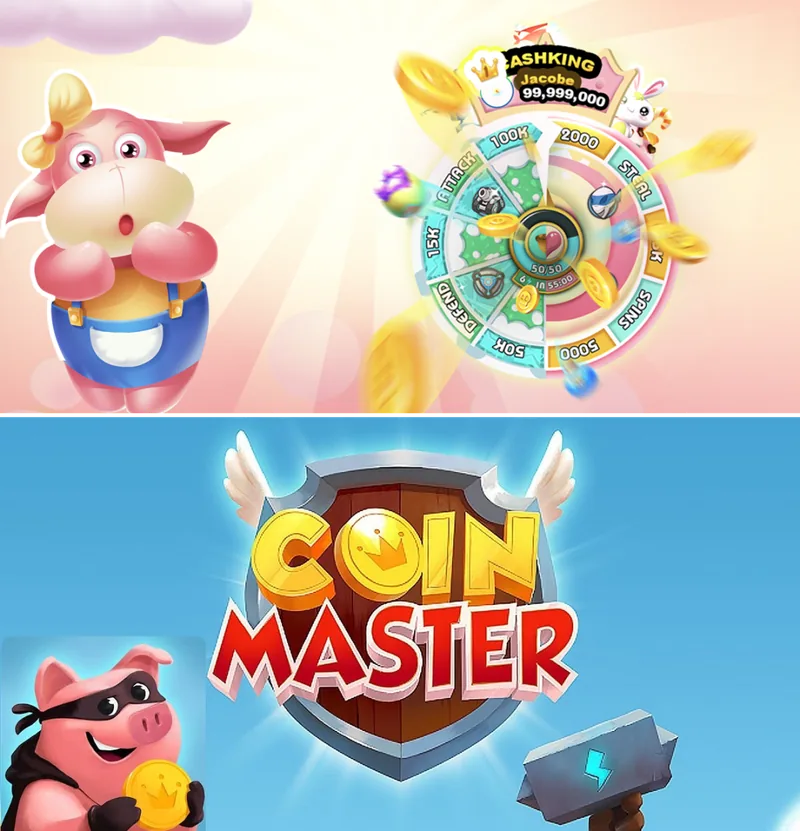
Sure enough, once the donkey was in, every metric went up, even past the game’s numbers in other countries. Local cultural taboos matter a great deal. Here are some of the taboos we know of so far:
| Country | Cultural taboo |
|---|---|
| United States | Racism, abusing or confining animals |
| Christian countries in Europe and the Americas | The number 13 is unlucky |
| Muslim countries | No pork, no pig imagery |
| Japan | Green as a decorative color is unlucky; Decorations with badgers or foxes symbolize greed and cunning |
| India | No beef, no cow imagery |
| United Kingdom | Elephant imagery stands for stupidity |
Support local payment methods
Google and Apple both explicitly ban third-party payments, but in many countries credit and debit card penetration is very low, under 30% in some cases, so developers have to consider third-party payment anyway (used discreetly, of course). The usual approach is:
- Inside the game, direct players to the game’s official website.
- The website has a top-up page where players enter their in-game user ID to complete the payment.
In Southeast Asia, the mainstream local payment methods are still:
- Prepaid cards (40%): fixed-value top-up cards issued by mobile carriers, which Southeast Asian users can easily buy at convenience stores.
- Carrier billing (36%): also called SMS billing, it pays for game top-ups out of the player’s phone credit. It is widely used in Thailand, Indonesia and Vietnam.
Of course, no developer can integrate every carrier in every country one by one, so a third-party payment platform is still needed. Common ones include ZGold, SEAGM, Codapay and Smile.One.
Pick an art style that suits the local market
Every developer would like one set of art assets to serve the whole world, since that is the cheapest way, but in practice it rarely works out. So far only Western-style games such as World of Warcraft and Homescapes manage to win in every market. Chinese-style art still has some acceptance in Southeast Asia, but outside Asia it tends to do poorly. Before settling on an art style, consider the main launch countries and set the style for those specific markets. Here are some common art styles with a short description of each.
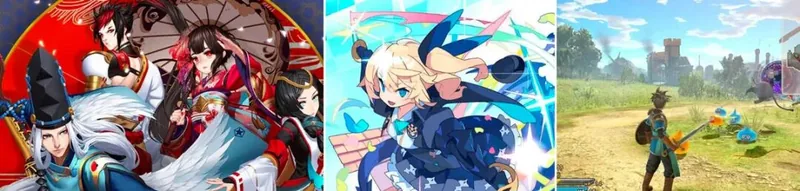
Japanese style: stylizes and distorts the lines of the face to create an idealized beauty, and feels soft overall.
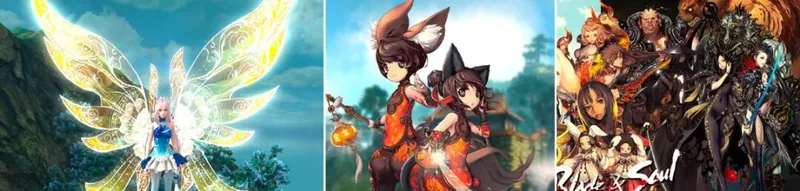
Korean style: body and facial structure are more realistic, and the look can be described as “refined” and “lavish.”
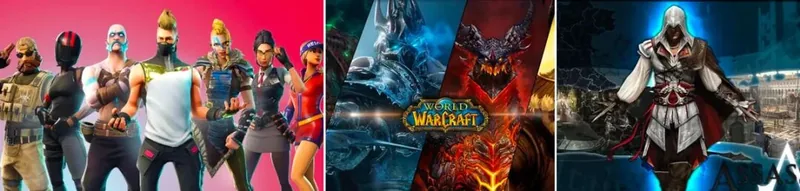
Western style: bold, exaggerated lines, bright colors and characters with sharp, angular features.
Use local time zones
If a game has many time-based settings, it is a good idea to set a different time zone for each country, so players feel more at home in the game:
| Country | Suggested time zone |
|---|---|
| United States, Canada | UTC-8 or UTC-0 |
| European countries | UTC-0 |
| Japan, South Korea | UTC+9 |
| Southeast Asian countries | UTC+8 |
Those are the five key points of localization.