Mobile Game Localization: Why 'Western' Games Look Chinese
From muddy colors to a First Top-Up Reward screen: how art and mobile game localization give away a Chinese team's Western-style game.
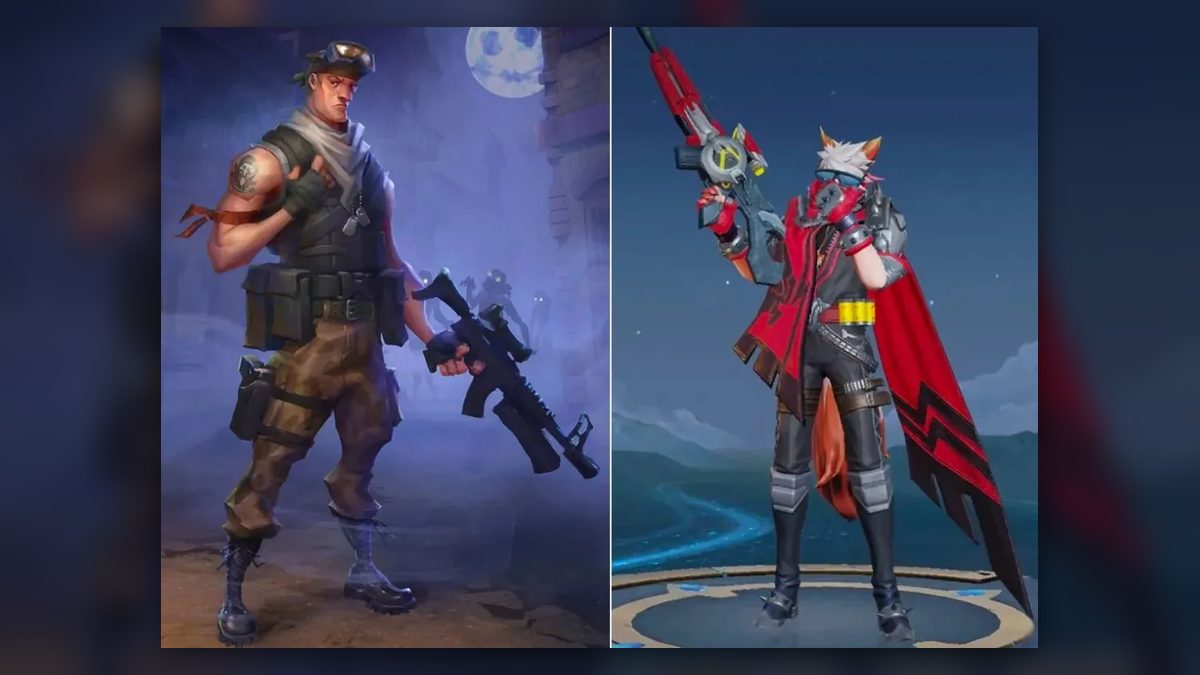
For Chinese developers making games for overseas markets, language and culture are the two biggest hurdles. One slip and the result is a Western-style game that isn’t the real thing. Parts of it can also make players uncomfortable and keep them from getting into it, which hurts the game’s metrics. This article looks at art, mobile game localization and culture to explain why some games sold as Western-style can be spotted as Chinese-made at a glance.
Art
1. Color and technique
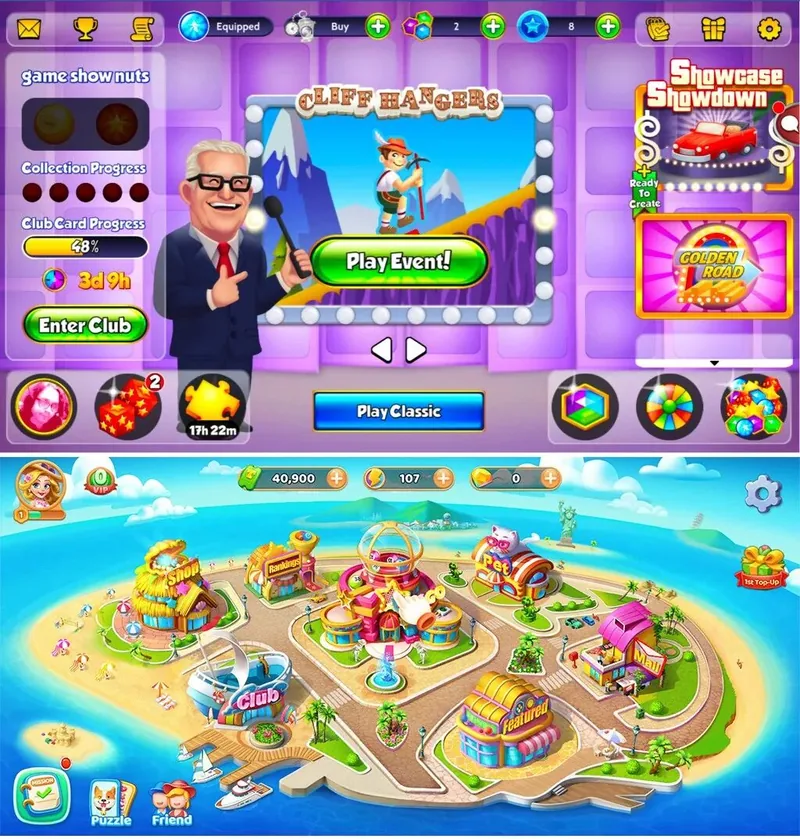
Start with the main screens of two games from the US charts, side by side. Judging by color and technique, the second is clearly not authentic Western style. The main reasons:
- The second game’s colors are mixed and fairly muddy, while many objects in the first, and its overall palette, are mostly solid colors.
- The second game pushes brightness and saturation fairly high, yet it is still less vivid than the first.
- The first relies mostly on thick, painterly rendering, while the second looks rather thin.
Now compare another pair:
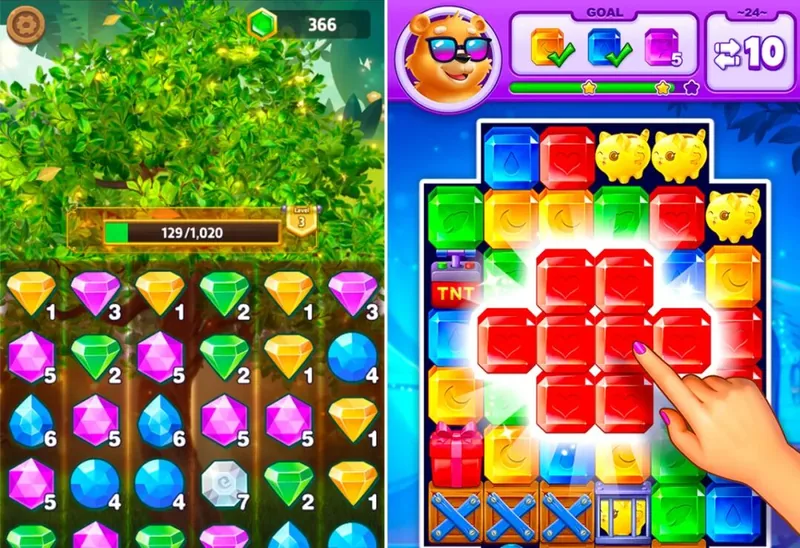
Both are gem-themed match-3 games aimed at Western players, but side by side, the first one is not quite authentic:
- The first game’s colors are messy, and it looks dark and dull overall.
- The second game’s colors are much fuller and brighter throughout, with no muddy feel.
These color comparisons sum up how color and technique work in a Western art style. There are many more details beyond these, which we won’t go through one by one.
2. Head-to-body ratio and body structure
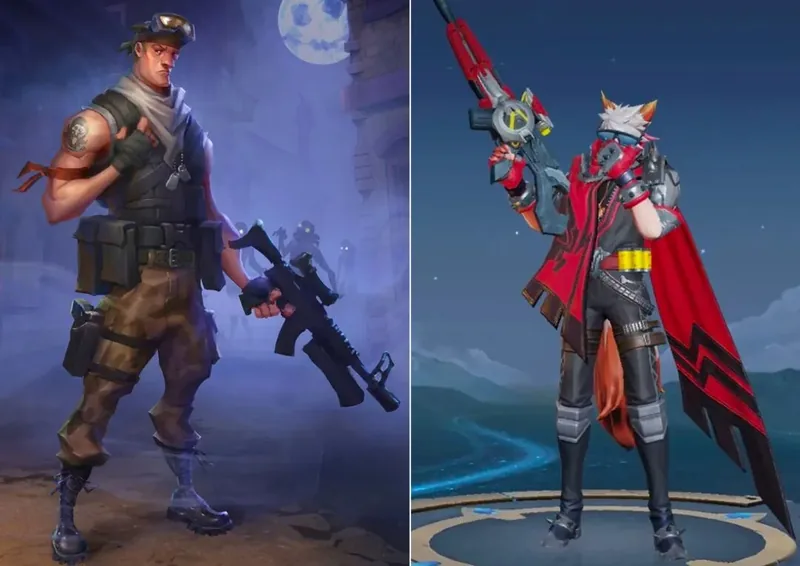
Comparing the character art of two games shows the following:
- Characters designed by Americans are usually nine heads tall, meaning the head is one-ninth of the body’s height. Asian designs are usually seven or six heads tall.
- In body design, Asian styles lean soft, while American designs are very angular, with especially exaggerated legs and muscles.
- So the first is fairly authentic Western style, and the second isn’t quite there.
That’s because Americans are generally much taller and bigger than Asians, and their taste leans the same way. The characters in Disney’s Zootopia show this clearly.
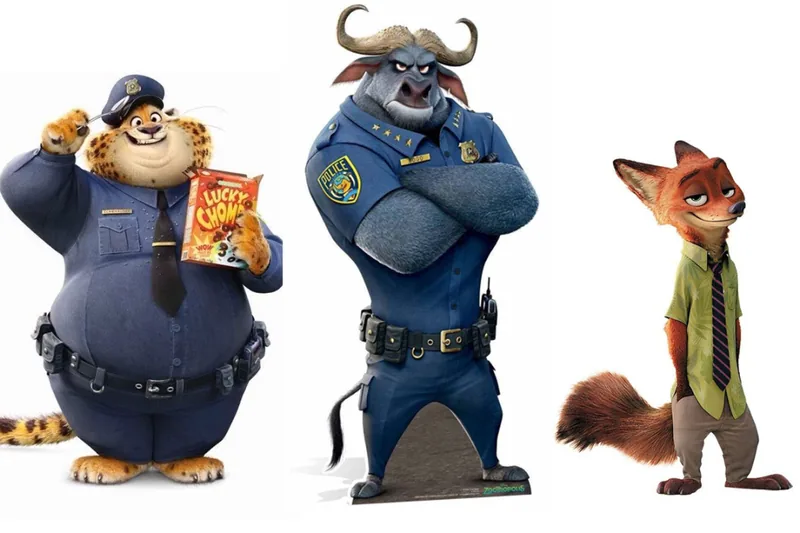
3. Face shape and expression

Take the female characters from two vampire games. Looking only at their faces, a few things differ:
- The first has a clearly Asian face shape with rounder features. The second has a Western face shape with strongly sculpted features.
- In expression, the first leans shy: even as a vampire, she comes across as gentle. The second uses a lot of exaggeration, so her expression is more dramatic.
Culture
1. Localization and translation
Localization covers a lot of ground, and translation is only a small part of it. Even so, many developers still get that small part wrong. Take a single example: how the first-purchase pack gets translated.
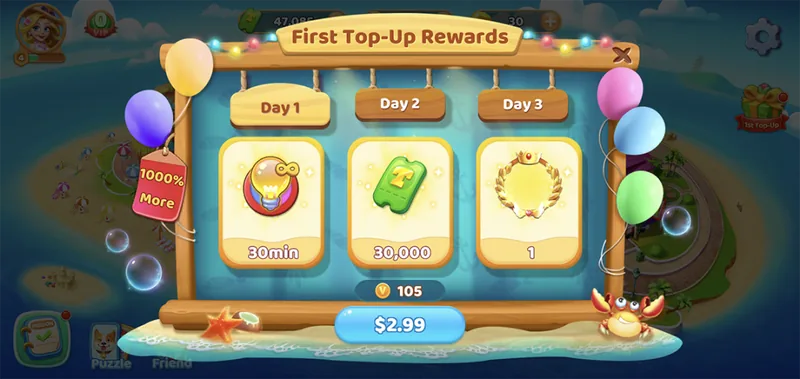
One game titles its first-purchase screen First Top-Up Reward. It is a word-for-word version of the Chinese term and most likely came straight out of Google Translate. The meaning is right, but it reads very strangely. Leading games word it differently.

Leading games translate the first-purchase pack in a few ways:
- First Time Offer/Deal
- First Timer Pack
- Starter Pack
Good translation follows how people actually use the language instead of rendering words literally, and the same holds when English is translated into Chinese. Many developers do this poorly, and it quietly lowers the score players give the game in their heads.
2. Choosing pets
Many casual games add pets to help players feel at home in the game, which makes choosing a species a tough question. A look at the top-grossing charts makes the pattern easy to spot: cats and dogs show up very often.
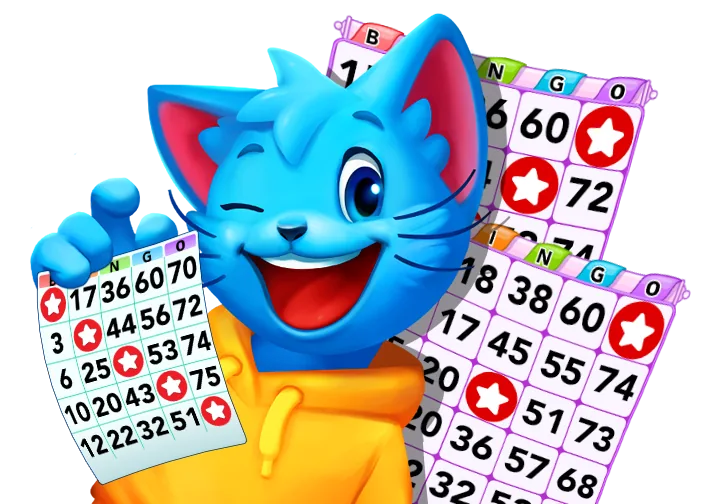
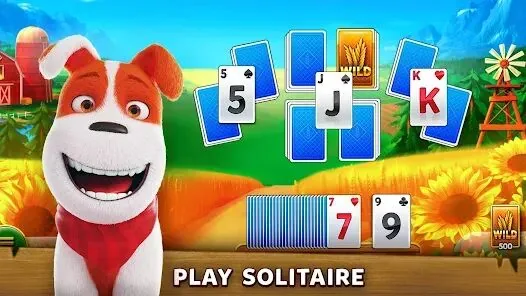
We once ran an ad test on animal themes, and the top-ranked animals were:
- Dogs
- Cats
- Unicorns
- Fish
The main reasons: cats and dogs are the animals people see most in daily life, so players relate to them and like them most. Fish are tied to the ocean, and the US has a vast ocean area, so they feel familiar. Unicorns may be harder to explain, but on closer look, the unicorn is a symbol of luck, which is why it often appears in luck-based games.
3. Choosing a time zone
The US spans a very wide range of longitude, so it has many time zones, from UTC-4 to UTC-10. It also has daylight saving time (clocks move forward 60 minutes around the start of spring and go back to standard time in fall), which makes timekeeping very confusing. Games generally pick their time zone in one of two mainstream ways:
- UTC-8, or Pacific Time. UA and monetization dashboards such as Google’s and Facebook’s use this time zone by default.
- UTC+0, or Greenwich Mean Time. It is a standard time zone with broad acceptance. Some analytics and attribution tools, such as AppsFlyer, use it.
Those are the core areas to get right when making a Western-style game.