Why Idle Arcade Games Took Off, and Where They're Going
Why idle arcade games, where one thumb walks a character around to gather and build, took off, and why the genre may end up inside bigger games.
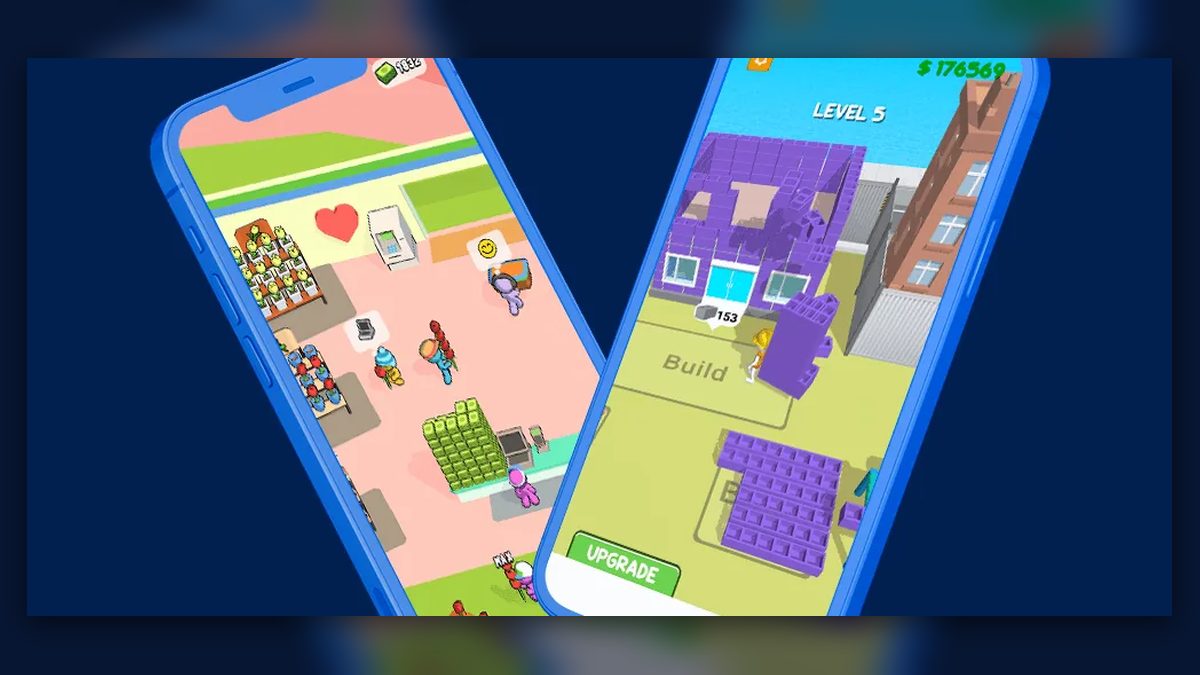
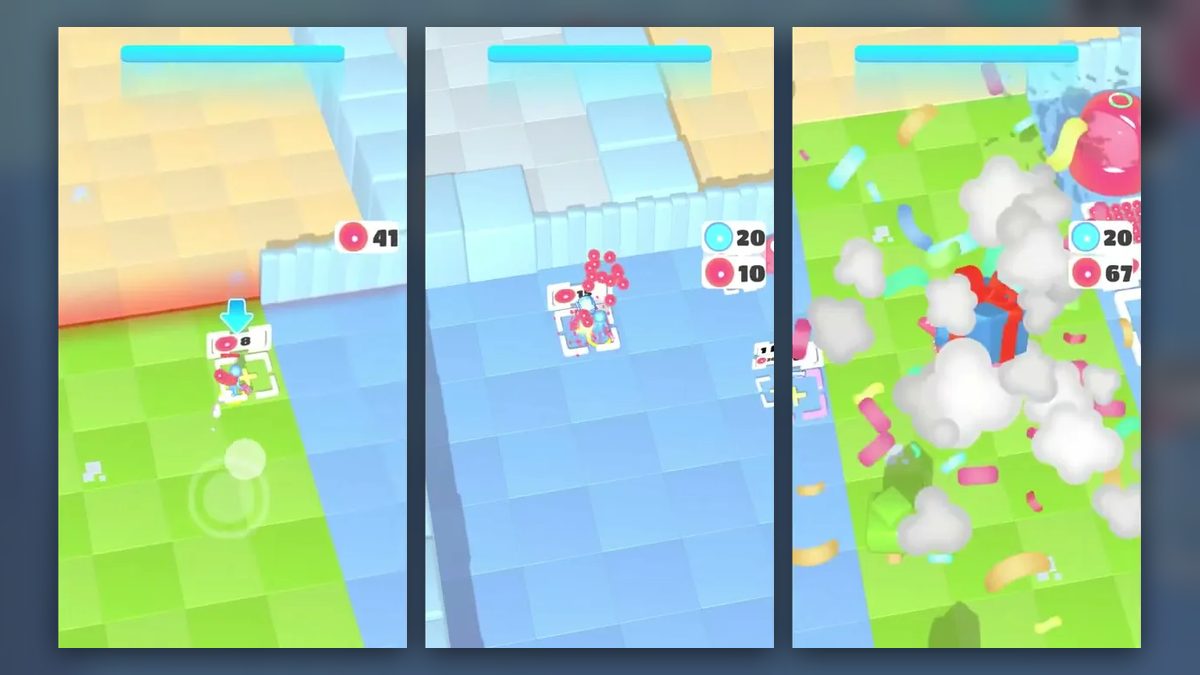
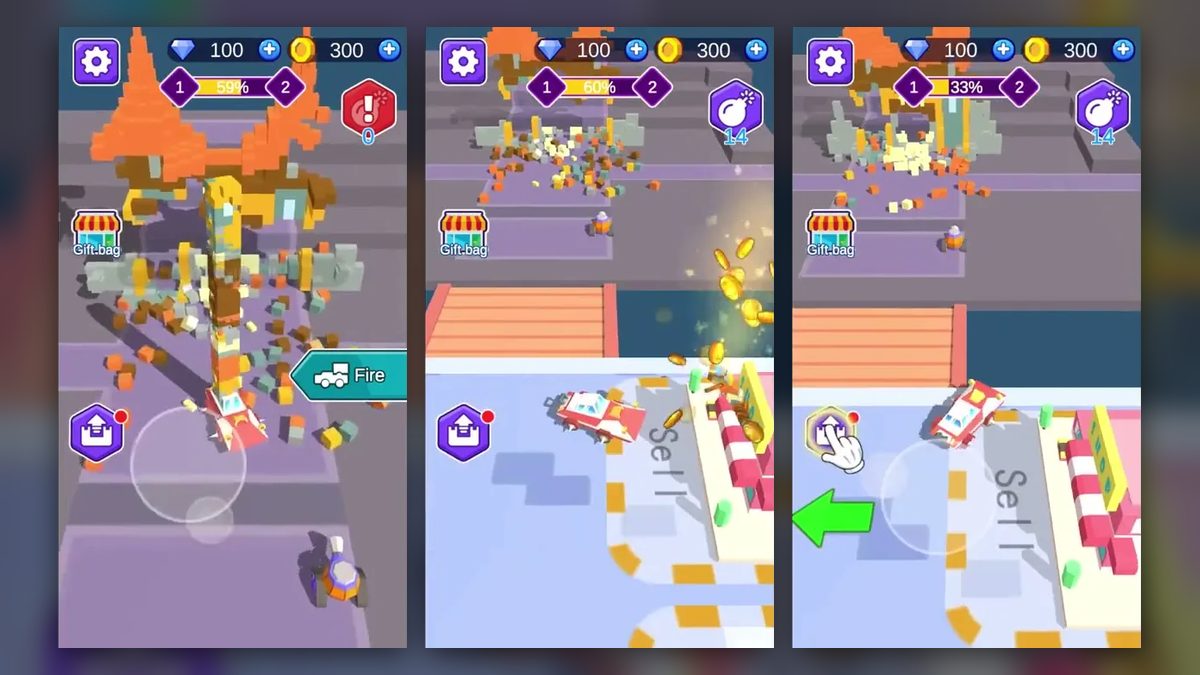
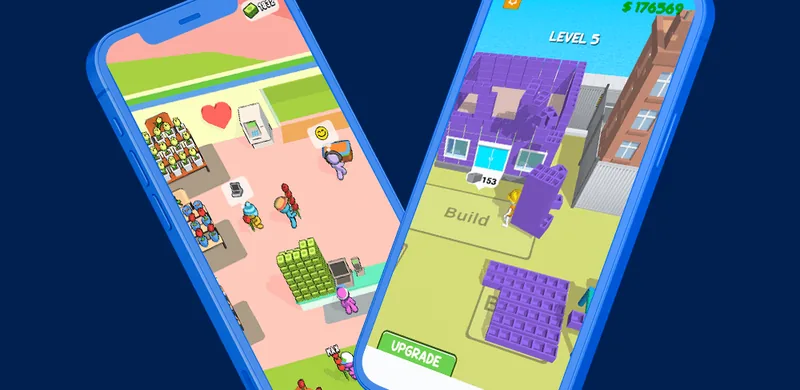
The name may be unfamiliar, but the games are easy to recognize: in idle arcade games you steer one small character with your thumb, stand on a spot to chop, harvest, build or serve, and watch the money turn into a bigger farm, shop or base. Here is why the format caught on so quickly, what separates a good one from a dull one, and where it seems to be heading.
Some background
Idle Arcade really took off at the end of 2020 and kept growing through 2021 and 2022. At the end of 2022, Homa Games, the studio that pioneered the genre, even raised $165 million from investors across two funding rounds…
We have worked on several Idle Arcade projects, and along the way looked at well over a hundred others from China and abroad, some played, some just watched. It’s one of our favorite genres, so this piece looks at it from a few angles.
1. Why did Idle Arcade take off?
2. What details matter when a studio starts an Idle Arcade game?
3. Where is Idle Arcade now, and where is it heading?
This piece was meant to come out in 2022 but kept getting pushed back. As it happens, 2023 finds the genre entering a new phase in the market, and following the market lately has given us a fresh way into the subject.
What is Idle Arcade?
Idle Arcade is no longer a small, brand-new niche, and most readers probably have at least a rough idea of it, so Homa’s own diagram and explanation will do for a quick introduction.
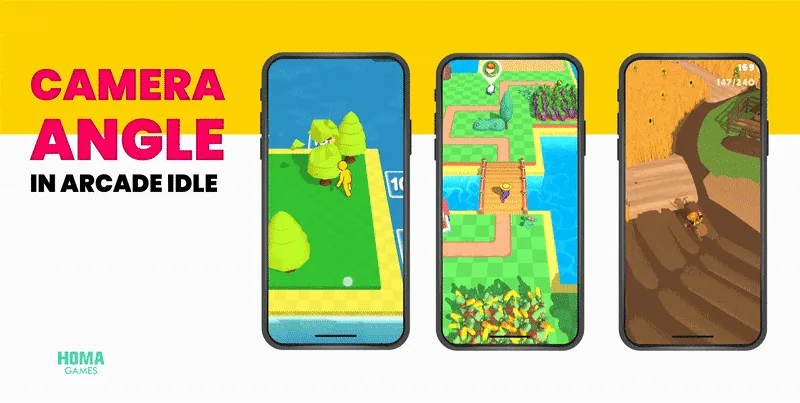
An Idle Arcade game is a 3D game played in portrait mode (phone held upright), seen from above at a slight tilt. You use a virtual joystick to steer a simple-looking hero around the map and carry out a series of actions, and most of your goals come down to gathering resources, building up a base and opening up more of the map.
Typical examples from China include “Chopping Trees With a Legendary Weapon” and “100 Ways to Mow the Grass”. Elsewhere there are many more, such as Harvest It, Craft Island, Dreamdale, My Little Universe, Burger Please and Alien Invasion: RPG Idle Space…
What Idle Arcade does well
1. Simple core rules that hook you fast
Idle Arcade took off in the middle-to-late stretch of the hyper casual boom and grew out of hyper casual games, the ultra-simple pick-up-and-play kind built for short sessions. Its core rules are simple and it plays with one finger. The screen is clean, clear and easy to read, and like any hyper casual title it gets you going within seconds and delivers a quick rush: stacking, smashing, mowing, gathering and so on. Players don’t have to set out to learn how to play. That low barrier to entry greatly widens the potential audience and lowers the cost of buying ads to win new players.
2. Simple, clear progression
Idle Arcade also has a progression system closely tied to the map and what you see on it. The goals and growth loops are usually easy to grasp: harvest crops to expand the farm, chop trees and quarry mountains to earn money and work faster, or fight monsters for money, buy gear and explore more of the map. All of these goals show up right on the map, so players see for themselves that they are leveling up, expanding and getting stronger and bigger. That sets up medium- and long-term goals with very little effort, which also does a lot for how many players keep coming back over time and how long they play each day.
3. Room to grow, and a good way to make money
Time to pick a fight with the experts, with all due respect. The name “Idle Arcade” was coined by Homa Games, and taken word by word it promises an “idle” game crossed with an “arcade” game. In our view, the genre has little to do with either word: most of these games aren’t especially idle, and they aren’t very arcade-like either.
We call it a “Hyper RPG”, short for “hyper casual RPG”. Most of the genre’s feel and most of its strengths come from how its controls, presentation, core gameplay and progression work together. Stripped to the bare minimum, it is an ultra-light role-playing game where you run around the map fighting monsters, collecting things, talking to characters and doing quests, all with one hand. Pretty much every Idle Arcade game feels like this.
So the name Idle Arcade isn’t really accurate. Then again, this is no authority speaking, so treat it simply as a different way of reading the genre.
Which name fits better is for readers to decide.
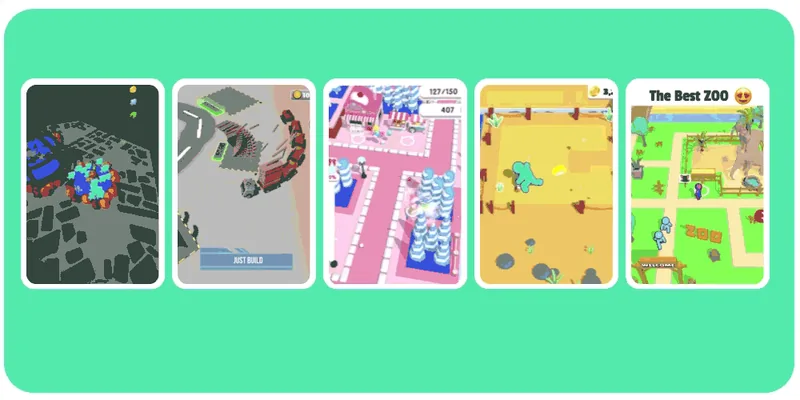
Back to the point. What this opens up is more room for imagination and for different themes: farming, adventure, monster-fighting and exploration games… nearly any of them can be simplified and repackaged in the Idle Arcade style, which leaves studios plenty of room for new projects.
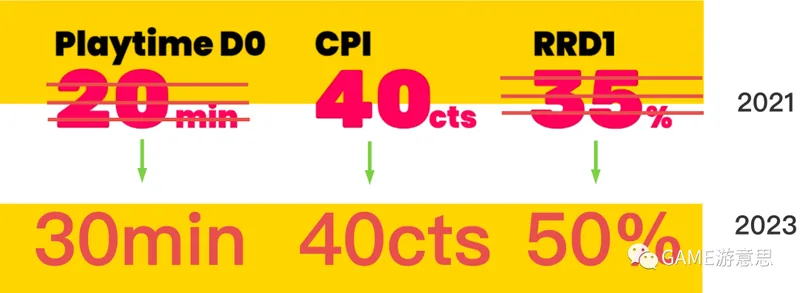
On top of that, the way Idle Arcade makes money works well too. Here, again, are the figures Homa shared in 2021, set against data Udonis published in 2023.
What gives a new Idle Arcade game better odds
The bar for starting an Idle Arcade game is low: the core mechanics aren’t hard, the art doesn’t have to be elaborate and the numbers behind progression stay simple, so it suits small and mid-sized studios and solo developers. The structure of its systems is simple too, and it can be summed up in a few lines.
Basically, once the core gameplay, the progression system and the map that packages them are in place, you have a perfectly standard Idle Arcade project. Craft Island, for instance, fits straight into this cycle.
Starting one is easy, and there are simple templates and methods to follow, but some choices of concept and core mechanic are still better than others.
1. The feel of the core gameplay itself
An Idle Arcade game can borrow its core gameplay from hyper casual titles, but that part of the experience still has to be kept under control. Players use the core gameplay to gather resources for progression, which means repeating the core action, often a fight, for long stretches. So if a core mechanic is fun in the short run but doesn’t hold up over long play, it doesn’t belong in an Idle Arcade game.
In “The Ranch Went Bald” the core action is sheep eating grass, but the handling feels thin, every moment plays the same, and it gets dull quickly.
Ideally, the core action feels great every single time, while still leaving enough active play time and on-screen response. Players shouldn’t finish a core fight before they’ve even had the chance to feel each hit. Otherwise the core action stops being fun and matters only for what it produces, and players start to feel like a cog in a machine, which makes the whole experience worse.
2. How sturdy the progression structure is
An Idle Arcade progression system works a lot like a tall building. The stronger its structure, or the better its parts connect, the steadier the foundation and the wider each floor. But with only one progression track, or with a very complicated one, players find their goals either too dull or too much like a job.
A good example is “Chopping Trees With a Legendary Weapon”. Its core combat idea comes from Voodoo’s Wood Craft, whose own progression was very simple, weak even: nothing beyond the most basic weapon upgrades, and the payoff from each one was only so-so. Voodoo had probably built it as hyper casual progression at the time. The newer game added its own progression on top of that and made the whole system feel great, with weapons, character skins, dungeons and skills fitting together in a mature, well-judged way. It went on to become a huge commercial hit.
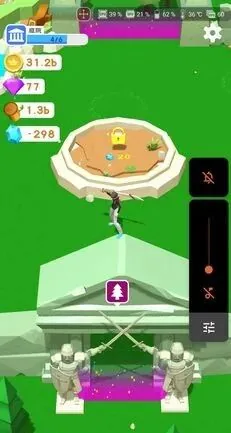
More layers of progression make it more dependable and give it more depth and variety, but they also mean more to learn, and players can start to resent the pressure of what feels like a job. Getting that balance right is the designers’ task.
The future of Idle Arcade
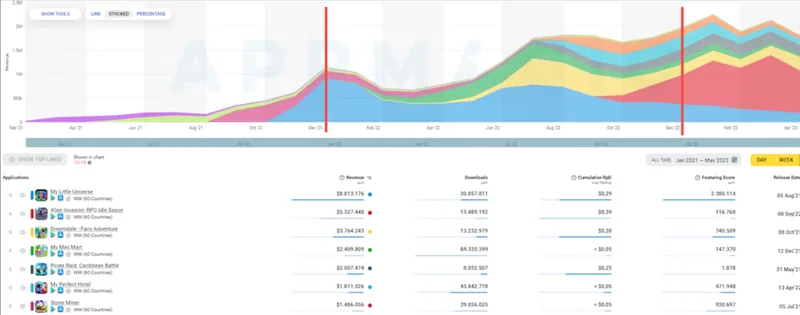
At the time of writing, a team outside China shared market research on how the genre is doing internationally. According to that research, as of June 2023 the top-earning Idle Arcade game worldwide was CrazyLabs’ Alien Invasion: RPG Idle Space, which earned as much as the games ranked second through fifth combined.
Its whole package is a monster-themed take on Idle Arcade that borrows heavily from Venom. You play a black, many-legged creature that “eats people” around the map to grow stronger, upgrades its abilities and takes on more enemies and challenges.
The way it fights monsters is a bit like Fish Idle.
Besides this people-eating monster, earlier reviews on this site have also recommended several newer Idle Arcade games.
Wizard Universe, from an earlier review
Space Miner, from another earlier review
These are all recent arrivals in the genre with fresher themes and formats…
The genre started out with management-sim themes like chopping trees, harvesting crops and herding sheep, and has been moving step by step toward more RPG-like themes of fighting monsters and leveling up. The experience, and the players it attracts, have shifted toward deeper midcore play and progression. Idle Arcade has become more of a presentation style, with nothing left that defines it as a gameplay genre.
Push the comparison as far as it will go. Suppose Archero, where you dodge to move and stop to shoot, put its upgrade menus on the map, and players walked to the right spot to buy gear, power up, buy talents or open the shop. Wouldn’t that count as an Idle Arcade game too?
So we think Idle Arcade may gradually turn into a way of presenting a game and interacting with it, blended bit by bit into other progression-heavy, deeper games until it is simply one part of the experience.
The genre has also become a bridge, and a kind of glue, between the hyper casual experience and deeper midcore casual games, joining kinds of games that might have nothing in common while keeping what each does best: the simple, easy-to-grasp rules and look of hyper casual games, and the sturdy progression and long-term play of midcore games… Putting those strengths together sparked something new. As the two keep merging and borrowing from each other, they end up forming a new set of ideas about how games are made: Idle Arcade will turn from a genre into a way of designing games, and in the end a small entry in the history of mobile game design.
The end.
Thanks for reading.
References: