Why today's hits borrow Coin Master's mobile game design
Royal Match and Monopoly GO! borrow from Coin Master: the mobile game design behind its spins, friend raids, card sets and chained gift packs.
Some of the biggest casual games on your phone run on ideas that started in one place: Coin Master, the slot-machine village builder. Its mobile game design has been borrowed so widely that once you know it, you start to see it in other hits.
The spin that pays for your next upgrade, the friend who raids your village, the event meter that fills while you play as usual, the pack that comes with a row of free gifts: here is where these ideas come from and why they work.
Background
Talk about casual games around the world and you can’t get around the mountain that is Coin Master. It has been out for 12 years and still brings in huge revenue every year, and its game modes and systems have been borrowed by games all over the world. That is especially true of today’s biggest casual hits, Royal Match, the king-themed match-3 game, and Monopoly GO!, the dice-rolling board game hit: Coin Master’s influence shows in both, inside and out. The three games hold the top three spots on the US App Store’s top-grossing chart for casual games, and together they earn a fortune every year.
What follows is a short look at several of Coin Master’s most popular and most borrowed designs, and at what lets this one game hold up half of the casual game world.
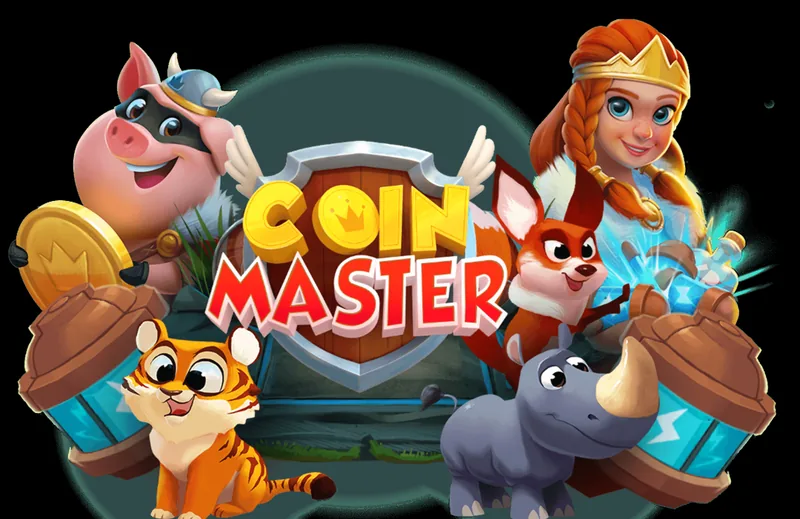
Core gameplay: solo progress plus lively social play
At its core, Coin Master has you spin a slot machine to win coins, items and actions, then spend the coins to upgrade your village, which earns you even more coins.
The whole process can be split into two parts: a solo side and a social side.
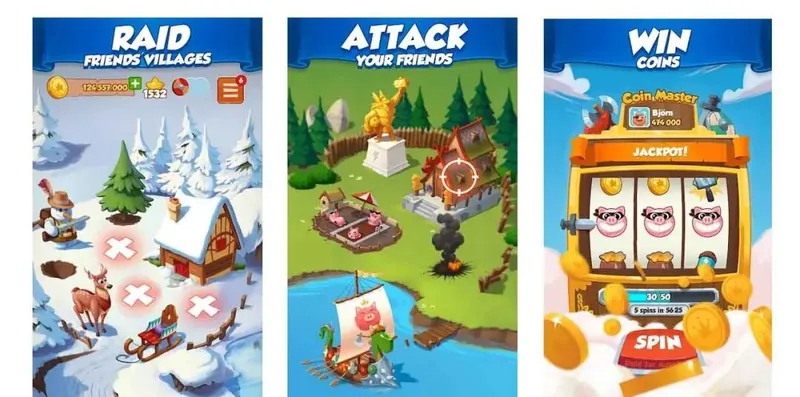
The solo side is about your own progress. Most of the time you repeat a loop of “spin, act, build”: spin the slot machine, act on what it gives you, then upgrade your village.
The social side holds the actions that involve other players, such as attacks, raids (digging up coins in another player’s village) and shields. On one hand these actions feed coins into your solo progress; more importantly, they create relationships between people, and that is what makes the game feel lively.
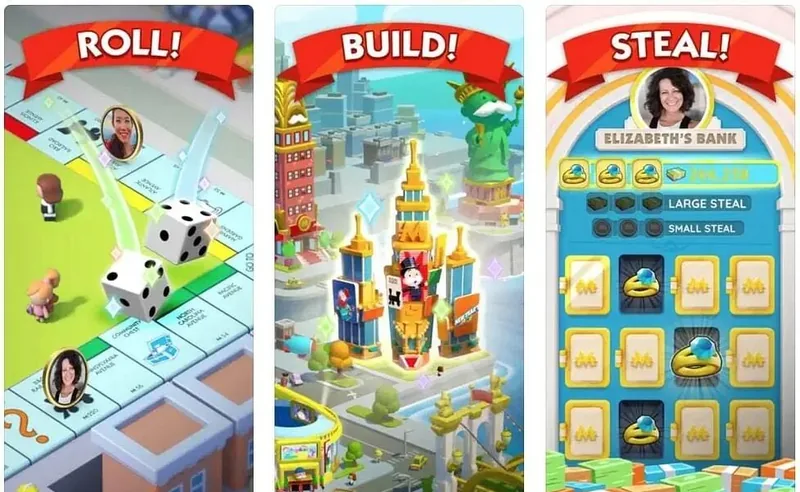
This pattern, where the solo play supplies the sense of growth and the social play supplies the connection with other people, is repeated in the current hit Monopoly GO!, and it’s no stretch to call that game Coin Master repackaged with dice and a Monopoly board.
Others, such as the Chinese game Pirates Are Coming and Board Kings, use the more traditional setup of a solo part plus a multiplayer part at their core. Put simply, in any game built on friendly social play and a roll-or-spin framework, where you roll dice or spin reels to see what you get, this model is the homework every top student copies.
One thing designers can study next is which kinds of games pair best with the roll-or-spin framework. In our view, there are still countless treasures in this space waiting to be dug up.
System design: simple, but not simplistic
1. A collection event that is also the core gameplay
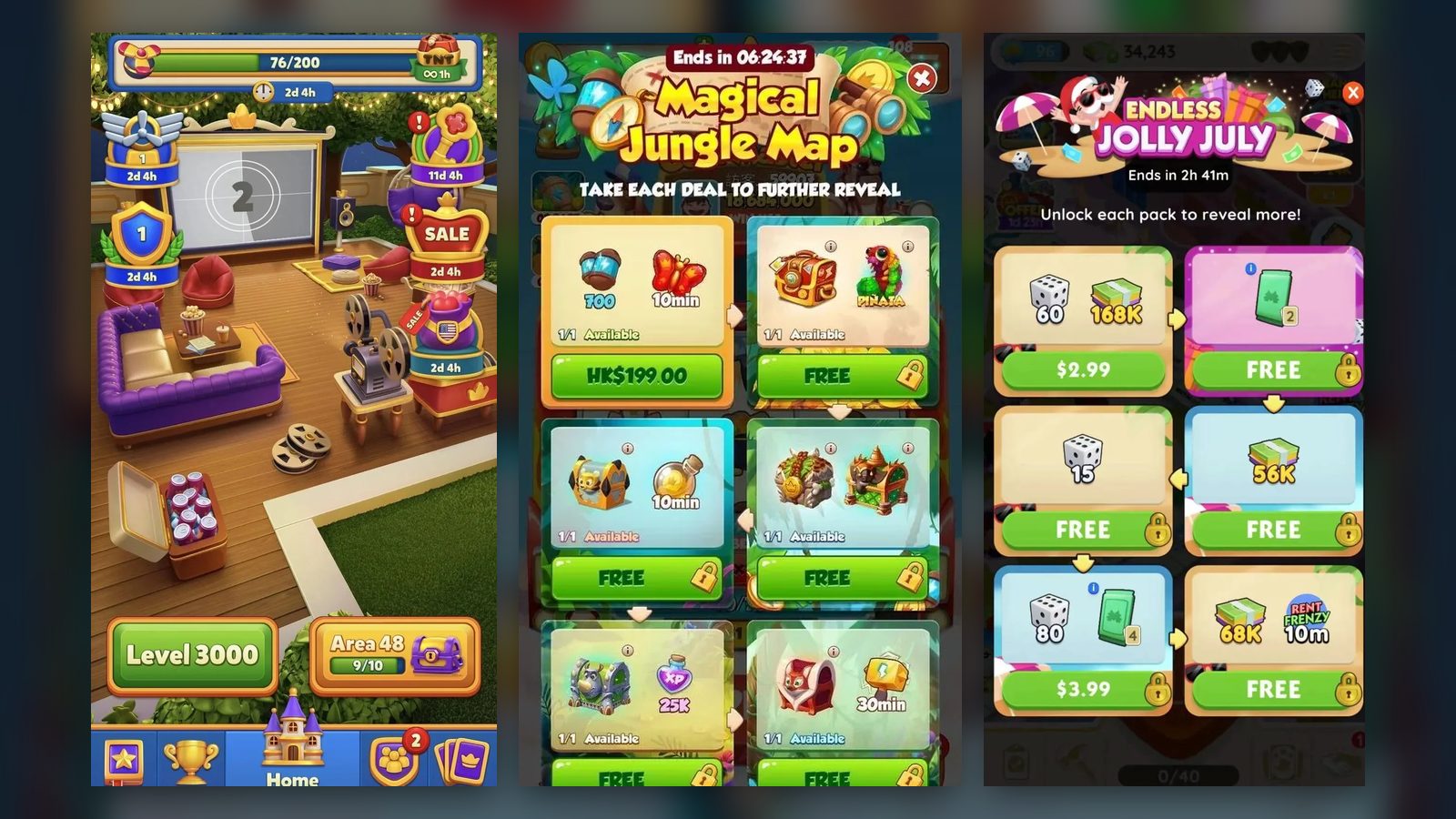
The event type you meet most in Coin Master, from start to finish, is the item-collection event with a leaderboard, which switches on at random with all kinds of items to collect.
Your number of attacks, your number of raids, special holiday items: any of them can count toward a running collection reward and a leaderboard reward.
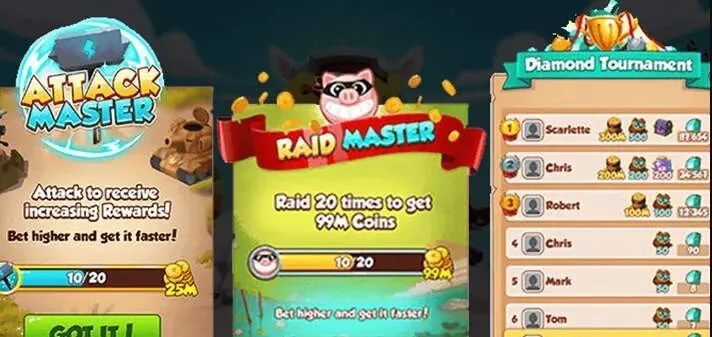
In the ATTACK MASTER and RAID MASTER events, for example, you only need to play your usual daily game. The event counts up your attacks and raids and hands out rewards along the way, which gives your everyday actions a goal to chase.
The special item events go one step further and add a new item symbol to the slot machine’s reels, so the same daily spins also collect the special item and add to your total.
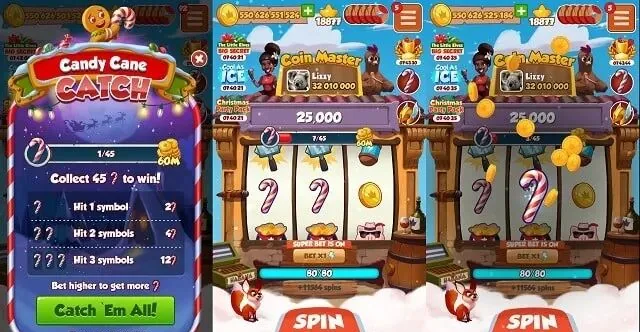
What’s special is that once a Coin Master collection event opens, everything after that, taking part and claiming rewards, happens automatically: the items are collected and counted during the animation after each spin, with no extra taps and nothing new to keep track of. With the extra steps removed and the event screens matched to the main game’s look, the two blend together for the player. The collection events and the daily play don’t feel like two separate experiences side by side. The events boost the daily play and become part of it, a design we call “event-driven core gameplay”.
This lowers the bar for joining events and raises how many players take part. And with event goals stacked on top, the core gameplay feels more meaningful and gives you more to chase, which gives everyday play much more of a rush.
Royal Match and the recently revamped Anipop, a popular Chinese match-3 game, both took cues from this collection event design. They made some of their level-collection systems lighter and blended them into the core gameplay, from the screens to how it actually feels, so that clearing level after level each day is more gripping and has a better rhythm than before.
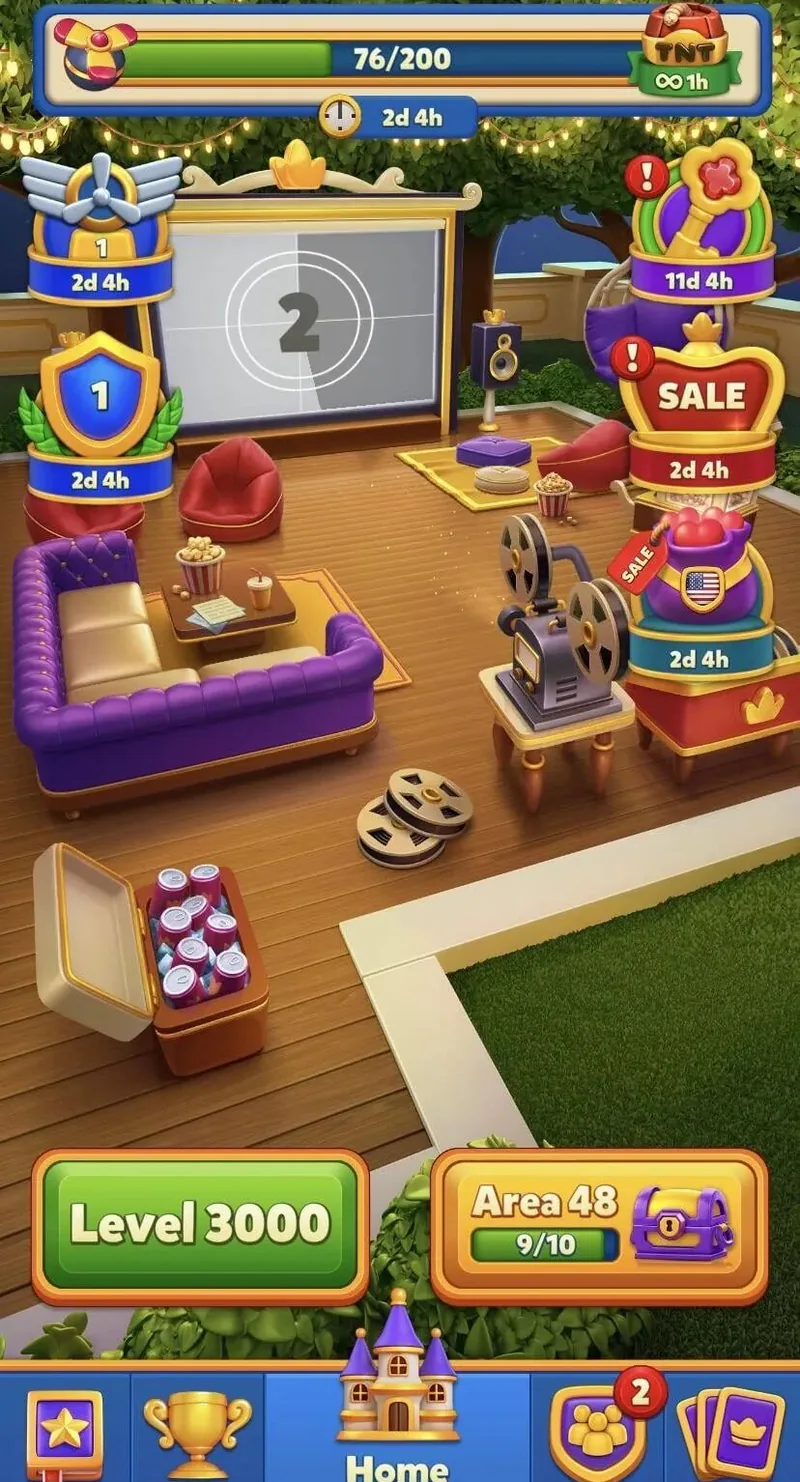
This effect is hard to put into words, so it’s best to try it yourself. Anyone with a feel for how game systems and screens come across should quickly see what this means.
2. Card collecting in a casual game
Cards Collection is a system Coin Master added only in recent years. It puts out several card sets with cards of different rarities. You can pull cards of every rarity from all sorts of event rewards, and once you finish a whole themed set, you get a completion reward.
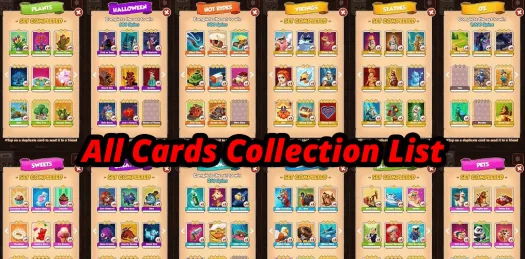
In Coin Master, card collecting does two main jobs. First, its big rewards push players to go after the rare cards offered in certain leaderboard events or sales, so it works as a grand prize. Second, you can ask friends or guild members for cards, which encourages friendly social play.
By the standards of real card games, a collection system with this structure and depth would be laughed at, since it is so simple and flat. Yet in Coin Master it has become a pillar of revenue growth, and the jump in Coin Master’s earnings has a lot to do with it. It gives a reason and a meaning to much of the heavy spending and heavy play in the game: on top of coins and growth themselves, the game’s goals now also point to high-value targets and rewards across its events.
Its rewards also feed straight back into the core gameplay and experience, and outside the system itself it asks players to learn nothing new and doesn’t pull their goals in other directions. It’s a clean, concise and efficient piece of event design. Perhaps the heart of system design in casual games really is a return to basics: use the most essential design language to give players the most direct, simple thing to chase.
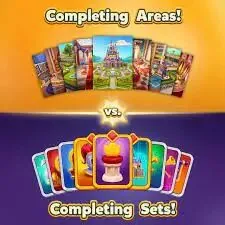
Unsurprisingly, Royal Match and Monopoly GO! both have card collection systems of their own.
3. Friends turned “enemies”: social play that’s hard to quit
Coin Master’s first ad to really break out showed Jennifer Lopez at a supermarket checkout, bragging about how much she had stolen from her friends. To some degree, this shows how essential the social side is to the game’s marketing, especially the “enemy” kind of social play: “you rob me, I raid you.”

“Sorry, I just raided your village. Oh well.”
It’s the same as with Happy Farm and Parking Spot Grab, two Chinese social network games where friends stole each other’s crops and parking spots, which were once played everywhere: messing with your friends always seems more fun, and harder to put down, than helping them.
The logic behind it, as we see it, is that being robbed gives players a sense of loss, the feeling of “that was mine, and because of so-and-so it’s gone.” When the loss is caused by a friend, it picks up emotional weight and value. The loss stops being about the stuff alone and takes on weight in feelings, relationships and the mind. That adds a whole other dimension: a design on a flat screen gives players an emotional connection in the real world.
And if you don’t want to be robbed, you have to log in more, upgrade your defenses more often, and even get into a contest of wills with your friends in the game. The social system gives your play a stronger urge to win and turns you from a laid-back player who keeps to themselves into a villain hardened by a cruel world. That’s exactly what game designers love to see.
Monopoly GO!’s Shutdown and Heist modes know this trick well too, and keep working hard to stir up a little trouble between you and your friends.
Making money: turning discounts into free gifts
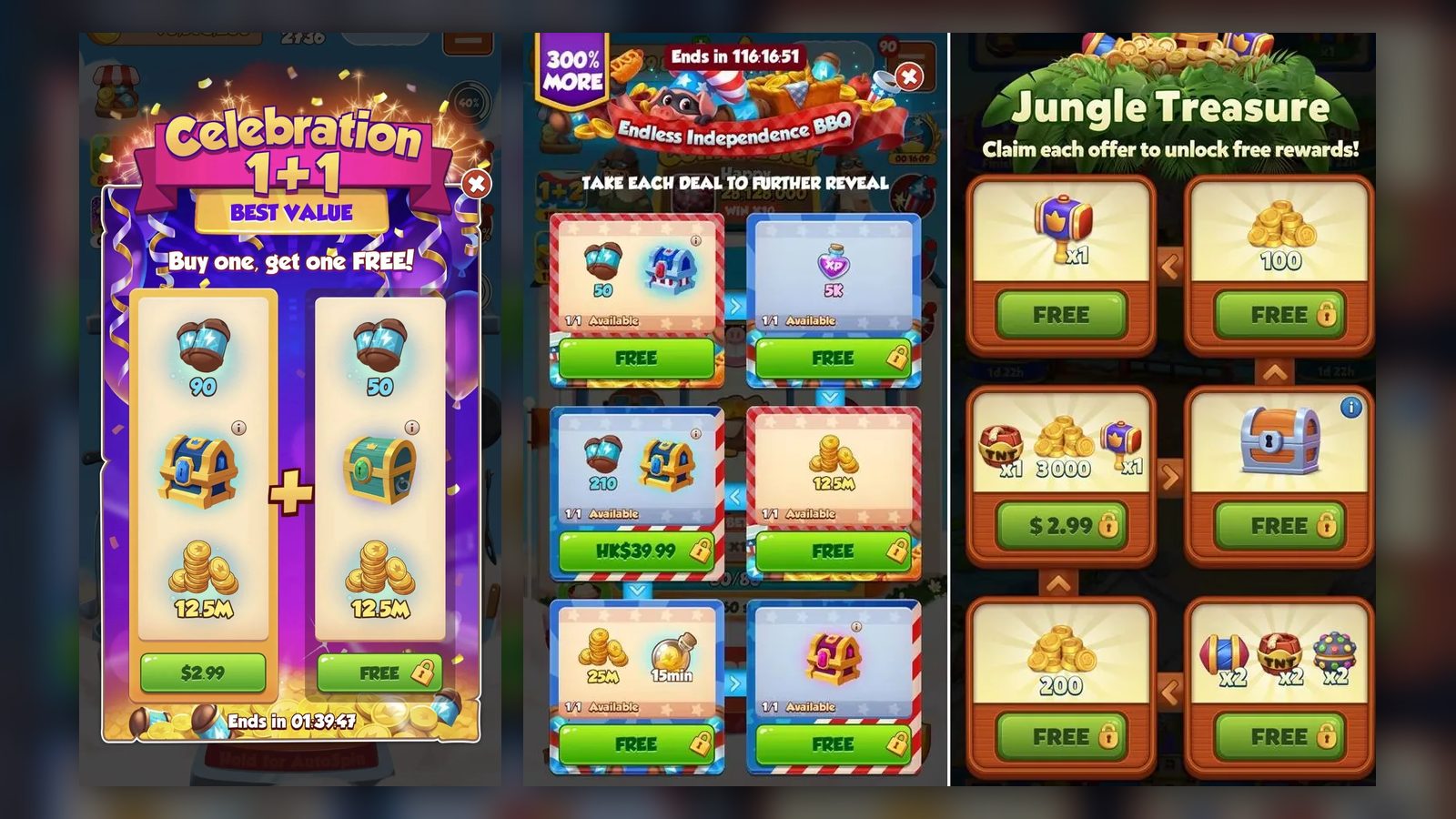
Just as the Battle Pass started a revolution in how games charge players (What’s the big deal about the Battle Pass?), we’d argue that Coin Master’s chained packs have, to some extent, moved the old discount sale forward too.
Discount packs in the past mostly pushed players to buy with words and a mood of scarcity: a big percentage off, a countdown before it disappears, a one-time-only deal.
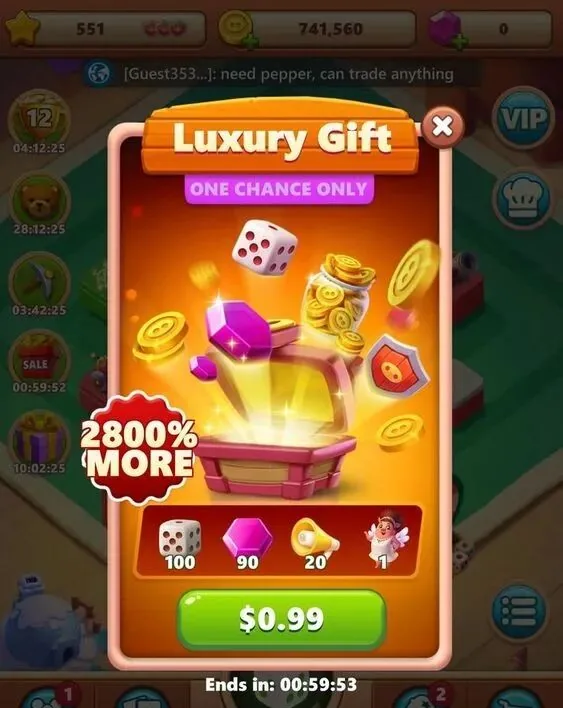
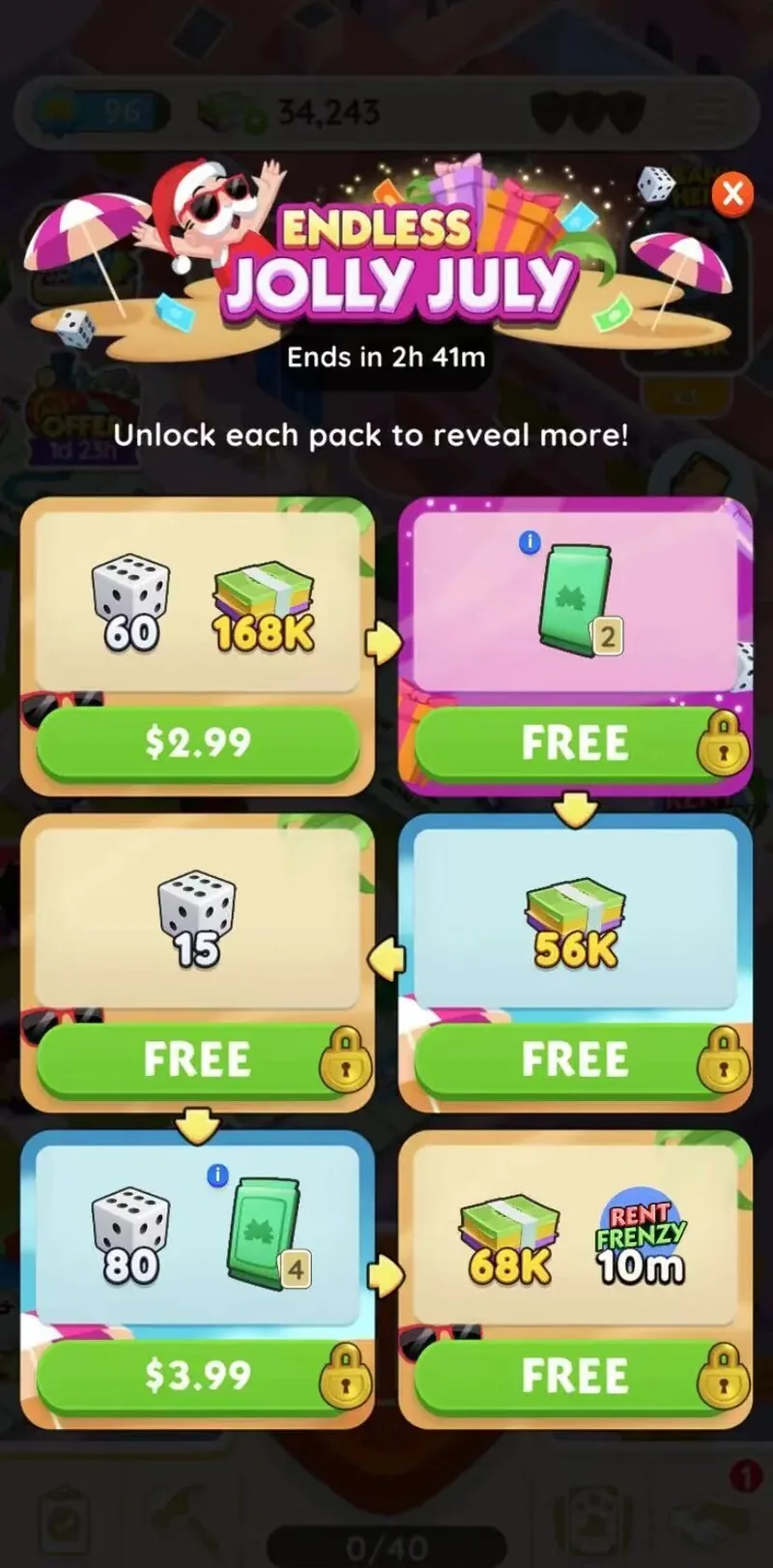
Coin Master is the first game where we saw a chained pack design (perhaps it was copied from another game too, and experts are welcome to set the record straight). The rewards that would have been the discount are spread out in a row as free items to claim, and the condition for claiming them is buying one pack.
This kind of offer turns a percentage off, which is hard to picture, into rewards that are easier to grasp and more eye-catching, and it gives players a “buy one, get N free” feeling.
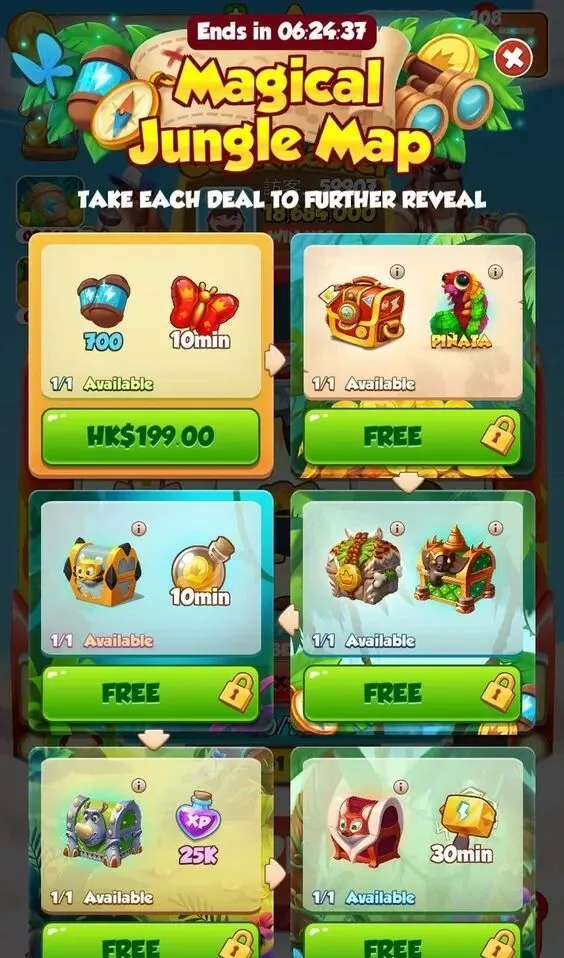
How much this feature lifted Coin Master’s revenue is hard to pin down, but Royal Match and Monopoly GO! copied the design straight over, so it presumably works well.
Wrapping up
Coin Master has many more features that casual games around the world have borrowed or copied, but there’s no room for them here. This piece only uses a few recent hits and some representative systems to pay tribute to the fresh ideas Coin Master’s designers tried, and to the experience and results those ideas produced.
To some extent, these designs are what made this game, out for more than 10 years now, and they are why it can still beat rivals of every kind and stay at the top of the industry.
Behind these designs is the designers’ work of taking apart, rethinking and reinventing core gameplay, system design and the way a game makes money, along with their restraint and control and their close study of how players think. Isn’t that exactly the fun and deep kind of game design that designers everywhere are trying to learn and live up to?
The end
Thanks for reading