Tomb Maze RPG: Maze Puzzles Meet Roguelite Monster Fights
This tomb maze RPG has you slide until a wall or a kill stops you, and grab a sword before taking on a two-star monster.
In this article3 sections
Building on the approach to game innovation laid out earlier on this site, this series regularly spotlights some of the better fresh ideas on the market, so the theory is easy to see in real games. This tomb maze RPG is the latest one.
This time the combination is a Tomb-style maze + RPG monster battles.
How It Plays
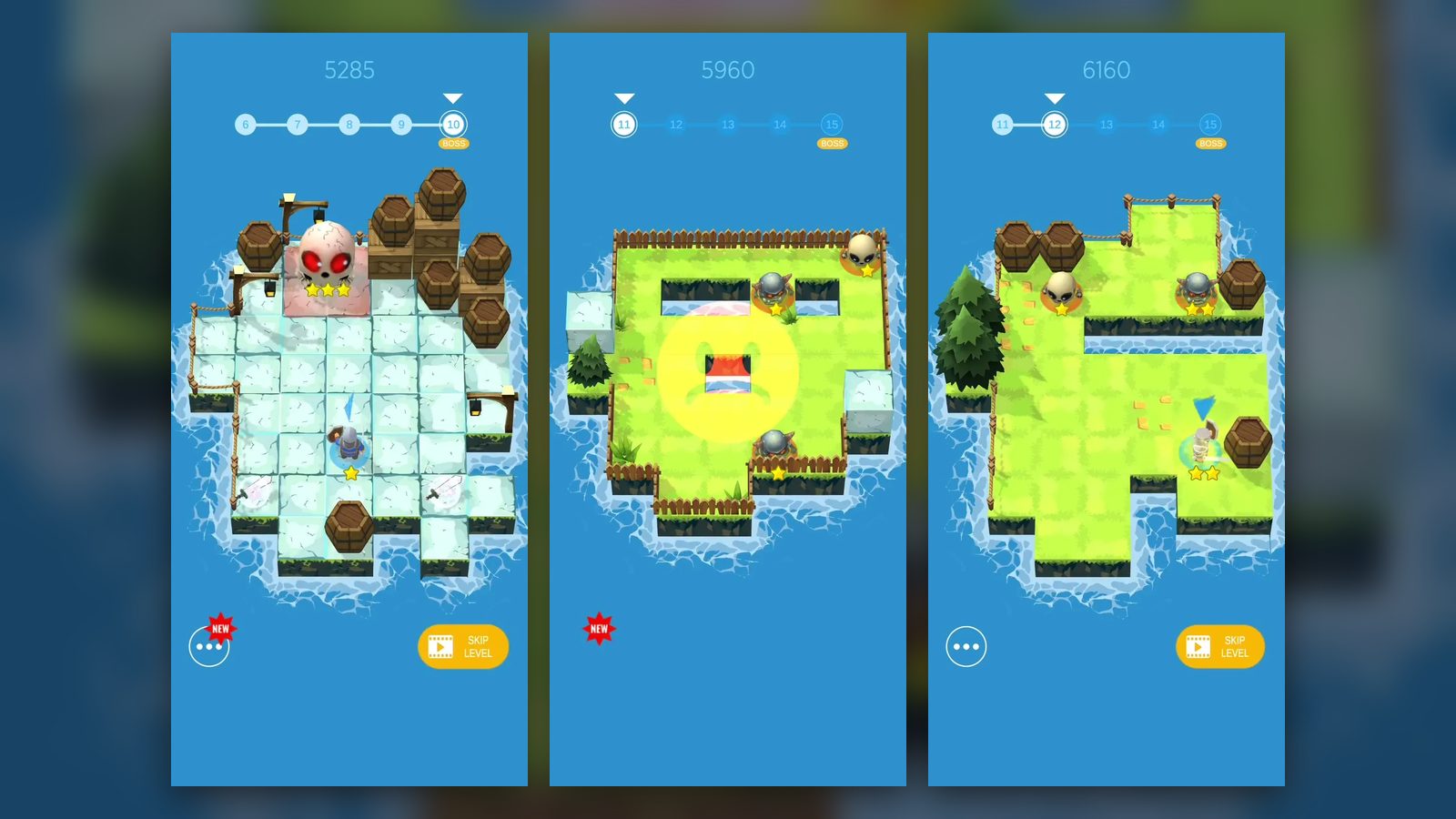
First, a look at a level:
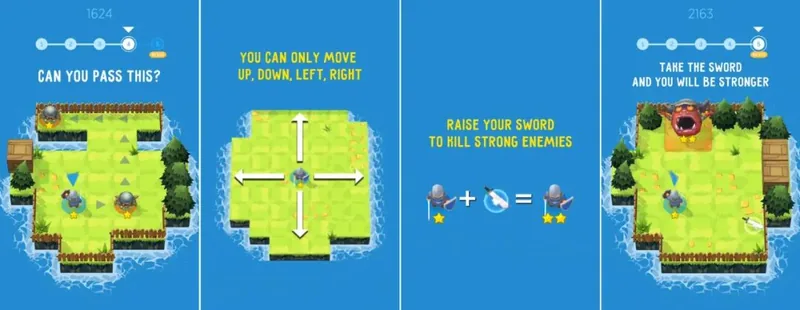
The rules in detail:
- The core play is a lot like Tomb, a maze game where you work your way through each level. The difference is that this game wraps it in an RPG setting and changes the goal from getting through the maze to killing every monster.
- You can only move up, down, left or right. Once you move, you keep going until you hit an obstacle or kill a monster. You can’t stop on your own.
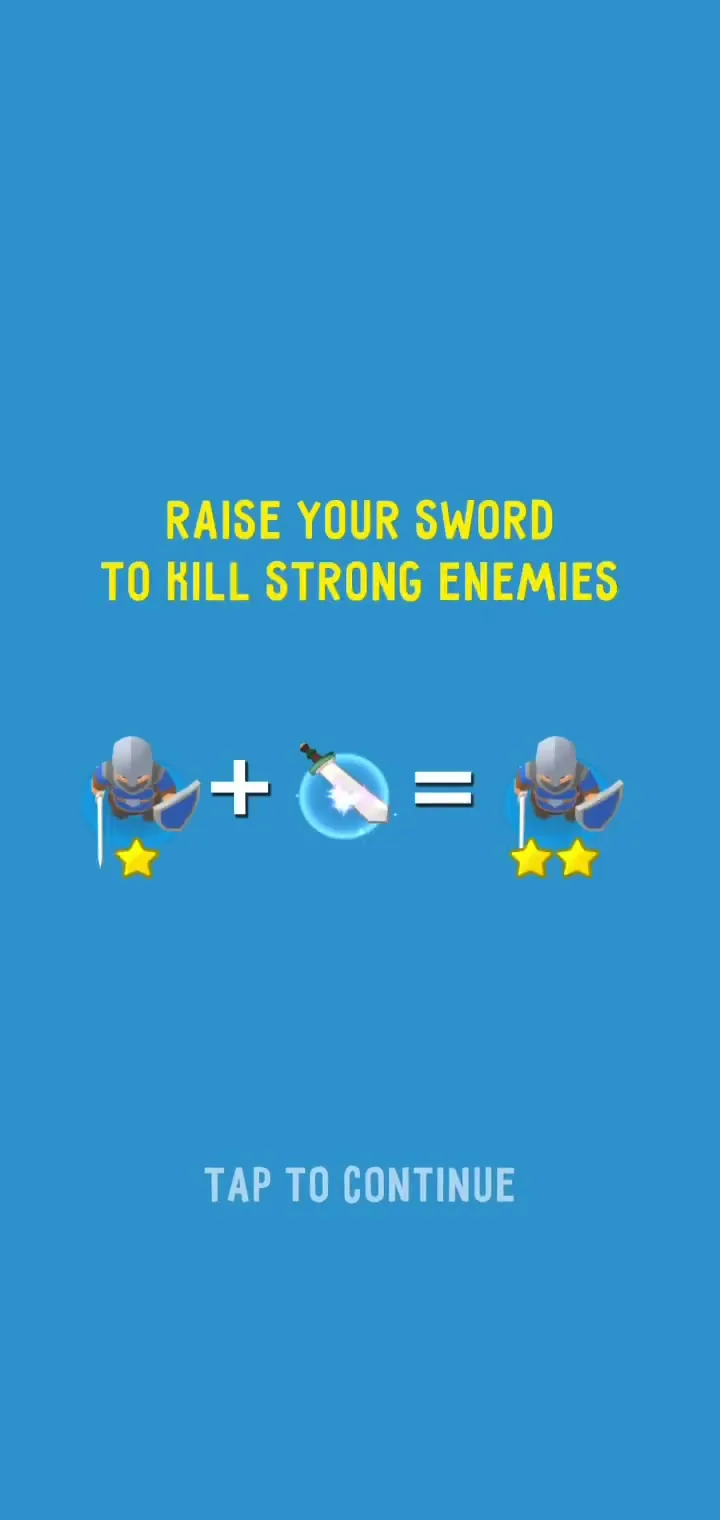
- You and the monsters both have star ranks, and you can only kill a monster of your own rank. Run into any other monster and you die. In the screenshot above, the player has one star and the monster has two, so the player has to grab the sword before the monster can be killed. Otherwise, the monster wins.
Put together, a level is a chain of slides, each ending at a wall or a kill, until no monster is left standing.
Guiding a Star-Ranked Knight Across Island Mazes
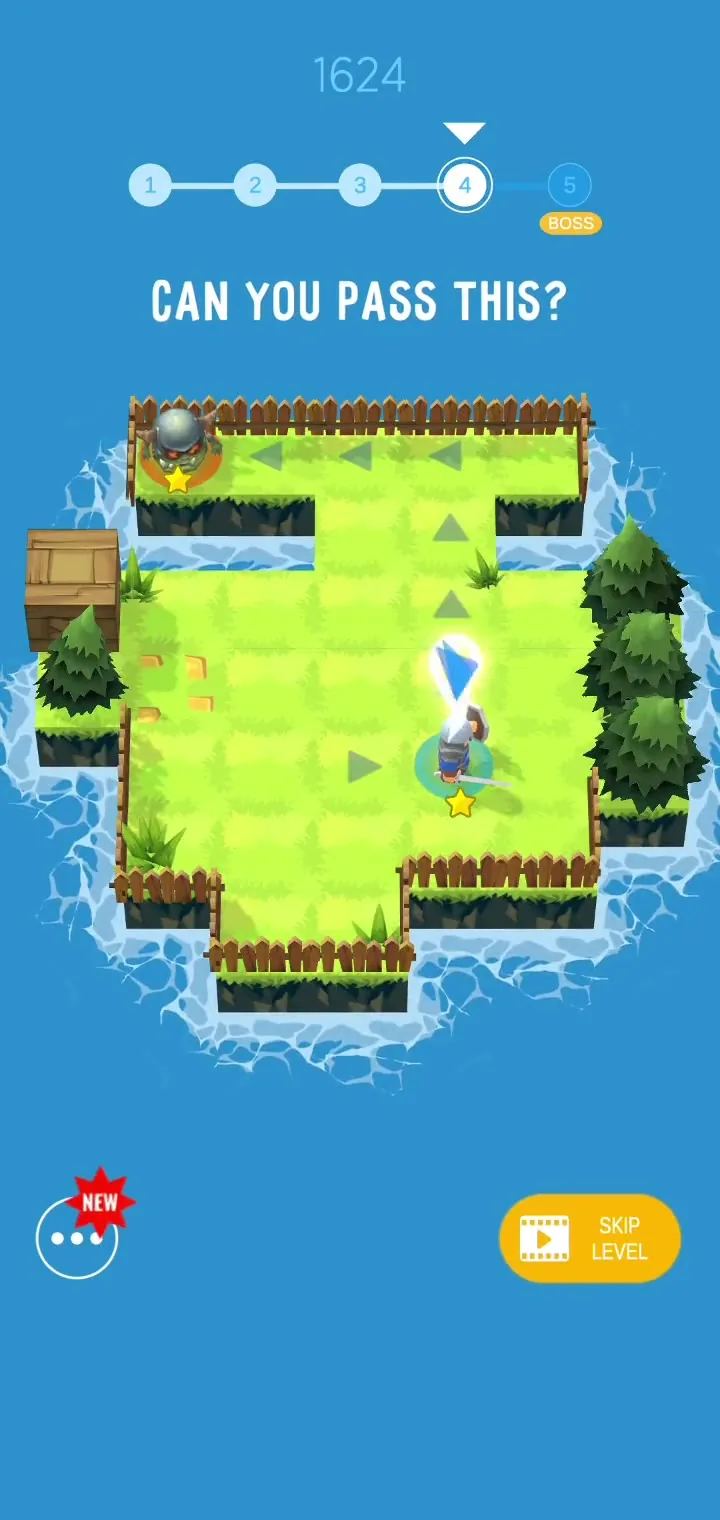
Each level is a small low-poly 3D board shaped like a floating island. Foamy water rings it against a flat blue background, and a high, tilted camera looks down on it. The hero is a knight with a row of yellow stars under it and a blue arrow-shaped marker above its head. Between moves it usually rests against a fence, a block or the edge of the board, or on a tile where an enemy stood.
Regular enemies wait on glowing orange or red circles. They are goblins in horned helmets and round skull creatures, each with one or two stars beneath it, while bosses carry two or three. When the knight beats an enemy, a gray dust cloud appears on its tile and the enemy is gone. Once the board is empty, a “SCORE:” panel shows the level’s points over light rays and a burst of colored stars, and the next level opens on a plain blue card with its number or a fade to blue.
During play, a running score total sits at the top of the screen, and a progress bar of five numbered nodes stretches across the top. A white pointer marks the current level, the fifth node carries an orange “BOSS” tag, and the bar covers Levels 1–5, then 6–10, then 11–15. Along the bottom are a round “…” button on the left, which shows a red “NEW” badge from Level 4 on, and a yellow “SKIP LEVEL” button with a film-strip play icon on the right.
The first boards are small grass islands with wooden picket fences, pine trees, crates and one or two one-star goblins. In Levels 2 to 4, gray arrows drawn on the grass trace a route, and Levels 2 and 4 put a prompt above the board. Level 2 reads “KILL 2 ENEMIES,” and Level 4, with a lone goblin in the top-left corner, asks “CAN YOU PASS THIS?”
After Level 4, a tutorial card pictures a one-star knight plus a sword equaling a two-star knight, with the line “RAISE YOUR SWORD TO KILL STRONG ENEMIES” and a “TAP TO CONTINUE” prompt. On the boards, a sword lies on a tile inside a glowing circle. When the knight is next seen on that tile, the sword is gone and the knight has gained a star.
Level 5 is the first boss level. Bosses are larger than regular enemies and stand on a colored square. This one is a horned red monster in a gray helmet with two stars, placed on an orange square at the top under the prompt “TAKE THE SWORD AND YOU WILL BE STRONGER,” and at one point in the level the knight shows two stars to match it.
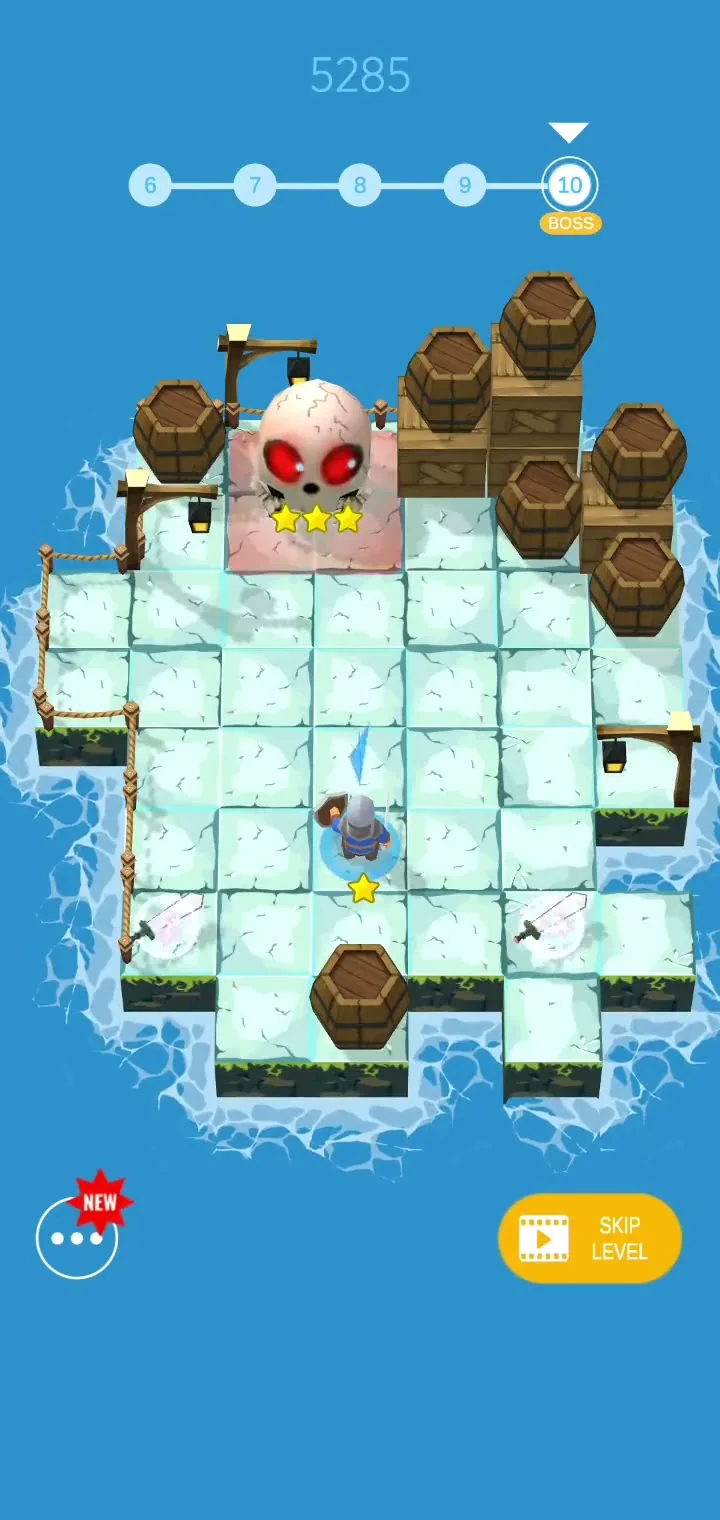
Levels 6 to 10 move to larger boards of pale cracked tiles with rope fences, lantern posts, crates and barrels. Level 7 has two one-star skulls and a strip of water cutting partway across the middle, while Levels 8 and 9 each have a square hole with water below. Level 9 holds four enemies, and on its score panel a translucent ghost figure rises over the central hole.
The Level 10 boss is a giant red-eyed skull with three stars, standing on a pink square, and two swords lie on the lower row. The knight starts at one star here, has two once the right sword is gone, and shows three on the score panel, with both swords and the boss cleared away.
Level 11 goes back to grass. Its fenced field has three holes (a wide one and a narrow one near the top, a small one in the middle), a pale blue cube block on each side edge, and two skulls and two goblins at one star each. At times a strip of green-highlighted tiles runs from the knight to the middle hole, whose floor shows red. At one point a large yellow frowning face covers that hole and the knight is off the board; shortly after, it is back at the right edge.
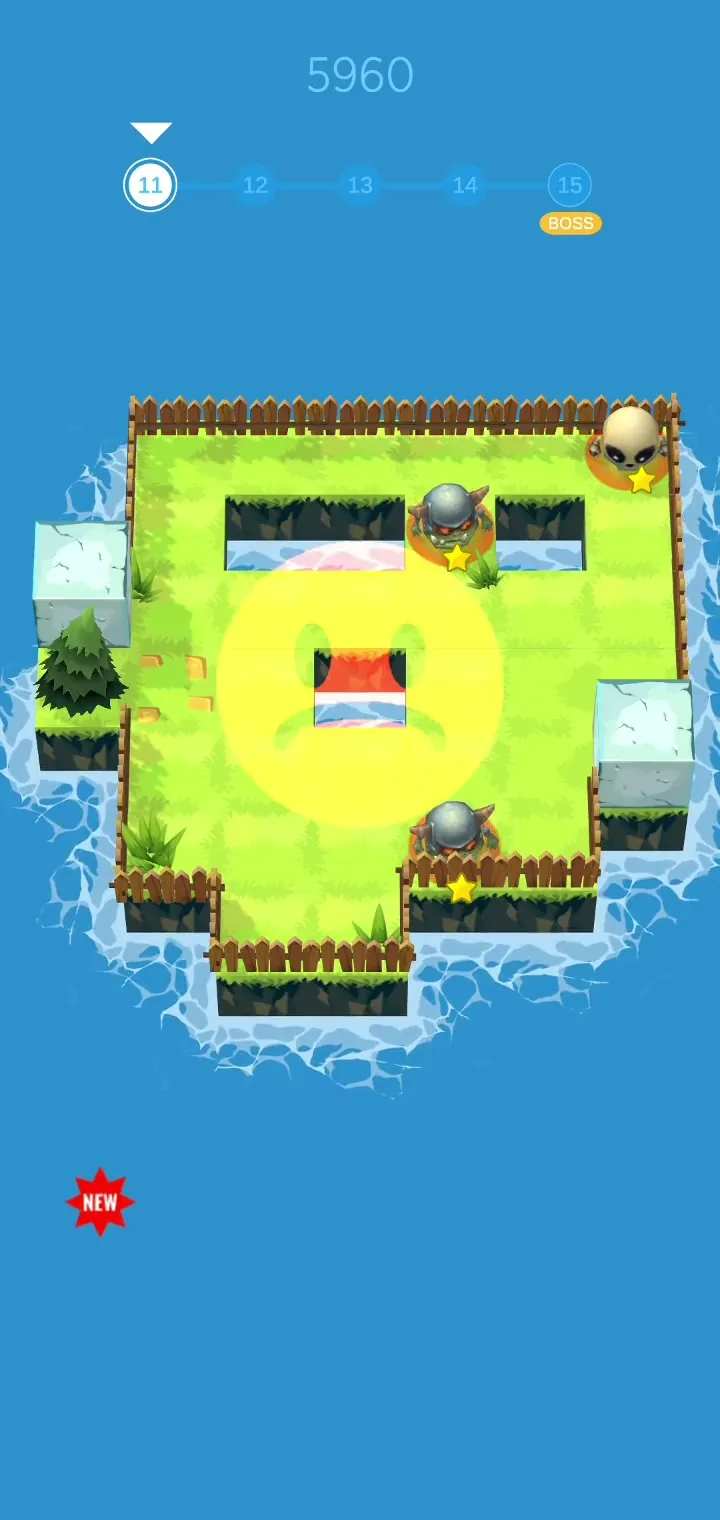
When we played it, Level 11 lasted about a minute and a half, and all four enemies were back in place several times along the way. During that stretch a “SELECT SKIN” screen appears. It shows character portraits in three columns (armored knights, a spearman, wizards with staffs and knights on horseback), with the top-left one highlighted. Labels between the rows read “NEED SCORE” with figures from 7500 up to 70000, and after this screen the red “NEW” badge on the “…” button is gone.
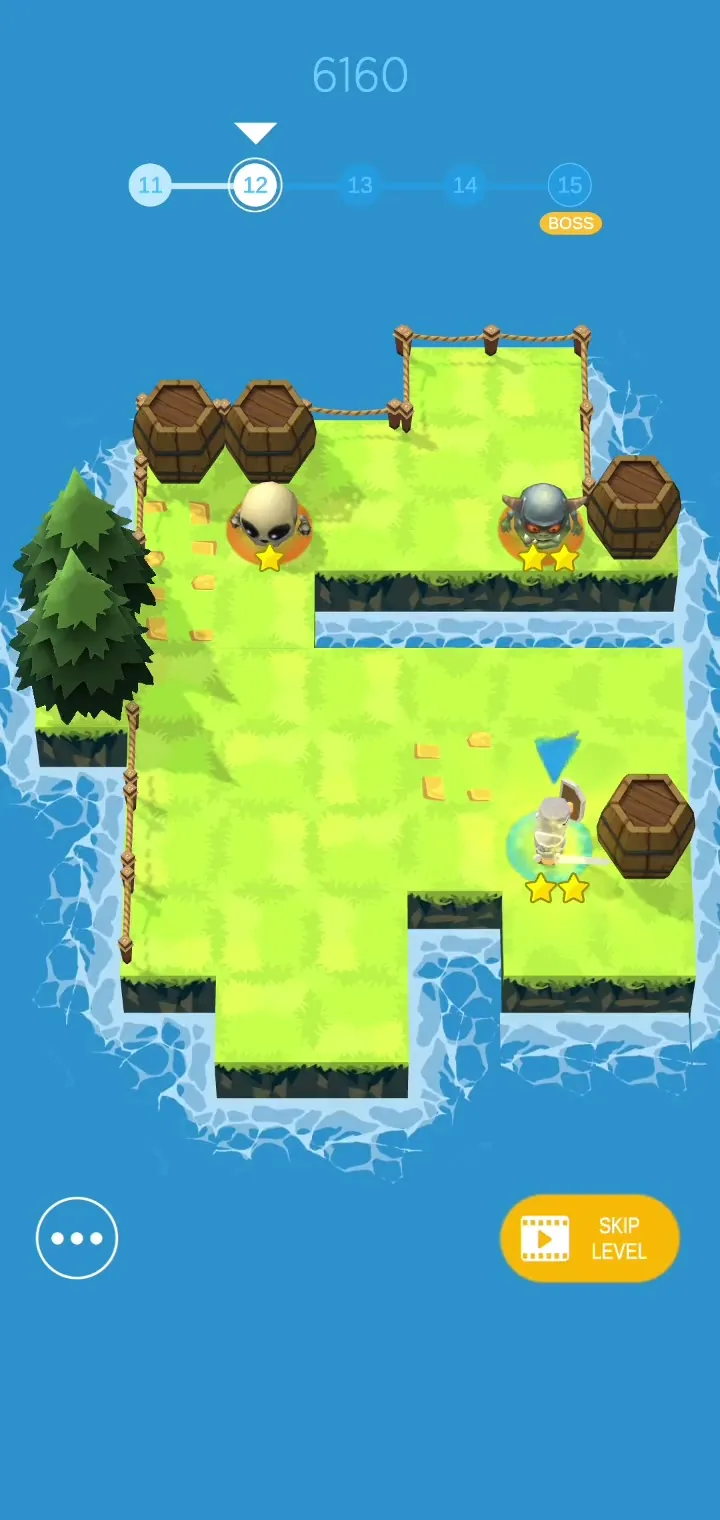
Level 12 splits its grass board with a strip of water on the right side that cuts off an upper section. Up there are a one-star skull and a goblin with two stars, the first regular enemy seen with that rank, while a sword lies on the lower right. The knight shows two stars while the skull is still standing, and the skull is gone by the score panel, so a lower-ranked enemy can be beaten as well.
Level 13 sets a skull and three goblins, all at one star, around a single crate in the center of a grass board. At one point two of them are gone, then all four are back.
Level 14 is a wide grass board with a sword in the upper left, a two-star goblin at the upper right and a one-star skull in a fenced nook at the lower right. At one point the knight is missing while a gray dust cloud sits on the goblin’s tile and the sword is still in place, and it next appears at the bottom of the board with one star. Later it shows two stars on the sword’s tile, and the level ends with the knight in the skull’s nook.
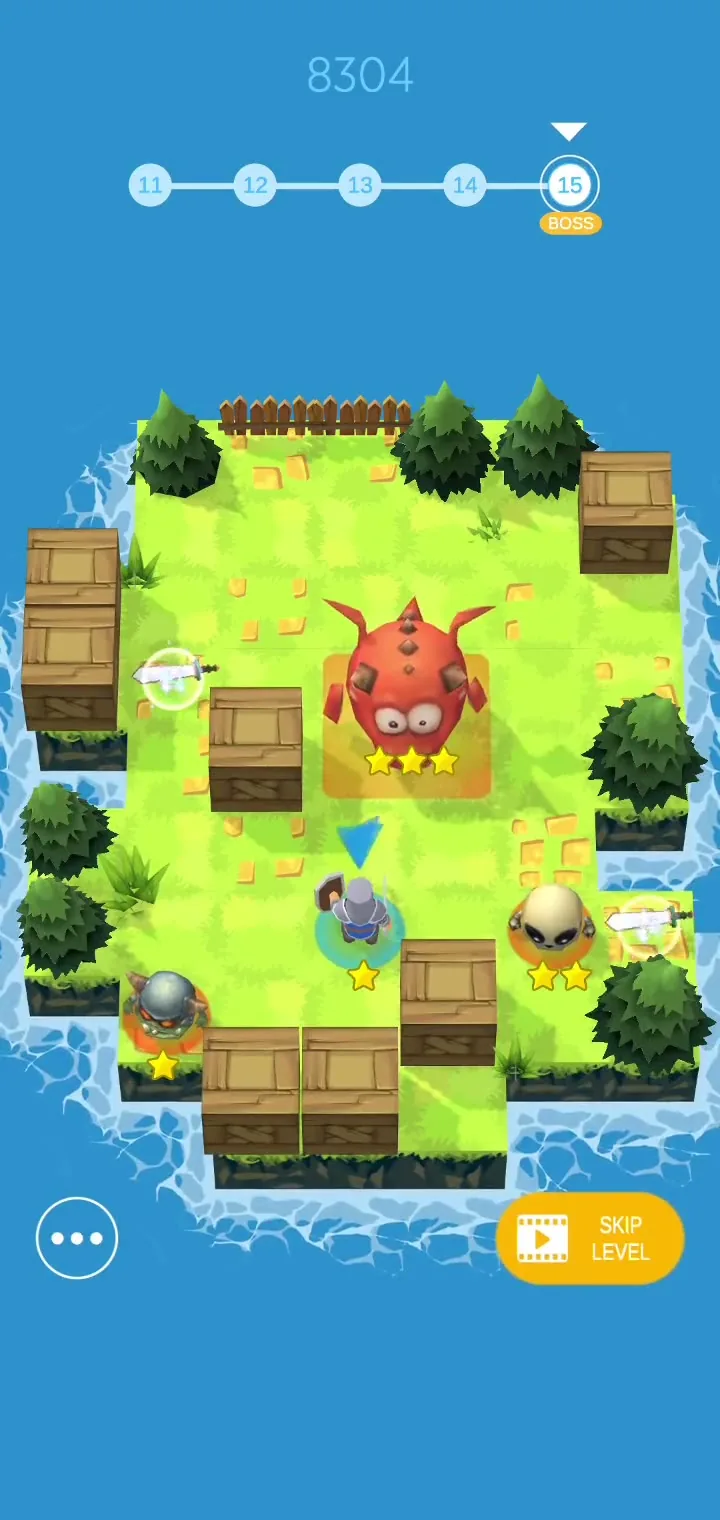
The Level 15 boss, a red horned creature with three stars, stands on an orange square in the middle of the board. Around it are a two-star skull on the right, a one-star goblin at the lower left and a sword near each side edge. The one-star knight reaches two stars with the left sword gone, then three with the right sword and the skull gone, and a “LEVEL 16” card follows.
How It Scores
The ratings, category by category:
| Category | Score | Comment |
|---|---|---|
| Core gameplay fun | 7 | Very fun; the puzzle-solving appeal is still there |
| Originality | 7 | A new theme, plus a small twist on the gameplay |
| Art style | 7 | A by-the-book midcore look |
Overall:
- It scores a 7 overall.
- We’ve seen plenty of games that put a small twist on Tomb. Most either don’t bring enough new ideas and end up looking a lot like the original, or change so much that they stop being puzzle games at all. This tomb maze RPG game lands right in the sweet spot between the two.
- The difficulty ramps up at a reasonable pace for now, with harder levels gradually showing up after Level 15. A hint feature would probably work better than the current blunt option of skipping a level outright.
- This game looks promising. With more fine-tuning it should do pretty well, and its approach is a good model for blending maze puzzles with RPG fights.
More from this series:
Ball sorting in measuring cups + mazes: a good idea, plenty of puzzling and lots of replay value
Tile matching + a laundromat, and somehow it works
TriPeaks solitaire + board clearing works too, and it’s pretty fun: highly recommended