500+ Organic US Installs a Day via Google Play Early Access
How Google Play Early Access works, how to get into its featured collection (500+ organic installs a day on average), and why ratings stay hidden.
In this article4 sections
Most developers taking games overseas use Google Play the same way: once the game is finished, it goes straight to Production, the full release. Few people notice the other tracks or use them. In fact, Google gives developers several tracks, each meant for a different stage of a game, and one of them leads to Google Play Early Access.
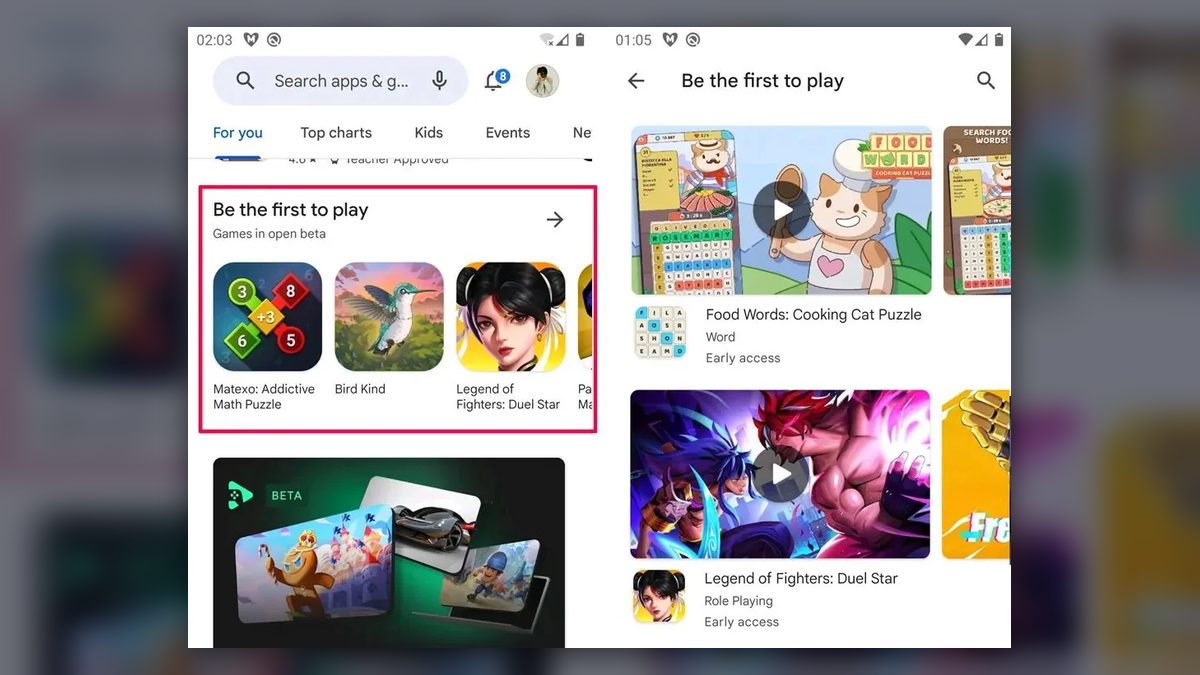
This article is about that track, Google Play open testing. In the Google Play mobile app, a game in open testing automatically gets “Early Access” added to its name, which is why it’s often called EA for short.
What is EA good for?
We’ve put together everything you’d want to know about EA:
| Question | Answer |
|---|---|
| How do you use it? | Upload the build, create a release on the Open testing track and submit it for review; once approved, it’s live |
| Can players tell? | In the Google Play mobile app, a game in EA shows “Early Access” after its name, marking it as still in development. The desktop site shows no EA label. |
| Any limitations? | The store page of a game in EA shows no player reviews and no rating |
| What are the advantages? | Google currently backs EA: there’s a recommendation mechanism for EA games, and Google Play has a dedicated entry point for them |
| Does it affect user acquisition? | Almost every channel works as normal |
| How do you switch to the full release? | Create a release on the Production track and submit it for review; once it’s approved, close the EA track. Players notice nothing at any point. |
How do you get organic installs from EA?
Developers who have already tried EA may be wondering at this point why they never got any organic traffic from it. There are two ways to get it:
- Through the weight of your Google Play account, up to 50 installs a day. Google always gives recommendation weight to accounts that perform well, and that includes EA. A new EA game published under an account that already has games with decent volume will get EA recommendations from Google. The volume isn’t large, but it’s enough for early testing.
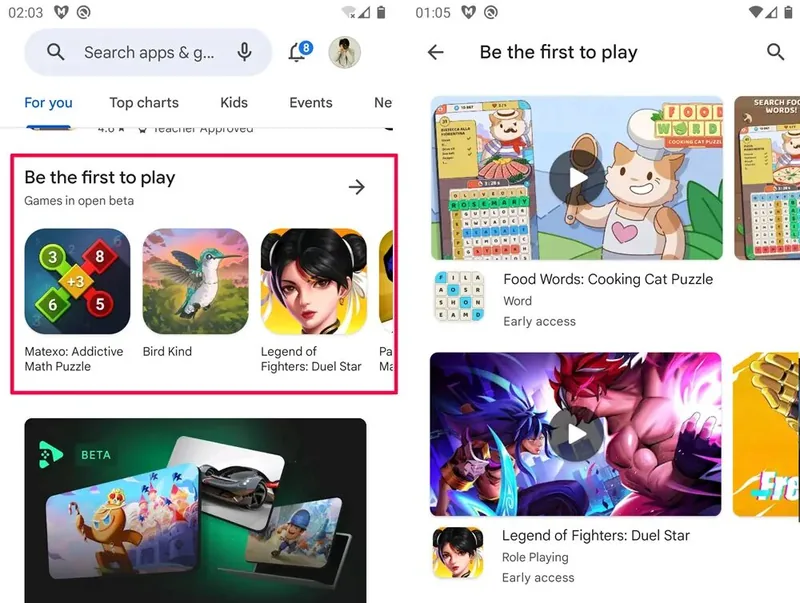
- By applying to Google staff for a spot in the EA featured collection. Once approved, a game gets 200+ installs a day; the volume swings quite a bit, but it averages out to 500+ a day. And as long as the game stays in EA, the traffic keeps coming, though it shrinks over time. This route is more direct and doesn’t depend on the account’s own weight, so it suits developers who are just starting out. It does require a certain level of polish, though: the game has to stand out in its art style, its gameplay and what sets it apart. After the EA release, you can send the game’s link and a description of its distinctive features to Google Play staff. Once they approve it, the game goes into EA’s “Be the first to play” collection, and Google orders that collection based on data about player preferences.
Once a game is in the EA collection, its organic traffic drops noticeably if it goes a long time without an update or if its crash rate or ANR rate is too high. Developers should keep an eye on both.
How good are the organic users from EA?
Google’s EA recommendations go to two kinds of players:
- Core players. These are players who have installed many games of the same type. They’re very high-quality users, with good spending and good retention.
- Broader audiences. Google also recommends the game to players who may like its genre: a word game might be shown to match-3 players, jigsaw puzzle players and so on.
Overall, the players EA recommendations bring in are very high quality. Each day’s new users include both core players and broader audiences, and developers only need to tell them apart by their behavior.
What else can EA be used for?
As mentioned above, a game in EA shows no rating and no reviews. That’s a real disadvantage for games that hope to win players over with a high rating, but some developers use exactly this to do things they otherwise couldn’t:
1. Make big, bold changes to the game without worrying that bad reviews will hurt the conversion of paid user acquisition.
2. Some cash-out games, and games that lure players with the promise of cashing out, tell players at install that they can withdraw money, when in fact they can’t or the withdrawal threshold is extremely high. Bad reviews from players don’t matter, since no rating is shown. Of course, if players report the game to Google Play, it will be taken down, so these games still have to stay within certain limits.
That covers the advantages of EA and how to use it. For all its advantages, EA has obvious drawbacks too: for a game that wants to build a brand and a reputation, player ratings and reviews still matter a lot. So once a game reaches a certain stage, we still recommend switching to the full release. If you don’t want to give up the organic traffic, you can keep applying to Google for new-game featuring.