Block Farm Review: A Block Puzzle Dressed as a Farm
Block Farm review: crop pieces fill rows on an 8x8 soil plot to harvest the tomatoes and carrots each stage asks for.
Game at a glance
Block Farm
8/ 10
Our score
Same goals-on-a-grid idea, but a strong farm theme and art style change the whole mood.
In this article6 sections
Plenty of block puzzles give the grid a goal, a set number of things to collect while rows are cleared. Block Farm joins them as a farm-themed 3D block puzzle, with coins that go toward upgrading a farm, a touch of the management side of idle tycoon games. Its rules sit with other games like block blast: crop pieces wait in a tray under a square grid, and full rows clear.
What changes is everything around those rules. The grid is a plot of soil in front of a red-roofed farmhouse, and the pieces grow into tomato and carrot beds whose harvest is the goal. We played Stages 02 through 04, Stage 04 twice, and the theme and art style are the story here.
Crop pieces on an 8x8 soil plot
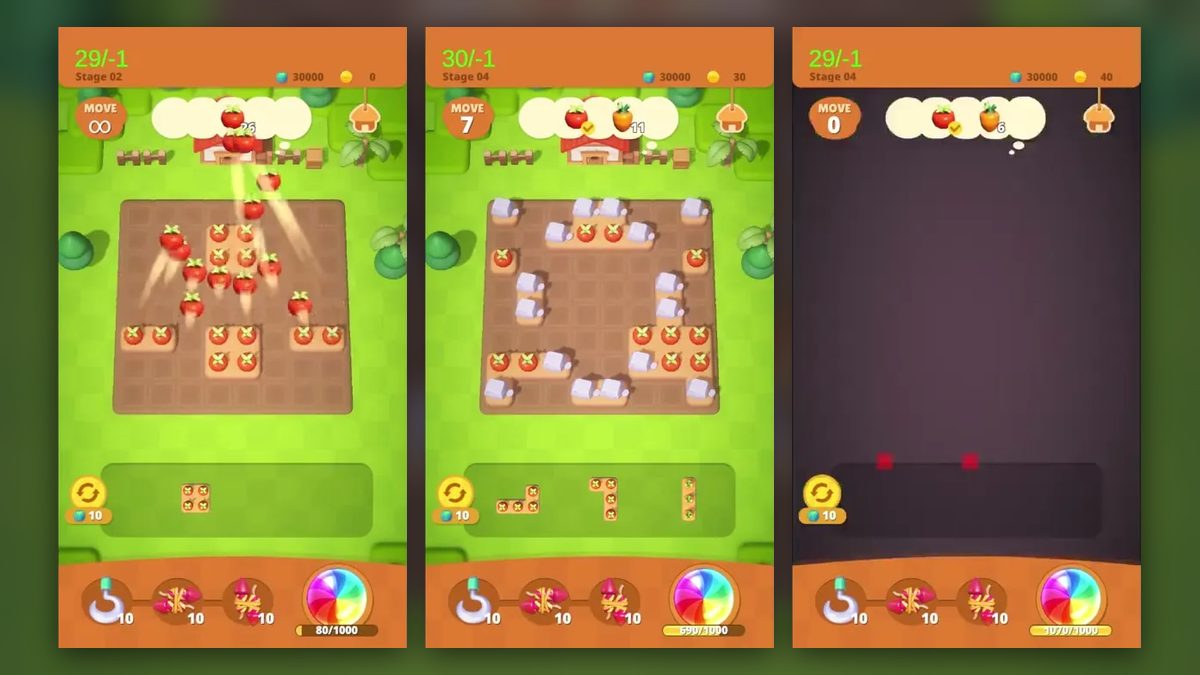
The basic move in Block Farm gameplay is to take a crop piece from the tray under the board and drop it onto the 8x8 grid of dark soil cells. Each cell of a placed piece becomes a raised tan bed with a full-size crop on it. A row that is completely filled clears, and its crops pop up and fly into the cloud-shaped goal panel above the board, sometimes with a burst of soil and dust over the row.
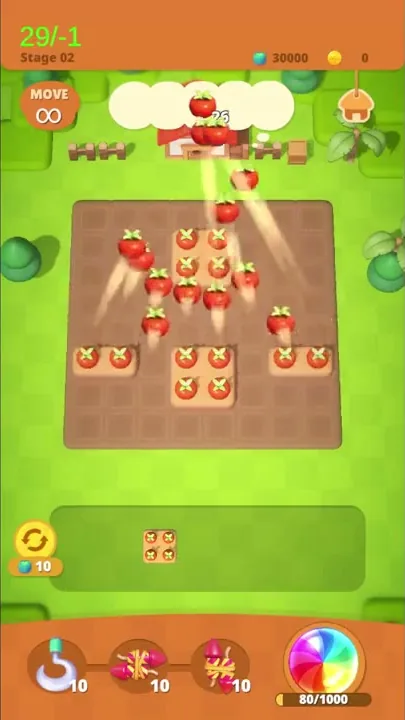
That panel, floating in front of the farmhouse, holds the goal. It shows each crop the stage wants with a number beside it, and the number drops as harvested crops arrive. When a goal is met, a check mark replaces its number, and play goes on for whatever is still counting.
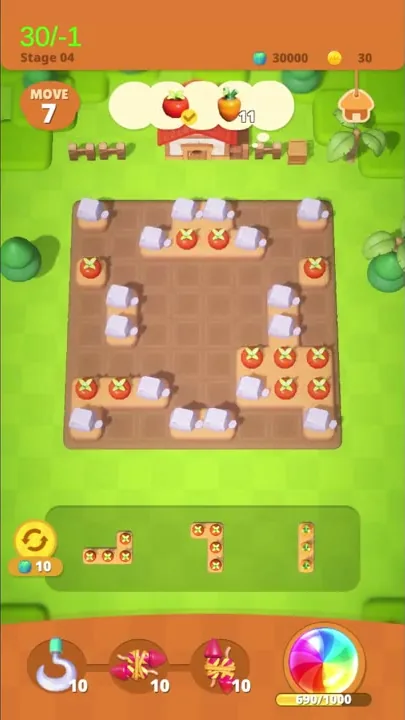
The controls are touch and drag. A piece lifted from the tray grows to board size and floats over the grid with its shadow under it, while white square outlines mark the cells it will fill. Now and then a pale pink glow passes over a strip of cells, and new crops sit there a moment later.
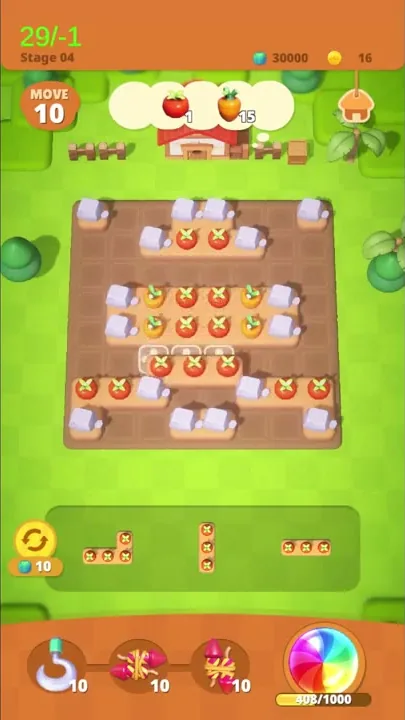
In the tray, pieces are small tan shapes marked with crop icons. The shapes seen include L and J pieces and a 2x2 square, as well as straight three-cell bars and S and Z shapes. During Stage 04, a tray spot that had just been used showed a new piece moments later, while the other two pieces stayed put.
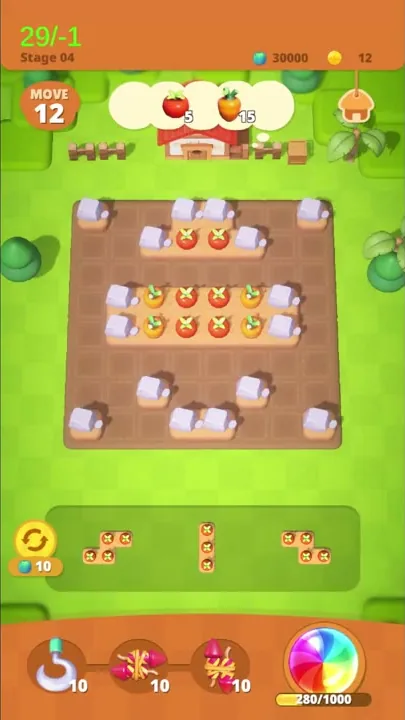
Rocks are white-gray stones on small tan bases, each filling a single cell. They count toward a row: once the other cells of a row with rocks in it are filled, the row clears around them. The crops leave, and the rocks stay where they were.
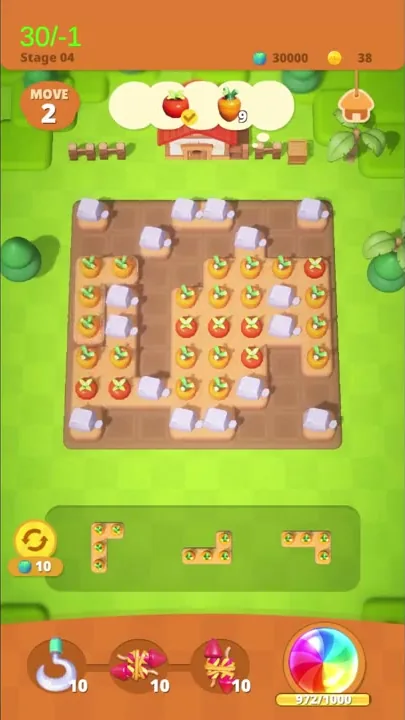
Stage 04 plants a second crop, orange with a green leafy top, carrots by the look of them. The board starts with two pairs of them, and pieces with green-topped icons join the tray later in the stage, forming carrot beds wherever they go down. Tomato pieces keep coming as well, even after the tomato goal is done.
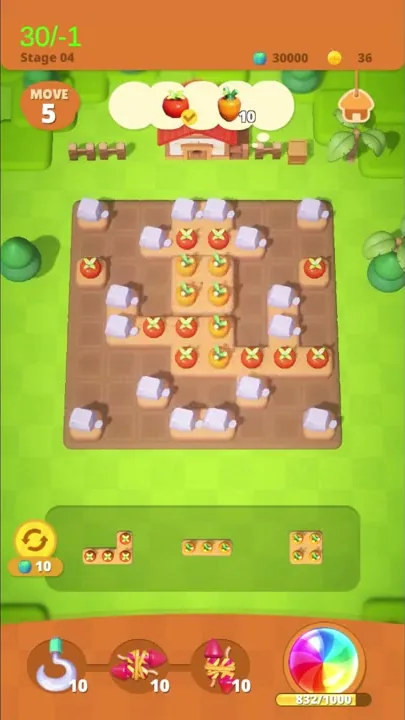
The goal panel in Stage 04 asks for two crops at once, 15 tomatoes and 15 carrots, and the MOVE badge to the left of the panel starts at 15 and counts down during play. On the first attempt the tomato goal was checked off with carrots still to go, and carrot pieces began turning up in the tray around then.
With the board mostly full, small orange tiles marked with a red X sat above the left and middle tray pieces. Nothing on screen explains them, and they stayed in place as the stage went on.
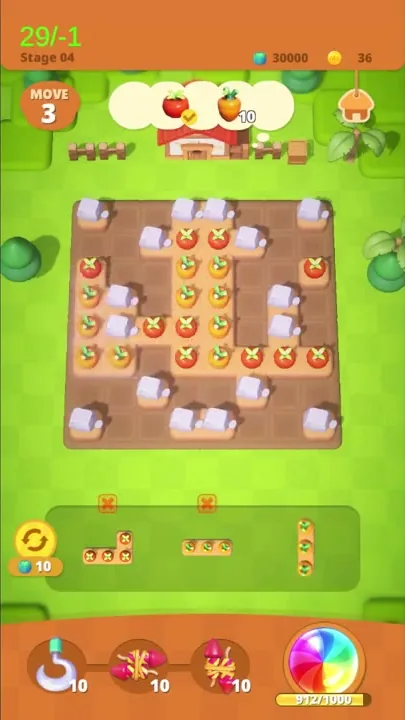
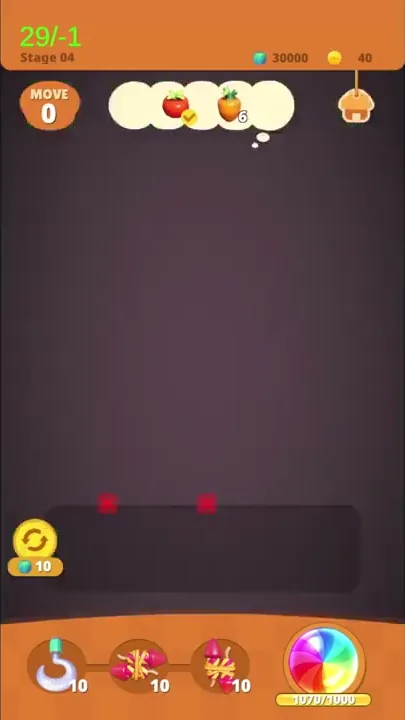
MOVE reached 0 with the tomatoes done and 6 carrots still needed. The board vanished and the play area turned a dark gray-purple, with the two X marks, red now, still above the empty tray. After that, Stage 04 was back on screen from its opening layout, with both goals reset to 15.
From an open plot to rocks and carrots
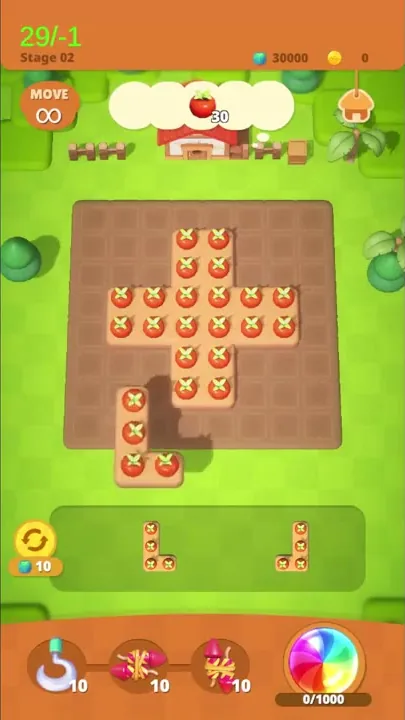
Across these stages the boards gain obstacles and a second crop. Stage 02 starts as a mostly empty plot with a single plus-shaped block of tomato beds in the middle, a two-wide vertical band crossed by a two-tall horizontal one. The target is 30 tomatoes, and MOVE shows an infinity sign, so there is no move limit.
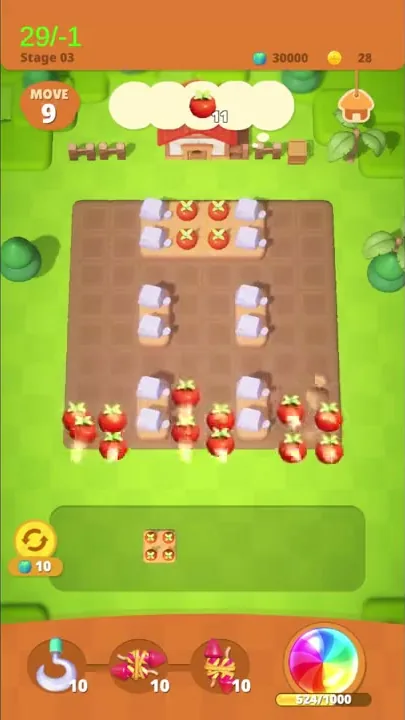
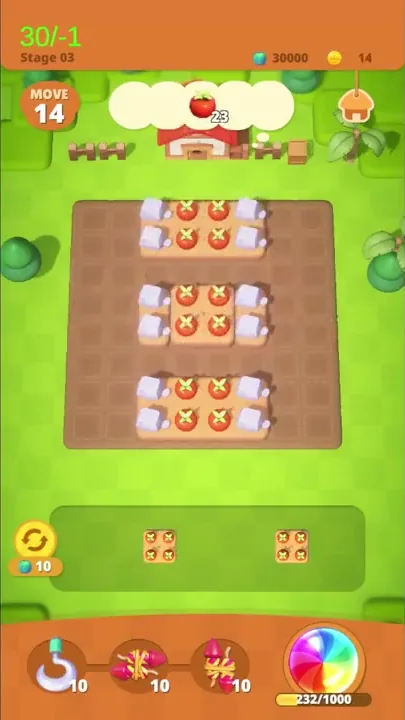
Rocks and the move limit arrive together in Stage 03. As it begins, four 2x2 tomato plots form a diamond, each with rocks beside it: a pair on either side of the top and bottom plots, and a pair on the inner side of the left and right ones. MOVE starts at 15, and the target rises to 35 tomatoes. Shortly after, the left and right plots have cleared, and three plots stand in a column down the middle, each with a pair of rocks on either side.
Stage 04 is laid out symmetrically, with rocks in all four corners. At top center and bottom center, two tomatoes sit between two rocks with two more rocks beyond them, and on each side of center a pair of carrots has two rocks along its outer edge. The move limit holds at 15 while the goal splits between the two crops.
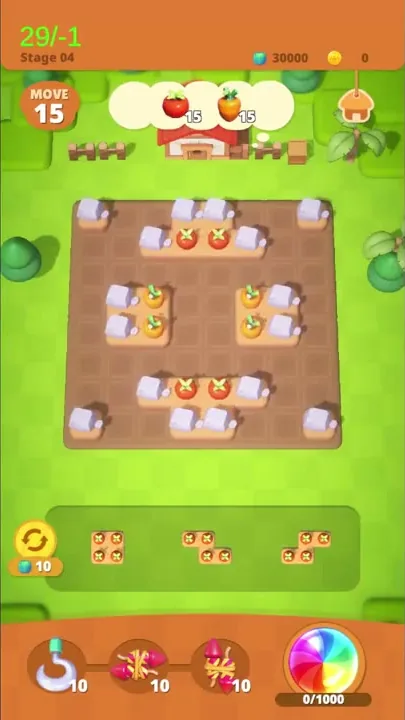
Carrots, as pieces and as a goal, first turn up in Stage 04; the earlier stages deal in tomatoes. The tray opens Stage 03 with two 2x2 squares and Stage 04 with three pieces, a square, a Z and an S.
The orange bar across the top of the screen holds the stage label and two currencies. At its far right, a gold-coin tally starts each stage at zero and climbs as rows clear. Next to it, a blue-gem counter tracks the currency that prices the yellow round button with circling arrows to the left of the tray, which carries a gem icon and a 10 beneath it. A small orange house also hangs from a rope at the top right of the play screen.
Down in the orange bottom bar sit three round boosters, each marked 10: a white hook-shaped icon, a red-and-gold crossed one and a red one that looks like a rocket. At the bottom right is a rainbow-colored wheel with a bar beneath it, which starts each stage empty and fills during play.
Farm theme and art style set the tone
The farm theme does more than decorate the grid. Block Farm runs on the same idea as other block puzzles that add goals, yet its strong theme and art style change the whole atmosphere, pushing the puzzle toward something more casual, more farm-like and more cartoonish. It felt fresh to us.
The farm fills the screen. A square of dark soil sits in bright green grass with round bushes at its sides, seen from a fixed, slightly tilted top-down view, and the goal panel floats like a cloud in front of the farmhouse and its wooden fences. The crops are 3D models, red tomatoes with green star-shaped tops and orange carrots with leafy ones.
We liked that the pieces are plants and the goal is a harvest. A piece that looks like a small tan shape in the tray turns into raised beds of full-size crops on the board, and a finished row sends those crops flying into the panel as the count beside each one drops.
The farm reaches past the board too. Coins pile up as rows clear, and they go toward decorating and upgrading the farm around it, which ties each stage to the progression between levels.
What the house icon and boosters leave unseen
There’s no complaint to report about Block Farm. The limits here are about what early stages can show. The farm decorating and upgrading happen off the board, and we can’t say what the house icon opens or which decorations and upgrades the coins buy.
The same goes for the tools in the bottom bar. All three boosters still showed 10 when play stopped. What they do is not shown in these stages, and neither is the job of the circling-arrows button or the rainbow wheel. The crops grown on the board by Stage 04 were tomatoes and carrots.
Filling soil rows against a crop count
The puzzle side of Block Farm comes down to scanning the soil grid for the spot where a tray piece closes a row. From Stage 03 on, that happens around rocks and against a move counter, and Stage 04 has two crop counts running side by side. The rest is the look, a cartoon farm where cleared rows send tomatoes and carrots flying toward a farmhouse. The mix speaks to two tastes at once: grid puzzles with a stated target, and farms drawn as cartoons.
Verdict
Strip out the farm, and the rules of Block Farm would look familiar: drag from a tray, fill a line, bring a count down. Its theme and art style are what set it apart, giving a goal-based block puzzle a mood all its own and making it feel fresh. That dressing is the highlight.