Tap Dig Dino Review: Arrow Cubes Hiding Dinosaur Bones
Tap Dig Dino review: arrow cubes slide off a 3D stack, turn into tiles that clear in pairs, and uncover bones for an Area 1 fossil museum.
Game at a glance
Tap Dig Dino
5/ 10
Our score
A smart blend of cubes and tiles that needed more care, and a museum left undeveloped.
In this article6 sections
Tap Dig Dino is a mixed result: a smart combination of two bite-sized puzzle formulas, with a dinosaur-fossil collection that gives it more of a goal and a museum side that is never fleshed out. It sits among the tile match games and plays on a phone held upright, as arrow-marked 3D cubes leave a stack and land as flat tiles in a tray.
Tiles of the same color clear in pairs, and each cleared stack frees a fossil. We played from the end of Level 2 into Level 8, stopping with a few of its cubes still standing. The blend is smart but needed more care, and the bones lying on the cubes aren’t very interesting as decoration.
Arrow cubes that become tiles in a tray
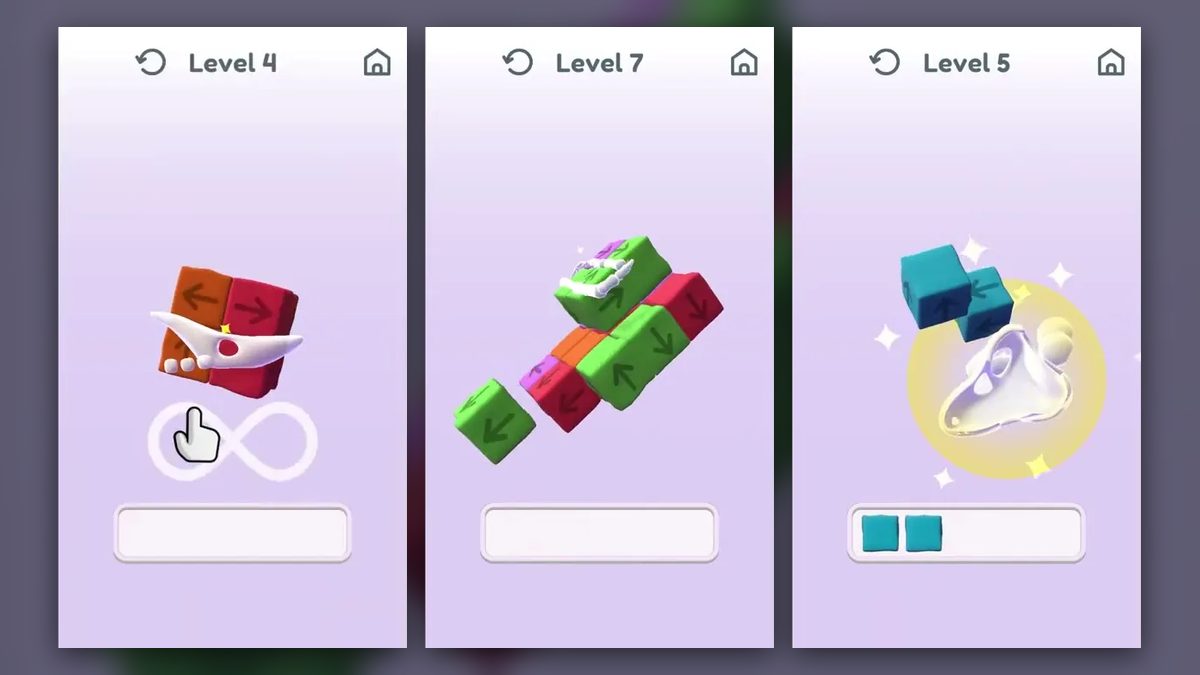
Tap Dig Dino gameplay splits the screen between a 3D stack of arrow cubes, with white bones lying on or inside it, and a white tray below. The aim is to clear every cube. No goal counter is printed during play; a level ends once its cubes are gone.
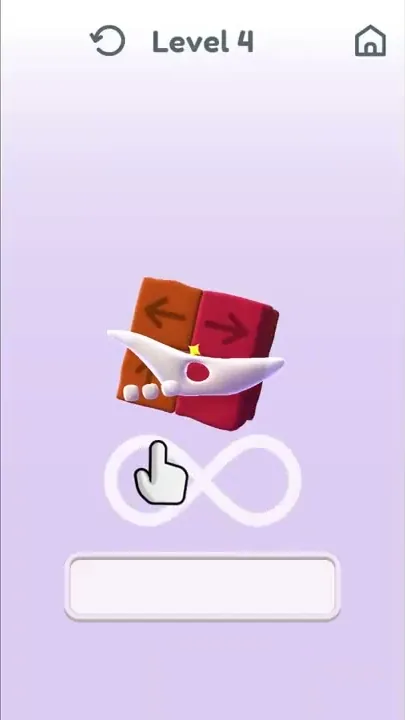
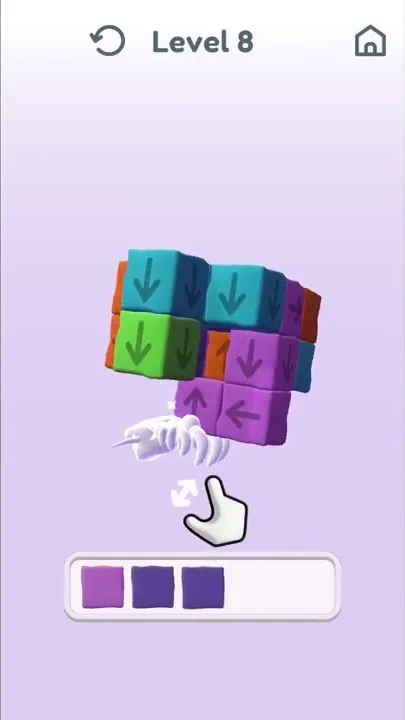
Cubes come off the stack one at a time, and the stack is shown from a noticeably different angle from one moment to the next. Two hand icons appear with no text attached: Level 4 opens with a hand over an infinity-shaped loop, and all through Level 8 a hand with a small diagonal two-headed arrow stays under the stack. Inside a level, the label at the top carries a circular-arrow restart button just to its left, with a house-shaped home button out in the right-hand corner. Between levels, a green button on the Area 1 screen starts the next one.
A cube leaves the stack and slides away, then shows up in the tray as a flat tile of its own color. Two tiles of the same color clear together, as a banner over the tray puts it early in Level 3: “Pair colors to sweep away the tiles.” Clearing the whole stack frees the fossil inside; a “DINO-MITE!” screen then names the creature, and the Area 1 museum keeps count of the pieces on its exhibits.
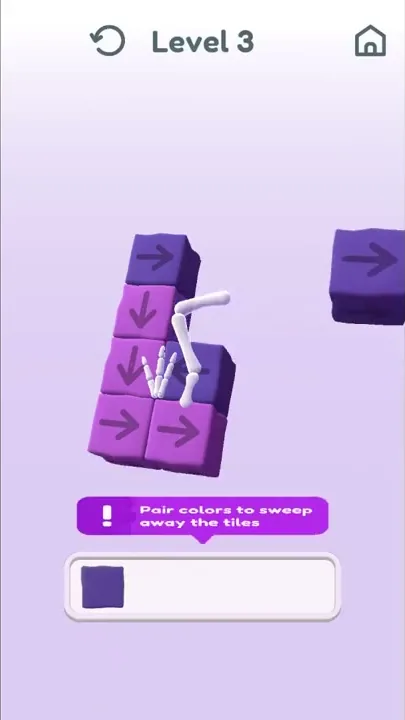
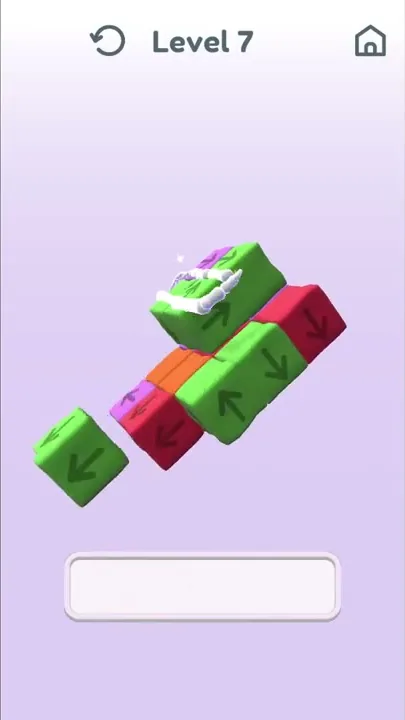
Every cube has an arrow pressed into one face and, once it comes off, moves in the direction that arrow points. A dark purple cube slides away to the right in Level 3, a green cube with a down-left arrow heads for the lower left in Level 7, and a teal cube leaves toward the upper left in Level 8. The cubes are chunky and squashed-looking with rounded edges. They float alone on a pale lavender background that fades to white at the top.
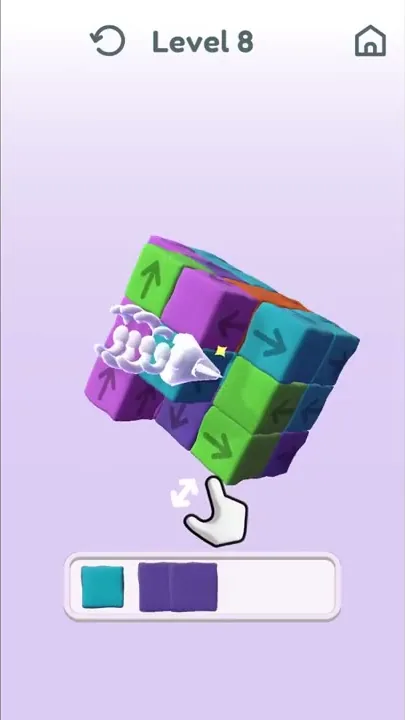
The tray is a white bar with no slot markings. Each cube that comes off puts a flat tile of its color there, and a newly arrived tile often sits lower than the rest, partly below the bar. Tiles clear in twos, not threes: in Level 8, two dark purple tiles next to a lighter purple one are gone moments later, leaving the lighter tile on its own.
White bones lie on or inside every stack, and their shape changes from level to level: leg bones and a foot with toes on the Level 3 slab, a crested skull across the Level 4 block, a long limb bone over the green cubes of Level 7, a curved row of vertebra-like bones on Level 8. Clearing the cubes uncovers the bone. Near the end of Level 5 it glows inside a yellow halo with white sparkles while a few teal cubes still sit beside it and two teal tiles wait in the tray.
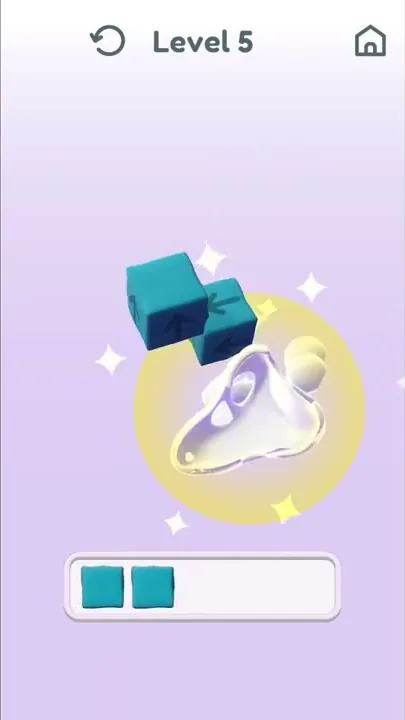
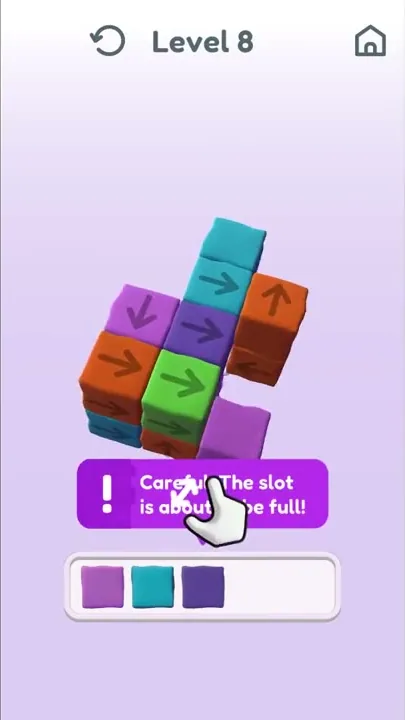
The tray has limited room. In Level 8, with three tiles of different colors in it, a purple banner with an exclamation mark appears above it to warn that the slot is about to be full. Nothing on screen counts moves or time, and no level was lost, so what happens when the tray fills is never shown.
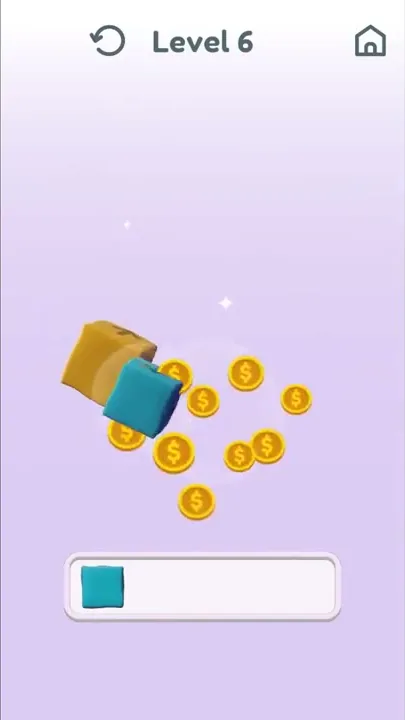
A flat slab of amber cubes, with a row of teal ones along its front, makes up Level 6, and a white bone shaped like a hand with several digits lies on top. It starts from the museum’s green “LEVEL 6” button. Soon two amber tiles sit pressed together in the tray; a moment later they are gone and teal tiles are coming in. More of the hand bone shows as the slab thins, and the level ends when the last amber and teal cubes leave.
From one teal block to a five-color cube
The count of colors is the plainest change. The end of Level 2 is a small block in teal alone, two cubes by two on top, with a bird-like skeleton lying over it. Two-color stacks are the most frequent: two shades of purple in Level 3, orange and red in Level 4, amber and teal in Level 6. Three colors share the Level 5 block and four share Level 7; Level 8 uses five.
Shapes swing between flat slabs and deeper blocks. Early in Level 3 the stack is a flat, roughly F-shaped slab, and Level 6 is flat as well. The Level 4 block is small, and the Level 5 block is compact but several cubes deep.
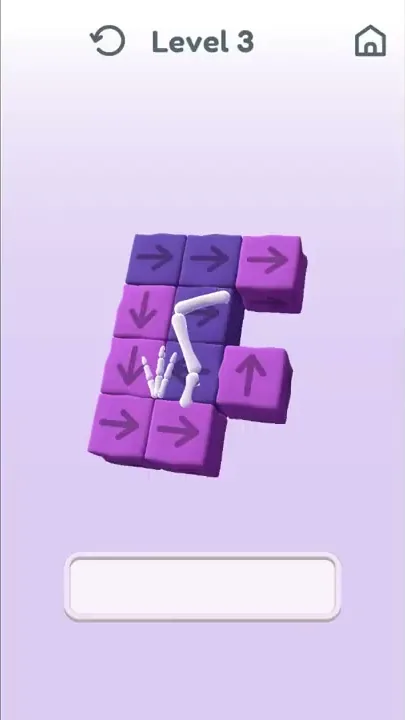
The four-color stack of Level 7 goes further. It runs several layers deep, with a long white limb bone lying across its green cubes.
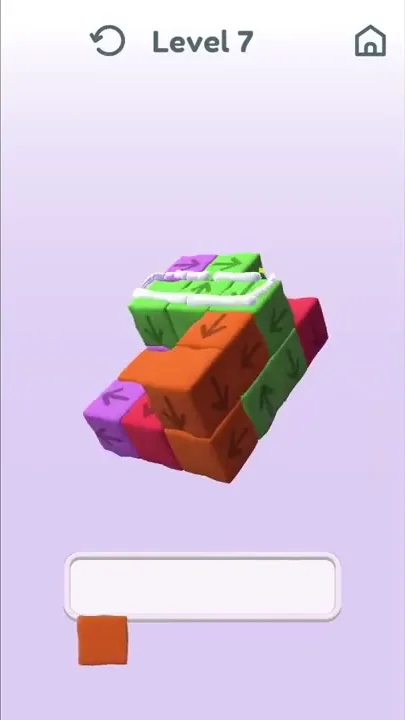
The largest stack comes last. Level 8 is a big cube of many small arrow cubes, several layers deep each way, with white bones showing on one face. It is the first level where the tray holds three colors at once and the full-slot warning shows.
Coins are the currency on show. Their counter sits at the top right of the Area 1 and reward screens; coins burst out of the stack as a level is cleared, and the reward screen adds “+10”. The total only rises across these levels, and nothing was bought with it.
After a level, a reward screen shows the freed fossil large and white, with confetti flying, under the purple heading “DINO-MITE!” and the creature’s name: “Dodo Bird” after Level 2, “Pteranodon” after Level 4. A “+10” coin award sits underneath.

The Area 1 museum appears between levels: a lavender hall with columns and rope barriers, where gray visitor figures stand among three exhibits. Each exhibit carries a piece counter, out of five on the large skeleton and out of four on the other two. A green level button sits below them.
Collected bones are white and missing ones faint gray outlines, which leaves the large skeleton gray apart from its white skull. After Level 6 the small pedestal of bird-like bones lights up yellow in a burst of colored bits. Two dots sit under the “Area 1” title, the first purple and the second gray.
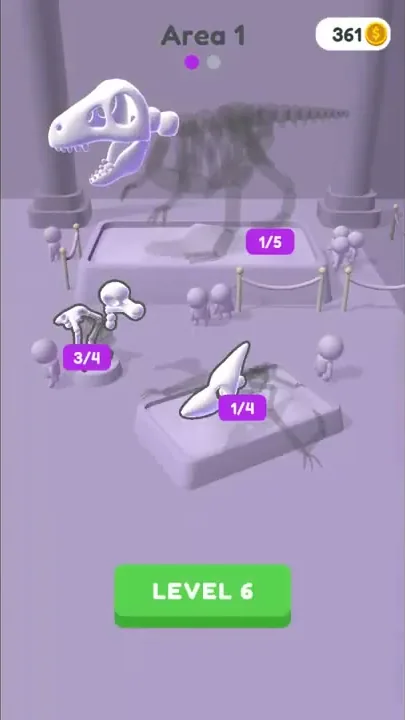
The same Area 1 screen can also show the next level’s stack, bones included, above the green button. The large Level 8 cube waits there above “LEVEL 8”, and Level 2’s small teal block shows as its button fades.
A fossil hunt that gives the stacks a goal
The dinosaur-fossil subject comes with a small collecting layer, and we liked what it does for the puzzles: it gives the cube-and-tile core more of a goal and, to a degree, more staying power and more to play. Each stack holds a creature’s bones, and clearing one ends with a name such as “Pteranodon” on the reward screen. In the museum, the exhibit counters keep a running tally, and the bird-bone pedestal lit up after Level 6.
The combination underneath is clever as well. A 3D arrow-cube puzzle, where each piece leaves along its own arrow, feeds straight into tile matching with a small tray, so a single stack ends up as pairs of flat tiles. Pairing two bite-sized formulas this way can stretch a game’s life, and with a collection layer wrapped around it, a bite-sized game moves partway toward one with longer-term goals.
A museum layer that never opens up
The management side is not fleshed out. Between levels, the museum view with its counters and a level button is all of it that appears; nothing was built or upgraded there, and no coins were spent. A long-term layer has to be fitted to the core puzzles with care, and here the museum is a screen to look at on the way to the next stack.
The core blend also needed more care. It lives in the handoff from stack to tray, where a 3D cube leaves along its arrow and turns into a flat tile waiting for a partner; the idea there is smart, the working-out less careful.
The fossils hold little interest as decoration for the cubes. The bones simply rest on or inside the stacks, like the leg bones across the purple slab of Level 3 or the hand-like digits on Level 6, and glow once they are uncovered.
Unpicking stacks one arrow at a time
The puzzle side is about reading arrows and colors. Each cube leaves in one fixed direction, and its tile waits in a bar of limited room for a partner of the same color, from a small teal block up to a five-color cube.
The collecting side answers a taste for sets: named fossils on the “DINO-MITE!” screen and exhibit counters that track bones toward whole skeletons. A taste for running a museum finds only the hall view with its counters.
Verdict
Tap Dig Dino lands in the middle. Digging out named creatures gives the puzzles a target and, to a degree, more staying power, and joining the two formulas was a smart idea. The rest is weaker: the management half barely gets started, the join was not made with enough care, and the dinosaur dressing on the stacks is not very interesting.